

Have you ever wondered how 3D printing is changing the world at an incredible pace? 🌍 In 2025, this technology is breaking boundaries and revolutionizing industries in ways we never imagined.
In this article, you'll discover seven innovative and little-known applications that will completely change the way you think about 3D printing. From medical breakthroughs to sustainable solutions, what's coming will blow your mind.
Ready to explore the future and find out how you can be part of this revolution? Keep reading and prepare to be amazed by what 3D printing has in store for all of us. 🚀
7 Surprising 3D Printing Applications in 2026
Can you imagine everything 3D printing will make possible in 2025? Get ready to discover applications that go far beyond what you usually see in the news. From medical breakthroughs to advances in construction, fashion, and art, 3D printing is set to transform our everyday lives. Let's dive in! 🚀
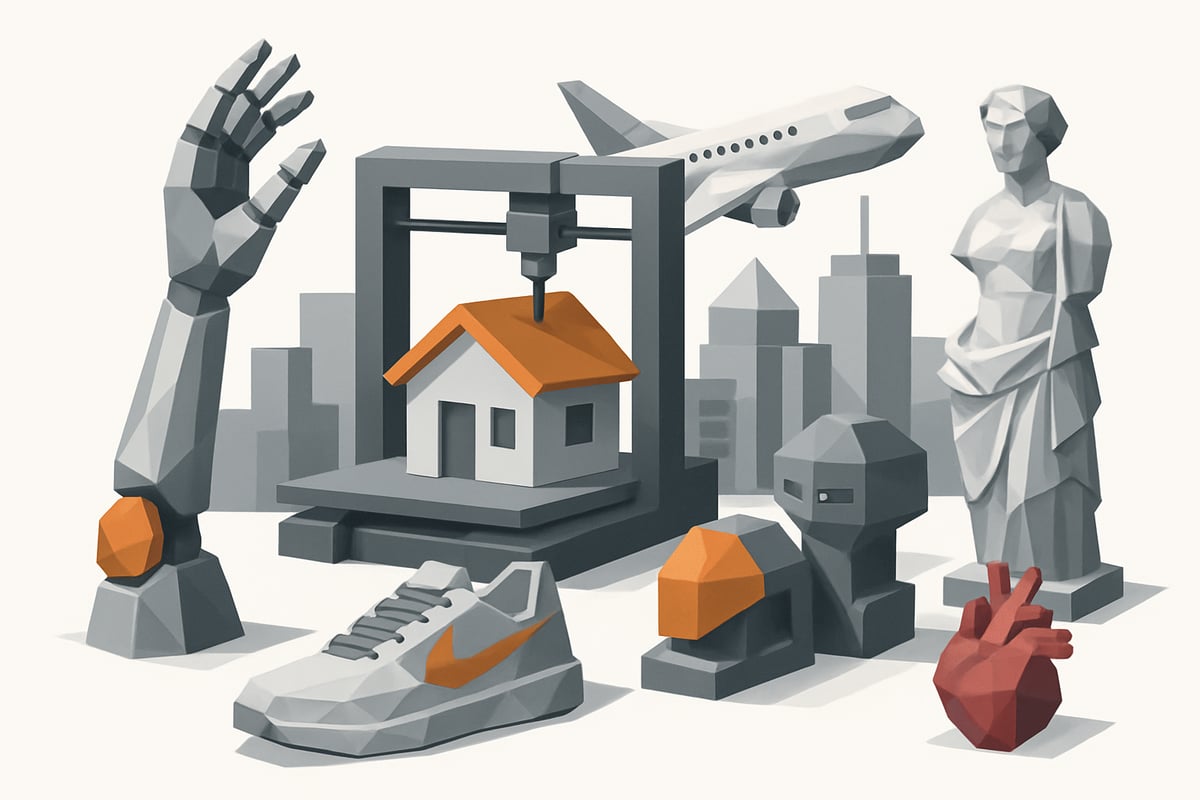
1. Custom, Affordable Medical Prosthetics
3D printing is revolutionizing the world of medical prosthetics. Today, hospitals around the world are printing custom-fit prosthetics tailored to each individual patient, dramatically improving comfort and functionality. Thanks to this technology, costs have dropped by up to 70% and wait times have shrunk from weeks to just days.
In developing countries, this means access to quality medical devices that were previously out of reach. On top of that, the use of biocompatible materials and reduced material waste make the entire process far more sustainable. Across Europe and Latin America, there are already incredible success stories — though challenges around materials and regulation remain heading into 2025. If you'd like to learn more about the key materials involved, check out our advanced materials collection for 3D printing.
2. Fast, Sustainable Housing Construction
3D printing is also transforming the construction industry. Large-scale 3D printers can now build a complete house in under 24 hours. Pilot projects in Mexico and the United States show that construction costs can be cut by up to 40%, with a significantly lower environmental impact thanks to recycled and eco-friendly composite materials.
This technology is a game-changer for tackling the housing crisis and responding to natural disasters, making it possible to build shelters quickly and efficiently. The sector is growing at a rapid pace, though it still faces regulatory hurdles and challenges around public acceptance. Can you imagine ordering a custom-built home as easily as ordering a pizza?
3. Lightweight, High-Performance Aerospace Components
In the aerospace industry, 3D printing makes it possible to manufacture complex, ultra-lightweight parts for aircraft and satellites. Companies like Airbus and NASA have already reduced the weight of key components by up to 60%, resulting in lower fuel consumption and reduced emissions.
Using high-strength metal alloys and advanced composite materials, full customization is achievable with maximum efficiency. Adoption of 3D printing in this sector is estimated to grow by 25% every year. There's even ongoing experimentation with manufacturing parts directly in space. The next frontier is closer than we think!
4. Custom Sports Footwear Manufacturing
What if you could wear shoes made specifically for your feet? With 3D printing, brands like Adidas and New Balance are launching footwear lines where every insole and outsole is tailored precisely to your foot shape. The process is straightforward: digital scanning, custom design, and on-demand production.
This not only boosts comfort and performance, it also cuts new model development time in half and enables material recycling. By 2025, we'll be seeing fully printed footwear and true mass customization. Say goodbye to standard sizing!
5. Creating Replicas for Cultural Heritage Restoration
3D printing has become a powerful tool in art and heritage restoration. European museums are already reproducing sculptures and historic architectural elements with millimeter-level precision — preserving cultural heritage, cutting costs, and making replicas more accessible for education and research.
The workflow involves 3D scanning, digital modeling, and selecting compatible materials. Over the past two years, heritage restoration projects using 3D printing have grown by 30%. Landmark examples include the reconstruction of the Parthenon and Egyptian artifacts — though ethical and legal debates around reproducing originals are still ongoing.
6. Innovation in Industrial Modeling and Prototyping
In the industrial sector, 3D printing has become the engine of innovation. Automotive and electronics companies can prototype functional parts in just a few hours, dramatically accelerating product development and cutting costs by up to 60%.
The use of resins, engineering-grade plastics, and advanced metals allows teams to iterate quickly and catch errors early. By 2025, 75% of manufacturing companies plan to increase their investment in 3D printing, with a focus on generative design and custom fabrication. Spain and France are already leading the way with some impressive success stories.
7. Bioprinting Tissues and Organs for Medical Research
Perhaps most remarkably, 3D printing is opening new frontiers in the bioprinting of tissues and organs. Laboratories are already producing organ models for pharmacological testing and surgical simulations — reducing animal experimentation and enabling more personalized treatment approaches.
The global bioprinting market is growing at 36% annually, though significant technical challenges remain, including vascularization and long-term functionality. Pioneering projects at universities across Europe and the US are pushing the boundaries, and within the next decade, printing fully functional organs may become a reality. If you want to dive deeper into these developments, check out this breakdown of innovative 3D printing applications in 2025.
The Role of Advanced Materials in the 3D Printing Revolution
The real driving force behind 3D printing's rapid advancement is the materials we now have access to. Today there are over 35 types of filaments and resins available — from biocompatible options for medical use to eco-friendly compounds and conductive materials for electronics. 🌱
These materials make it possible to produce parts that are more customized, durable, and sustainable than ever before. Did you know there are already recyclable plastics and high-temperature-resistant filaments on the market? Explore the full range of 3D printing filaments and see how they're changing the game.
The future promises smart, self-healing, and multifunctional materials that will supercharge industries like healthcare, automotive, and aerospace. The only limit is your imagination! 🧠✨
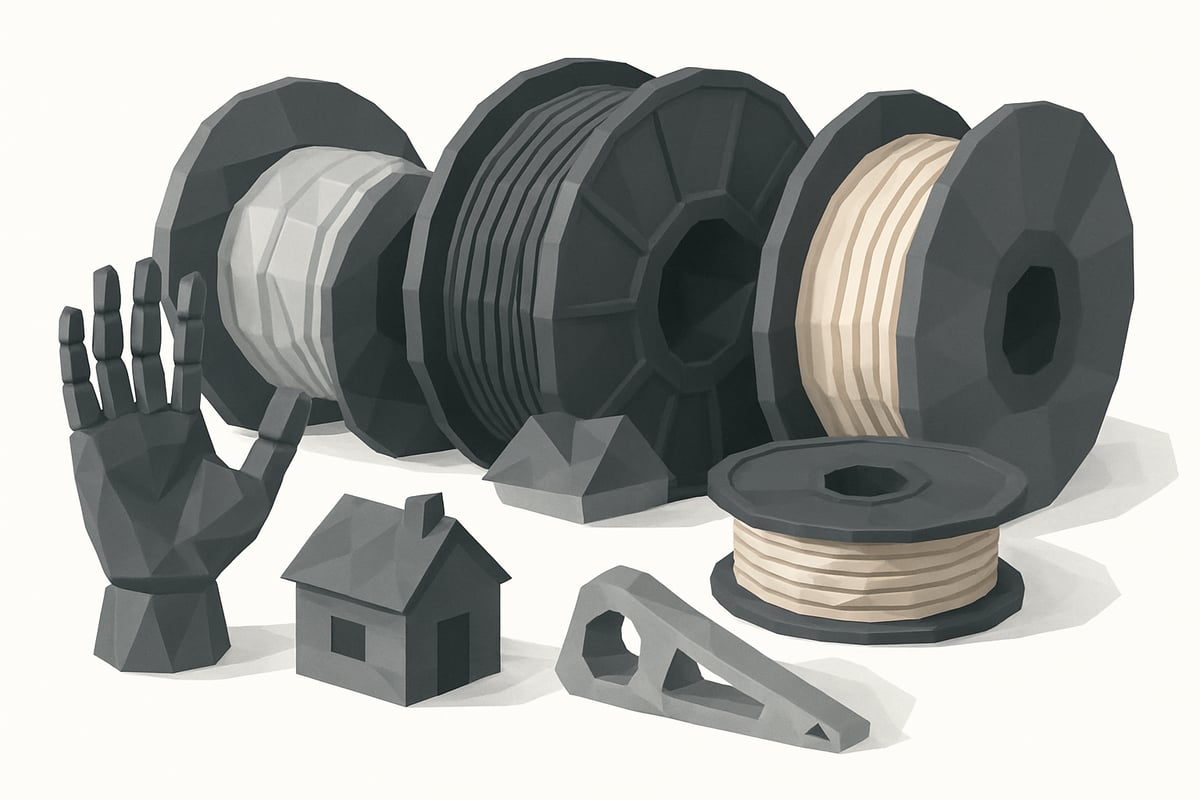
After seeing everything 3D printing can achieve in 2025, you're probably itching to experiment yourself. Whether you want to create custom prosthetics, highly detailed prototypes, or even miniatures for your hobbies, the material you choose makes all the difference. If any of these amazing applications have sparked your inspiration, I'd encourage you to check out the wide range of resins we have available. There are options for every project and skill level, so you're sure to find exactly what you need.
Shop all 3D printing resins