

🌟 Did you know that the 3D printing material you choose can mean the difference between a simple prototype and a truly groundbreaking part? In 2026, 3D printing is transforming entire industries thanks to increasingly innovative and accessible materials. If you want outstanding results and want to take your projects to the next level, knowing your options is essential. Here you'll discover the 7 must-know material types, their advantages, applications, and the secrets to choosing the right one. Get ready to explore everything from classic filaments to high-tech resins and futuristic composites. Let's dive in! 🚀
Why Does Choosing the Right 3D Printing Material Matter So Much?
Choosing the right 3D printing material is the first step to ensuring your parts are strong, functional, and finished exactly the way you want. Can you imagine printing a mechanical component with a brittle material? The result would be a disaster — wasted time and wasted money.
The difference between a 3D printing material for rapid prototyping and one for medical applications is enormous. For example, a biocompatible resin is essential in dentistry, while ABS is the go-to choice for automotive and electronics applications.
Common issues like warping, brittle parts, or poor surface finish usually come down to choosing the wrong material. To avoid these pitfalls, check out this guide on common 3D printing mistakes and make sure you're making informed decisions.
In 2026, the range of available materials has grown by 30%, with more and more industries moving toward sustainable and customised solutions. This directly impacts your costs, production timelines, and the environmental footprint of your projects.
Sectors like automotive, healthcare, and design are pushing innovation to its limits thanks to smart, eco-friendly materials. The trend is now firmly towards recycled filaments, advanced resins, and tailored solutions for every application. The future of 3D printing is in your hands!
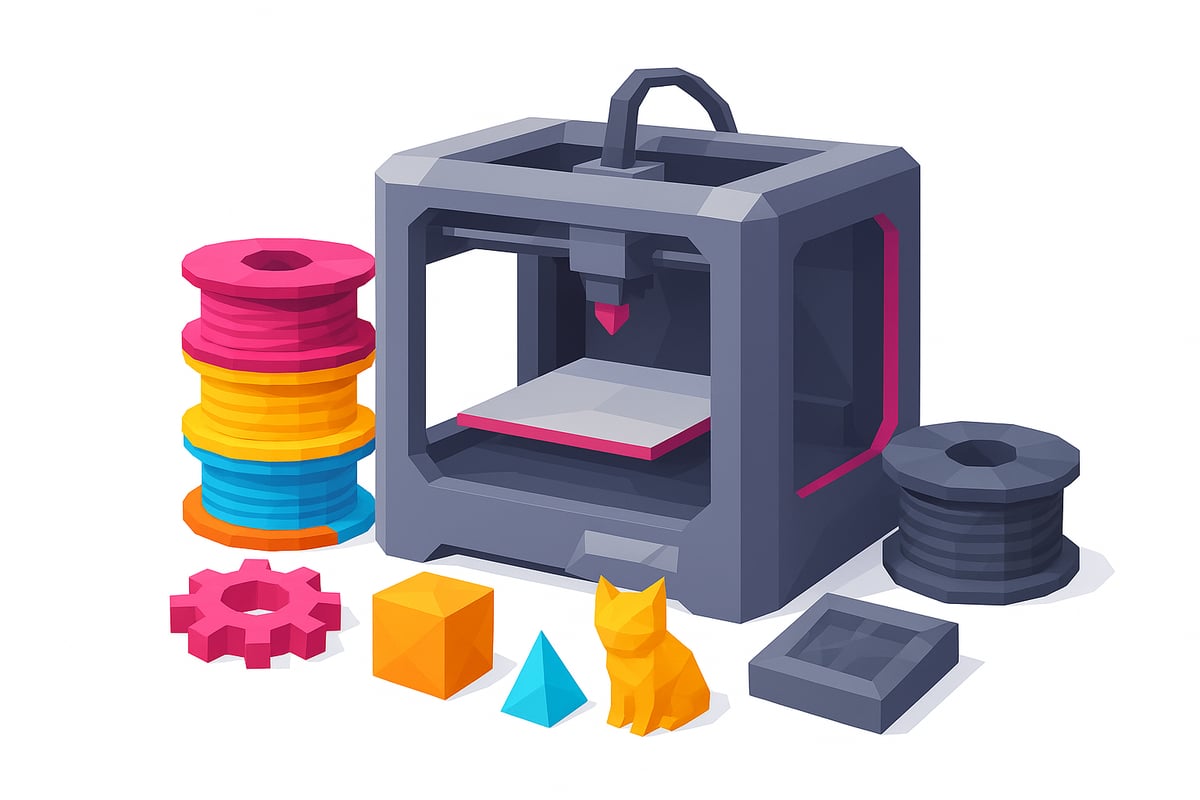
7 Types of 3D Printing Materials You Need to Know in 2026
Ready to explore the world of 3D printing materials? Here are the 7 most popular and exciting material types for 2026. Each one has its own characteristics, strengths, and ideal use cases. Whether you're searching for the best option for your next project or just getting started, read on and find your perfect match.
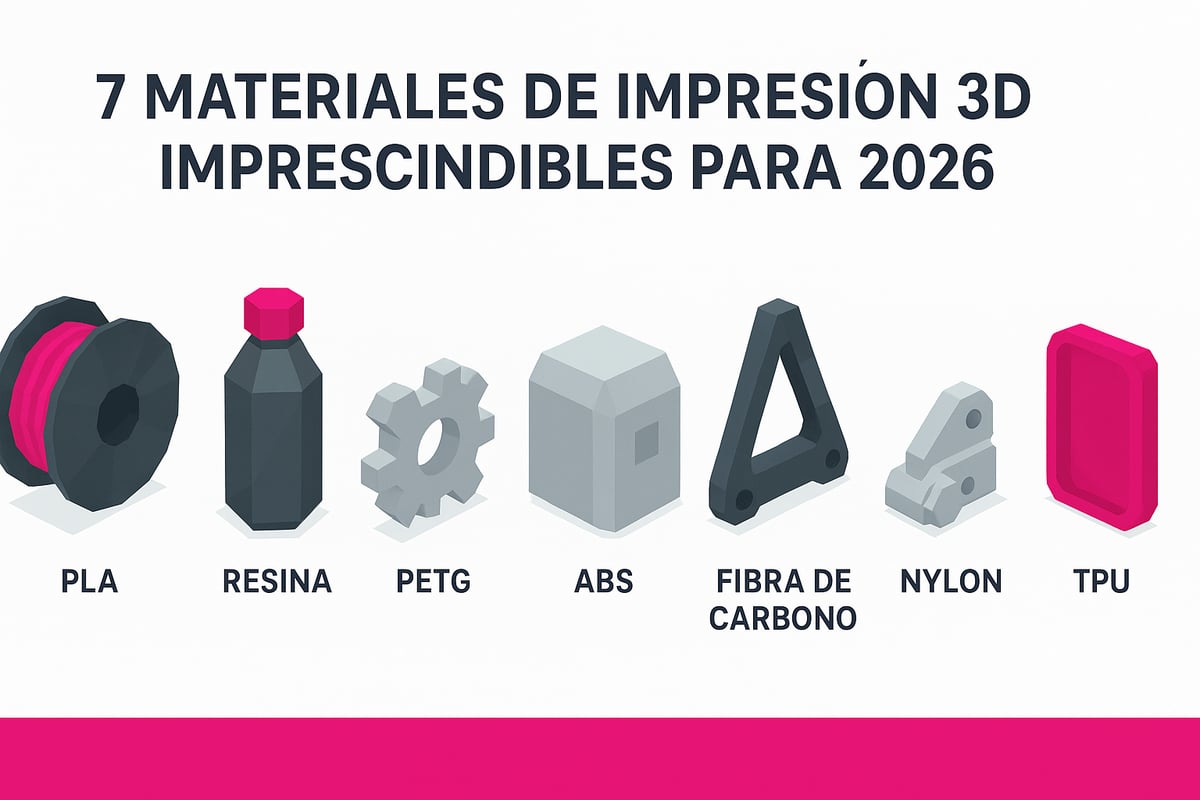
1. PLA (Polylactic Acid)
PLA is the go-to 3D printing material for beginners. It's a bioplastic made from renewable resources like corn starch, and it's well known for being easy to print with and kind to the environment 🌱.
It comes in a huge range of colours and finishes, so if variety is what you're after, PLA delivers. That said, it's not the most heat-resistant option, so it's not ideal for parts that will be exposed to high temperatures or heavy friction.
Common uses include model making, toys, and rapid prototypes. More than 40% of home 3D prints in 2025 used PLA, cementing its status as a true classic in the world of 3D printing materials.
2. PETG (Polyethylene Terephthalate Glycol)
PETG hits the sweet spot when it comes to 3D printing materials — it balances strength with ease of use, offering flexibility, impact resistance, and water resistance 💧.
It's ideal for parts exposed to moisture, such as containers, drone components, or protective enclosures. It's also transparent and recyclable, though not biodegradable.
In 2026, PETG is the most widely used filament in the food-contact industry — so if you're looking for a reliable, safe 3D printing material, this is your go-to choice.
3. Advanced Photopolymer Resins
For fine detail and smooth surface finishes, advanced photopolymer resins are the star of the 3D printing materials world 🧪. They come in a wide range of types: standard, ABS-like, flexible, biocompatible, and heat-resistant.
They're perfect for dental applications, jewellery, miniatures, and functional prototyping. The precision is outstanding and the results are spectacular — though they do require careful handling and proper post-processing.
Want to dig deeper? Check out this guide on Types of 3D Filaments to explore even more material options and how to choose the right one for your project.
4. ABS (Acrylonitrile Butadiene Styrene)
ABS is the go-to 3D printing material for functional parts and industrial prototypes 🔥. It's known for its high impact resistance and ability to withstand elevated temperatures.
It's easy to sand, paint, and bond with adhesives — making it ideal for automotive parts, electronics, and toys like the famous interlocking building bricks. Just bear in mind it requires an enclosed printer and good ventilation, as it emits fumes during printing.
ABS remains the industry standard for prototyping thanks to its durability and versatility as a 3D printing material.
5. Carbon Fibre Composite Filaments
Need maximum rigidity with minimal weight? Carbon fibre composite filaments are the premium tier of 3D printing materials ⚙️. They combine polymers such as PLA, PETG, or Nylon with carbon fibre strands for exceptional strength-to-weight ratio.
These filaments are perfect for drones, robotics, automotive applications, and structural components. Keep in mind they require hardened nozzles to prevent extruder wear.
In 2026, 15% of 3D printed automotive parts are already produced using this high-performance 3D printing material.
6. Nylon (Polyamide)
Nylon is the favourite 3D printing material for mechanical parts that demand flexibility, abrasion resistance, and long-term durability 🦾. It's perfect for gears, hinges, and moving components.
It absorbs moisture, so proper storage is essential. It's also compatible with various fibres and additives to further enhance its properties.
In the engineering world, Nylon is synonymous with functionality and toughness as a 3D printing material.
7. Flexible Filaments (TPU, TPE)
Looking to print flexible, elastic parts? Flexible filaments like TPU and TPE are the ideal 3D printing material for the job 🧩. They're perfect for gaskets, phone cases, protective covers, and even prosthetics.
They vary in hardness to suit different needs and require specific print settings, but the results are impressive.
Their use is growing rapidly in the healthcare sector and wearables, making flexible 3D printing materials increasingly versatile and accessible.
How to Choose the Best Material for Your 3D Printing Project
Choosing the right 3D printing material can make or break your project — the difference between a part that performs perfectly and one that falls short of expectations. So what should you consider?
First, think about the end use: will it be a prototype, a functional part, something decorative, or even a medical application? Also make sure your printer is compatible — whether FDM, SLA, or DLP.
Evaluate the mechanical, thermal, and chemical resistance you need. Factor in cost, ease of printing, and whether you're looking for biodegradable or recyclable materials to reduce your environmental impact. For example, biocompatible resin is the go-to choice for dental applications, while TPU is ideal for flexible cases and grips.
If you're still unsure, check out this complete guide to choosing 3D printer filament, packed with practical tips and real-world examples. And remember — testing sample packs and running small test prints is the best way to find what works for you.

Practical Tips for Storing and Maintaining 3D Printing Materials
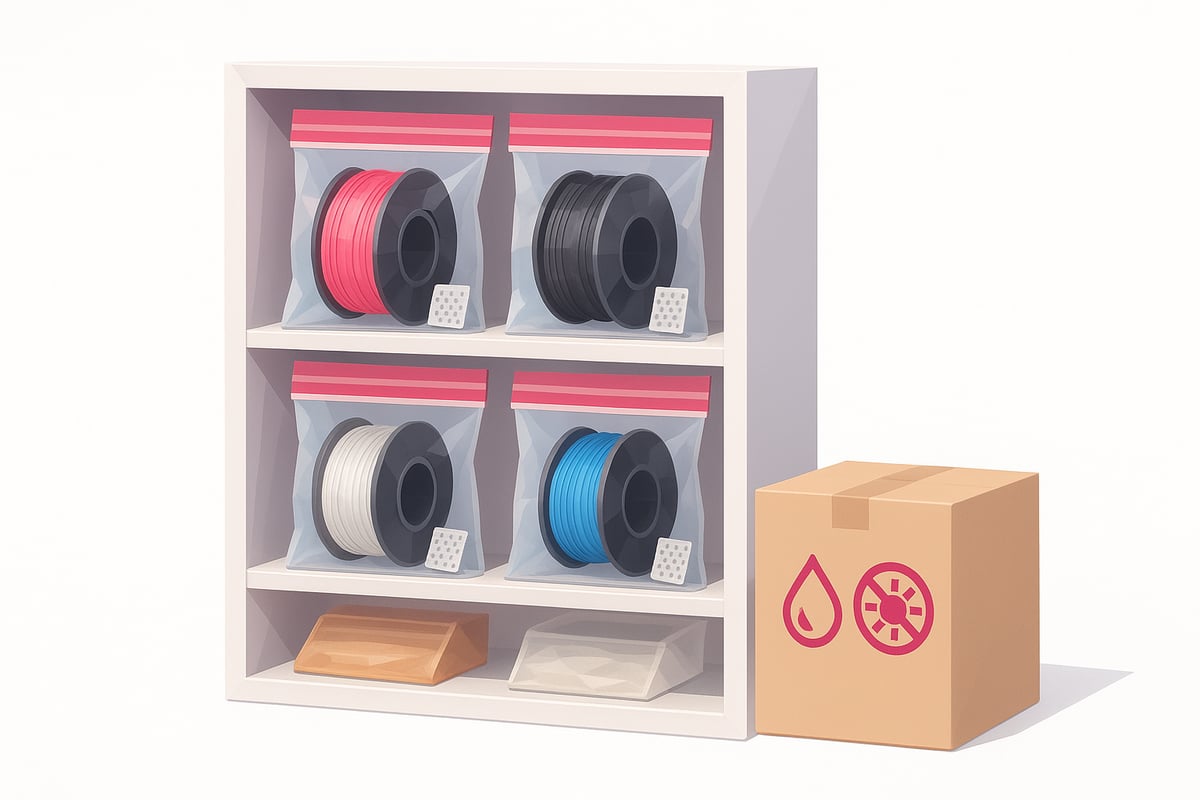
Want your 3D printing materials to last and perform consistently? 🧑🔬 The first step is storing them somewhere dry, away from direct light and moisture. Use airtight bags and desiccants to prevent filaments and resins from absorbing humidity — a key factor in avoiding failed prints.
Nylon, for instance, is especially moisture-sensitive, so always store it with a desiccant pack. Photopolymer resins also need extra protection from light and air. For a deeper dive into material care, check out this guide to 3D printing resins, full of useful tips and tricks.
Inspect your spools and containers regularly: if you notice brittleness, bubbles, or discolouration, the material may have degraded. Clean your printer after each session and follow the guidelines for each specific material type. This will help you avoid common issues like ABS warping or resin bubbling — and ensure your prints come out great every time.
Conclusion:
The 7 types of 3D printing materials covered here are essential for taking your projects to the next level — from early prototypes to functional parts and advanced applications. Choosing the right material makes all the difference in quality and results, as reflected in the continued growth of the global 3D printing materials market.
Explore our full range of 3D printing materials and accessories in our online store. Join our Telegram community at https://t.me/MrResin3D for exclusive discounts, new releases, and dedicated support.
Want even more perks? Subscribe to our Newsletter and get special offers, coupon codes, and the latest 3D printing news delivered straight to your inbox.
✨ Happy Printing! 🚀
Now that you know which materials are set to define 3D printing in 2026 and how each one can take your projects to the next level, are you ready to give them a try? Whether you're curious about advanced resins or looking to push your builds further, we'd love to help you find the perfect match. At Mr Resin, we stock resins for every type of printer — from entry-level to professional — backed by expert advice and fast shipping.
Want to take a look? Browse our full selection here: Shop All 3D Printing Resins and find the one that's right for your next project.