

3D printing is revolutionising the world, and choosing the best PLA filament is key to achieving spectacular results in 2026! From detailed miniatures to functional prototypes, filament quality is what separates a stunning success from a frustrating failure.
In this article, you'll find a comprehensive comparison of the 7 top options of the year, complete with pros, pricing, real-life images, and personalised recommendations. We'll also share expert tips to help you find the ideal filament for your budget and project needs.
Ready to print like a pro and unlock exclusive deals? Keep reading and find your perfect match!
What is PLA filament and why choose it in 2026?
PLA filament (polylactic acid) is a 3D printing material derived from renewable resources such as corn or sugarcane 🌽. Its plant-based origin makes it an eco-friendly option, ideal for anyone looking for the best PLA filament without compromising on environmental responsibility.
Its key advantages include:
- Easy printing on most FDM printers
- Biodegradability and low environmental impact
- Low cost and wide availability
- A huge range of colours and finishes
Global demand for PLA has grown by 20% over the past year, driving innovation in variants such as PLA+ and specialist formulations. Compared to other filaments like ABS and PETG, PLA is far easier to print with — less warping, no heated bed required. You'll also find options like matte PLA, silk PLA, and recycled PLA, perfect for tailoring every project to your vision.
The best PLA filament delivers not just great aesthetics, but real functionality: it's ideal for prototypes, decorative pieces, miniatures, and even everyday objects. If you'd like to explore the eco-friendly and biodegradable properties of this material in more depth, check out this article on the biodegradability and properties of PLA plastic.
In 2026, sustainability and innovation are driving the industry forward. That's why choosing trusted brands and certified materials is essential — for quality prints and a cleaner planet.
How to choose the best PLA filament for your projects
Choosing the best PLA filament isn't just about colour or price. There are technical details that can make the difference between a flawless print and a stringy mess. Let's break down what actually matters! 🎨🧐
Key factors when choosing the best PLA filament
Before you start printing, check these essential points:
- Dimensional accuracy (±0.02 mm) to prevent clogs and jams.
- Colour consistency for even, uniform results.
- Print performance: smooth flow with no clogging.
- Compatibility: make sure the filament works with your FDM printer or 3D pen.
- Packaging: vacuum-sealed spools and recyclable packaging help preserve filament quality.
Want to go deeper? Take a look at this guide to choosing filament for your 3D printer — perfect for making an informed decision and avoiding costly surprises.
Differences between standard PLA, PLA+, and specialist variants
Not all PLA is created equal. Here's a quick comparison table to break it down:
| Type | Main Advantages | Recommended Uses |
|---|---|---|
| Standard PLA | Easy to print, budget-friendly | Miniatures, prototypes |
| PLA+ | Stronger, less warping | Functional parts, gadgets |
| Specialty | Matte, silk, and recycled effects | Decorative pieces, unique designs |
The best PLA filament for you will depend on what you're after: glossy finishes, strength, or an eco-friendly option? Always check the specs and look for quality certifications.
Practical Tips and User Reviews
Read reviews and learn from other users' experiences. Small details like clean spool winding or easy support removal can make a huge difference.
If you're a beginner, start with standard PLA, set temperatures between 190 and 210°C, and try slower print speeds. More experienced users can experiment with specialty variants and mix them depending on the project.
Remember: proper storage and trying different brands will also help you find your favourite best PLA filament. The community is always full of great tips!
Top 7 Best PLA Filament Options for 2026
Ready to find the best PLA filament to take your projects to the next level this year? Here's a curated selection with real images, user experiences, and key details to help you choose with confidence. Let's get printing! 😎
SUNLU Meta Bundle PLA
The SUNLU Meta Bundle PLA is perfect if you're looking for the best PLA filament to explore colours and creativity. Starting from €23 for a multicolour pack, it offers a vibrant range and excellent flow, ideal for clog-free printing.
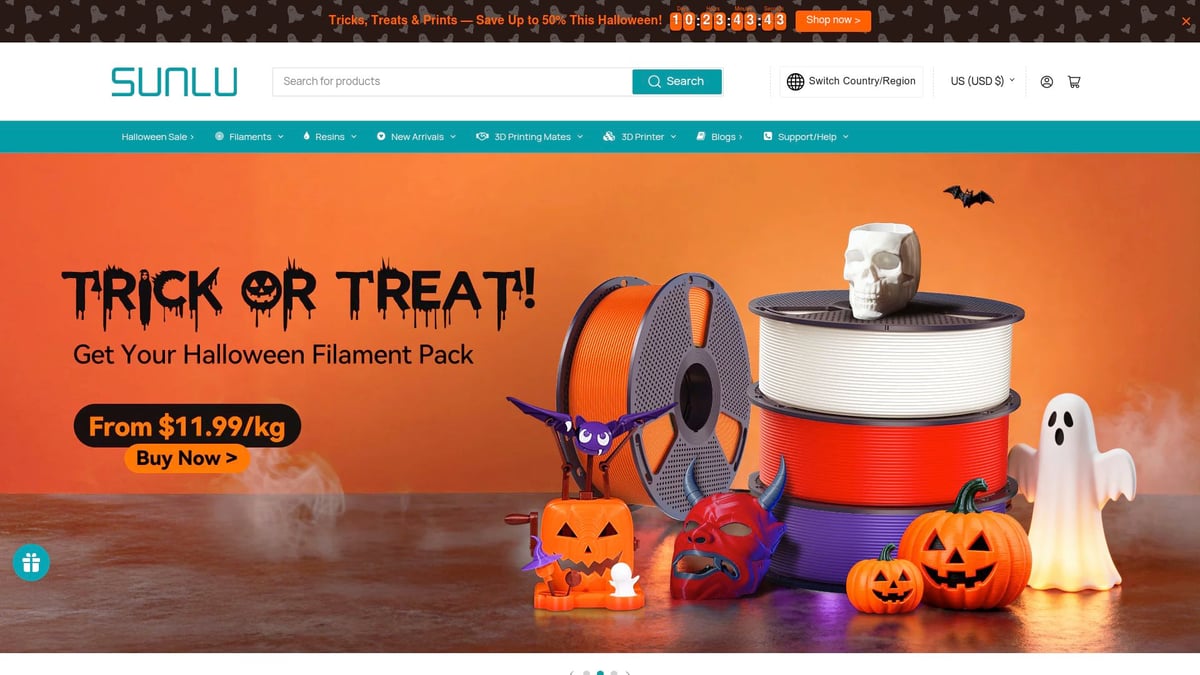
- Vibrant colours and excellent bed adhesion.
- Minimal warping, beginner-friendly.
- Users praise its reliability, though there can be slight colour variations between spools.
Great for artistic projects and rapid prototyping. Real product images available on the Sunlu website.
eSUN PLA+
eSUN PLA+ is a firm favourite among advanced makers. From €22 per 1 kg spool, it stands out for its reinforced formula and high strength. Easy to print, smooth finish, and minimal stringing.
- Tight dimensional tolerance.
- Wide range of colours and effects (wood, silk, marble).
- Requires precise temperature tuning for best results.
The community rates it highly for reliability and professional-quality finishes. Real product images on the eSUN website.
Elegoo PLA+ White
Elegoo PLA+ White, around €21 per 1 kg spool, is known for its strong layer adhesion and minimal thermal calibration requirements. Perfect for consistent, sustainable prints.

- Glossy surface finish and recyclable spools.
- Easy to use and eco-friendly.
- Minor colour differences may occur between batches.
Ideal for those seeking professional results. Positive reviews and real product photos available on the Elegoo website.
Mr Resin: Premium PLA Filaments
If you're looking for a trusted store, Mr Resin offers the best PLA filament with personalised advice, a curated selection of leading brands, and exclusive deals from €18. They stand out for their specialist support, active community, and educational resources, including the guide 3D Filament Types Explained.

- Wide variety and support in Spanish.
- Guides, blog, and stock from top brands.
- Limited stock on exclusive launches.
Perfect for beginners and professionals alike. Check out real photos and the latest arrivals at mrresin.es.
Overture PLA
Overture PLA is synonymous with reliability and great value, starting from €20 per 1 kg spool. It offers a tolerance of ±0.05 mm and includes length indicators.
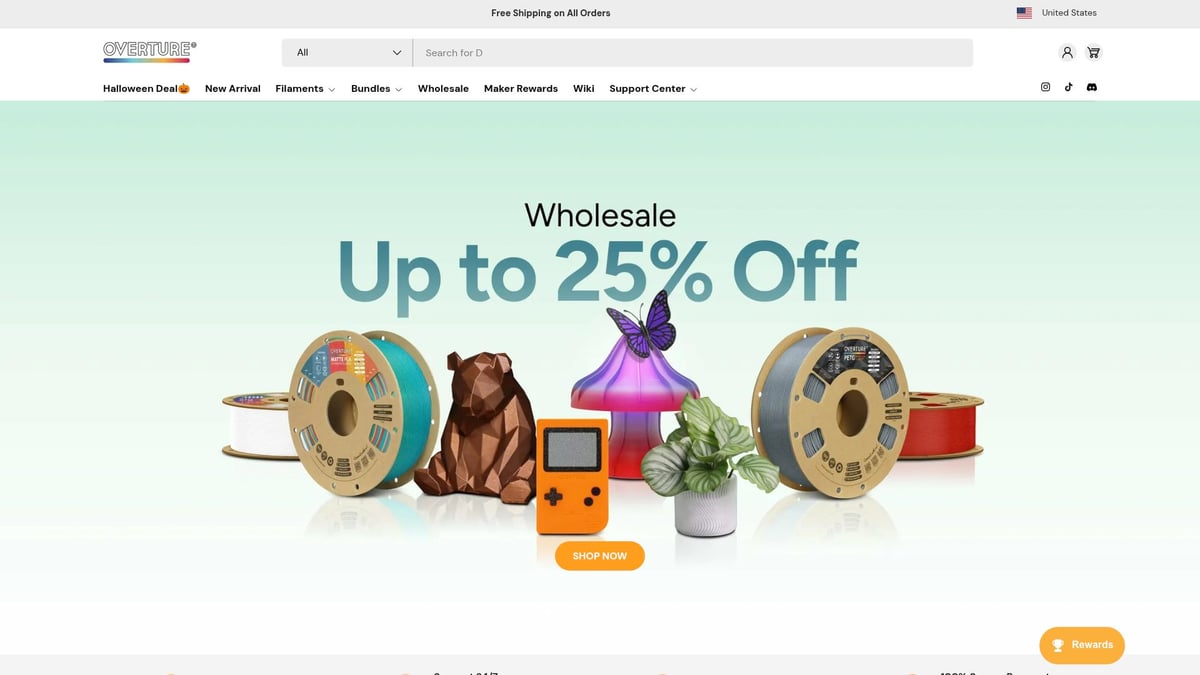
- Clean winding and tangle-resistant.
- Eco-PLA available with a wide colour range.
- Slightly higher tolerance compared to other premium options.
Ideal for those who want quality without breaking the bank. Real reviews and photos available at Overture.
🏆 Our recommendation with real stock in Spain: Anycubic Basic PLA

After reviewing all 7 brands in our top picks, there's one thing we can't ignore: most of those filaments have to be ordered from outside Spain, with days or weeks of waiting and the uncertainty of customs. That's why, at Mr Resin, we want to give you a straightforward, honest recommendation with verified stock: the Anycubic Basic PLA with RFID detection.
Why do we recommend it? Because it's the filament we ship ourselves within 24 hours from Spain — no endless waiting, no last-minute surprises. And because after thorough testing, we know it performs just as well as brands that cost twice as much.
✨ Why does the Anycubic Basic PLA stand out from the other 7 options?
- Dimensional tolerance of ±0.02 mm — the same precision as eSUN PLA+ or Overture, but with immediate stock availability.
- Integrated RFID chip — automatically loads print parameters on the Anycubic Color Engine Pro, so you can forget about manual settings.
- Made from fermented corn starch — 100% biodegradable, just like the eco-friendly options in our top picks, but without the "green" price premium.
- Neat, tangle-free winding — one of the weak points of cheaper brands, handled properly here.
- Compatible with all 1.75 mm FDM printers — no adjustments needed.
- 24h shipping from Spain — no customs, no waiting, no surprises.
📦 Technical specifications
|
Specification |
Value |
|
Spool weight |
1 kg |
|
Diameter |
1.75 mm (±0.02 mm) |
|
Total Length |
≈ 330 m |
|
Hardness |
81 D |
|
Tensile Strength |
61 MPa |
|
Density |
1.23 g/cm³ |
|
Nozzle Temperature |
200–210 °C (190–230 °C for high-speed printers) |
|
Bed Temperature |
50–60 °C |
|
Print Speed |
50–100 mm/s |
|
Material |
Biodegradable PLA |
|
Compatibility |
All 1.75 mm FDM printers |
Note: Anycubic is transitioning from cardboard spools with RFID chips to plastic spools with RFID chips. Depending on available stock, your order may arrive in either format. Product quality and specifications remain unchanged.

3DFILS PLA Ingeo 3D850
Made in Spain, the 3DFILS PLA Ingeo 3D850 is biodegradable and strong, starting from €24 per spool. It stands out for its fast crystallization and low odour.
- Great for mechanical parts and prototypes.
- Vacuum-sealed packaging, minimal warping.
- Spool winding could be improved and there may be some retraction issues.
Highly regarded by eco-conscious makers. Real photos and reviews available on the 3DFILS website.
Polymaker PolyTerra PLA
Polymaker PolyTerra PLA puts sustainability front and centre, with cardboard spools and a tree-planting programme. Starting from around £21 per spool, it delivers easy printing and vibrant colours.
- Compostable and competitively priced.
- Good bed adhesion, though impact resistance is lower than PLA+.
- Perfect for eco-conscious makers and educational projects.
Real-world photos and user experiences are available on the Polymaker website. Without a doubt, a top pick if you're looking for the best PLA filament to reduce your environmental footprint.
How to store and look after your PLA filament properly
Want to get the most out of your best PLA filament and achieve flawless prints every time? 😎 Proper storage is everything! Filament that isn't stored correctly can absorb moisture and ruin your prints, so here are some simple tips to keep it in top condition.
Essential tips for storing your PLA filament:
- Store each spool in a vacuum-sealed bag with desiccant packets. This keeps moisture out and ensures your best PLA filament stays fresh for longer. 💧
- Always store in a cool, dry place away from direct sunlight. Heat and UV exposure both degrade filament quality.
- Use dedicated filament storage boxes to protect your spools from dust and sudden temperature changes.
- Check your spools monthly. If you notice bubbling, cracking, or the filament snapping easily, it may have degraded.
- Rotate your stock: print with your oldest spools first to avoid any going to waste.
- If you're experiencing clogs, bubbling, or uneven layers, your filament has likely absorbed moisture. Drying it at a low temperature in a dedicated filament dryer can often save it.
A simple tip from experience: ever since storing my best PLA filament in airtight bags, my prints have come out noticeably cleaner with far fewer failures. The difference is immediate!
If you'd like more tips on getting the most from your filament and improving your results, check out these budget 3D filament tips and take your printing to the next level.
Frequently asked questions about PLA filament in 2026
What's the difference between standard PLA and PLA+? PLA+ is an enhanced version offering greater strength and flexibility, making it the best PLA filament choice for functional parts.
How far does a 1 kg spool go? It depends on the size and complexity of your prints, but a 1 kg spool typically covers several medium-sized projects or dozens of miniatures.
Is PLA actually biodegradable at home? While PLA is technically biodegradable, it requires industrial composting conditions to break down fully — it won't decompose in a standard home compost bin.
Is PLA compatible with all 3D printers? Most FDM printers support PLA, but always check your printer manufacturer's specifications to be sure.
Can you sand and paint PLA prints? Yes — PLA can be sanded and painted to achieve custom, professional-looking finishes.
What are the most common mistakes when printing with PLA? The most frequent issues are clogs caused by moisture-damaged filament, poor bed adhesion, and incorrect printing temperatures.
Where can you find exclusive deals and discounts on filaments? Stores like Mr Resin offer discounts and new arrivals, and you can also explore innovations like RFID PLA for 2026.
Tips for beginners? Start with the best PLA filament, dial in your temperatures, and check reviews to avoid common frustrations.
Conclusion:
Choosing the best PLA filament in 2026 is what separates average prints from truly impressive results. As we've covered, the key is combining quality, innovation, and sustainability — three areas where new material trends are advancing year after year. For a deeper dive into what's coming, check out this analysis of 3D filament innovation and sustainability trends for 2025.
The PLA market continues to grow, with options becoming more accessible and varied than ever, as confirmed by this global PLA filament market growth report. So if you're looking for the best PLA filament for your projects, head over to the Mr Resin store and explore the full range of filaments, resins, and printers — always with real product photos and personalised support.
Want to join the most active community? Join our Telegram group at https://t.me/MrResin3D for exclusive discounts, coupon codes, and the latest news. Don't forget to subscribe to our Newsletter, where we share updates, deals, and tips to keep you ahead of the curve.
✨ Happy Printing! 🚀
Now that you've got the full picture on the best PLA filament options for 2026 and some handy tips for picking the right one, why not take the next step together? I know how easy it is to get lost among so many brands and types — but remember, at Mr Resin you'll find a seriously comprehensive selection, from premium filaments to eco-friendly and budget-friendly options, plus guides and support to help you every step of the way. If you're ready to find exactly the filament your 3D printer needs, take a look here: Shop All 3D Printing Filaments — let's print something amazing this year!