

3D resin curing time is one of those topics that can make the difference between a perfect print and a sticky disaster. If you've ever wondered exactly how long you need to leave your prints under UV light, or why some prints come out stronger than others, you're in the right place. We're going to break down everything you need to know about this crucial process in resin 3D printing so your projects come out flawless. 🎯
What exactly is 3D resin curing? 🤔
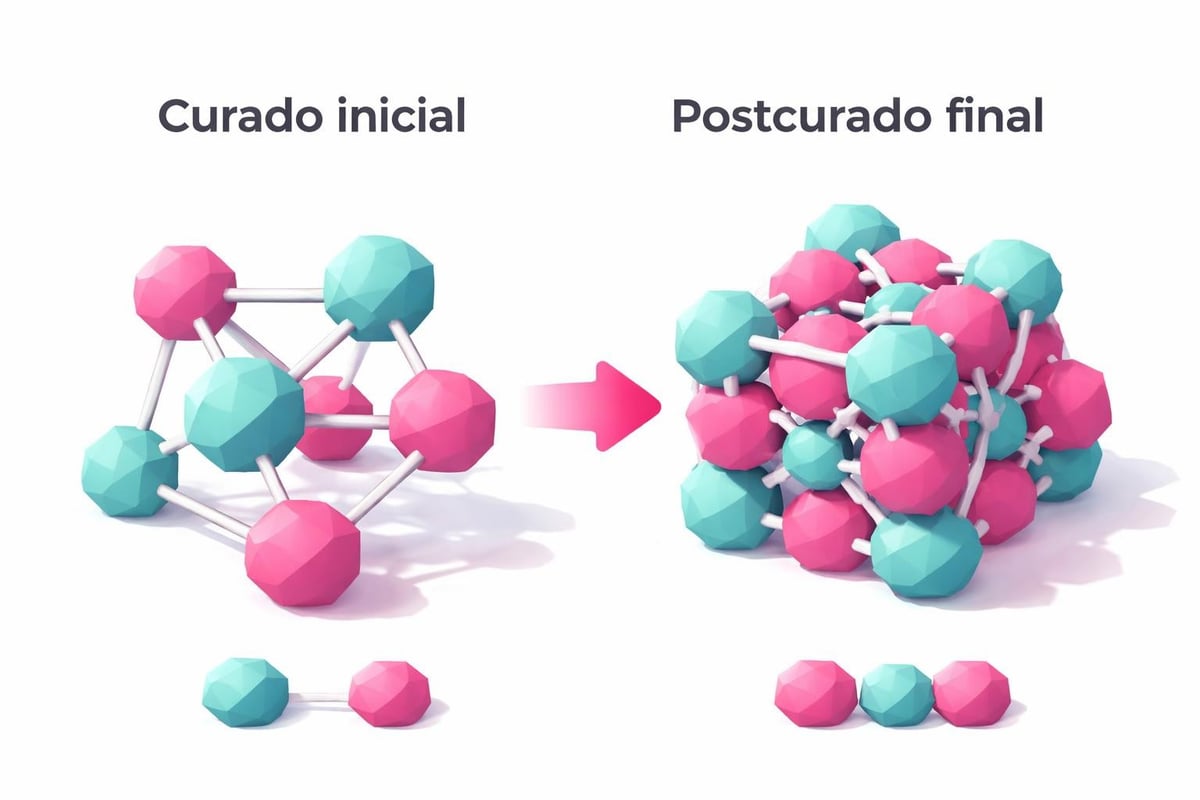
Curing is the process by which liquid resin fully solidifies through chemical cross-linking. During printing, each layer receives a dose of UV light that starts this process, but once the print is finished, it needs additional post-curing to reach its optimal mechanical properties.
Think of it like baking a cake: the initial oven (the printer) bakes each layer, but the final resting stage (post-curing) is what truly perfects the result. Without proper 3D resin curing time, your prints will end up soft, tacky, or even brittle.
The two types of curing you need to know
Stereolithography and similar technologies work in two distinct phases:
-
Curing during printing: Each layer receives UV light according to the configured exposure settings
-
Post-curing: Additional UV exposure to complete molecular cross-linking
Factors that affect 3D resin curing time ⚡
There's no one-size-fits-all answer here. The time required varies depending on multiple factors you need to consider:
Resin type
Each formulation has its own unique characteristics. Standard resins typically need between 2–5 minutes, while specialised formulations can vary:
|
Resin Type |
Approximate Time |
Characteristics |
|---|---|---|
|
Standard (grey/white) |
2–4 minutes |
General purpose, good strength |
|
3-6 minutes |
Longer cure time needed to maintain clarity |
|
|
2-3 minutes |
Shorter cure time to prevent brittleness |
|
|
4-8 minutes |
Extended cure time for optimal mechanical properties |
|
|
5-10 minutes |
High durability and heat resistance |
UV light power and type
Professional curing stations with 405nm LEDs tend to be the most efficient. The Anycubic guide on cure times notes that wattage has a direct impact on how quickly the curing process completes.
-
40W curing stations: typically 2-4 minutes
-
6W UV lamps: 8-15 minutes
-
Direct sunlight: 15-30 minutes (varies depending on weather conditions) ☀️
Part thickness and size
Thicker prints require more exposure time. A small miniature can be fully cured in as little as 2 minutes, while a solid, bulky object may need 10 minutes or more.
How to find the perfect cure time for your 3D resin prints 🎯
The best way to dial in your process is through systematic testing with your specific setup.
Interval testing method
This is the method I personally use, and it works like a charm:
-
Thoroughly clean the print with isopropyl alcohol
-
Start with an initial cure of 2 minutes
-
Check the surface by touching it with a gloved hand
-
Add 1-minute intervals until the surface is no longer tacky
-
Add an extra 1-2 minutes to ensure complete internal curing

Signs of proper vs. improper curing
Properly cured:
-
Hard to the touch 💪
-
Uniform colour
-
No resin smell
-
Good mechanical strength
Under-cured:
-
Tacky or soft surface
-
Deforms easily
-
Persistent resin smell
-
Can cause skin irritation ⚠️
Over-cured:
-
Yellowing or discolouration
-
Excessive brittleness
-
Surface cracking
-
Loss of fine detail
Optimising your curing station 🔧
For professional results, investing in a quality curing station makes a real difference. Options range from budget-friendly models to professional stations with temperature control.
Recommended settings
Elegoo resins and Anycubic resins, two of the brands we work with most at Mr Resin, come with detailed technical specifications.
For standard 405nm resins:
-
Temperature: 40–60°C
-
Time: 3–5 minutes
-
Rotation: enabled for even curing
Prusa's guide to curing goes deeper into how temperature speeds up the chemical process without compromising quality.
Advanced post-curing techniques 🚀
More experienced users combine different methods depending on the project. Liqcreate's post-curing study shows that the best results come from resin-specific curing protocols.
Staged curing
For complex or large prints:
-
Light pre-cure (1–2 min) for safe handling
-
Thorough cleaning to remove excess resin
-
Main cure (time varies by resin type)
-
Optional secondary cure for maximum strength
Water curing
Water-washable resins can be cured while submerged, reducing bubbles and improving the finish on transparent parts. This method is particularly useful for detailed miniatures.
Common Mistakes to Avoid ❌
After years in this hobby, I've seen (and made) pretty much every mistake in the book:
-
Not cleaning before curing: Excess liquid resin hardens and ruins the surface finish
-
Curing without rotation: Creates shadows and uneven curing
-
Direct exposure without protection: Can cause discolouration on pigmented resins
-
Ignoring manufacturer specifications: Every resin has its own optimal parameters
Properly calibrating your printer has a direct impact on how much post-curing you'll need.
Practical Tips for Different Applications 💡
Resin 3D cure time also varies depending on the intended use of your prints:
For miniatures and scale modelling:
-
Shorter cure times (2–3 min) preserve flexibility in thin sections
-
Ideal before applying Vallejo paints
For functional parts:
-
Full cure (5–8 min) ensures mechanical strength
-
High-temperature resistant resins require extended post-curing
For clear/transparent prototypes:
-
Water-submerged curing improves optical clarity
-
Strict time control prevents yellowing
Conclusion: Mastering Cure Time for Perfect 3D Prints 🎨
Resin 3D cure time isn't an exact science, but with practice and attention to the key factors, you'll achieve consistently professional results. Always start with the manufacturer's recommendations and adjust from there based on your specific setup.
Don't forget to join our community 💬 to share your experiences and learn from fellow makers. Join our Telegram group for exclusive discounts, coupons, news and special events. You can also subscribe to our Newsletter to receive exclusive community deals, technical guides and the latest 3D printing news.
Whether you're working with UV 3D resins, LCD or DLP, mastering post-curing will completely transform the quality of your prints. Experiment, record your results, and build up your own knowledge base.
✨ Happy Printing! 🚀
Mastering resin 3D print cure times is essential for achieving optimal mechanical properties and professional-quality results. Whether you work with standard or specialty resins, the key is understanding the factors that affect the curing process and dialing in the right settings for your specific printer and materials. At Mr Resin, you'll find everything you need for a complete workflow: from high-quality resins from leading brands to curing stations and post-processing accessories — all with real stock, fast shipping from Spain, and expert technical support. Visit our store and discover how we can help you take your prints to the next level.