

Want to master PLA printing and achieve professional results in 2025? 🚀 You've come to the right place to discover the tips and trends that will help you stand out in the world of 3D printing.
This essential guide gives you practical tricks, the latest updates, and expert advice to make your PLA printing experience efficient, sustainable, and creative. Whether you're just starting out or looking to stay ahead of the curve, we've got you covered.
Together, we'll explore what PLA is, its pros and cons, step-by-step tips for printing like a pro, new developments in materials and sustainability, and recommendations from the maker community. Get ready to take your projects to the next level and become a go-to resource for PLA 3D printing.
What Is PLA and Why Does It Still Lead the 3D Printing World?
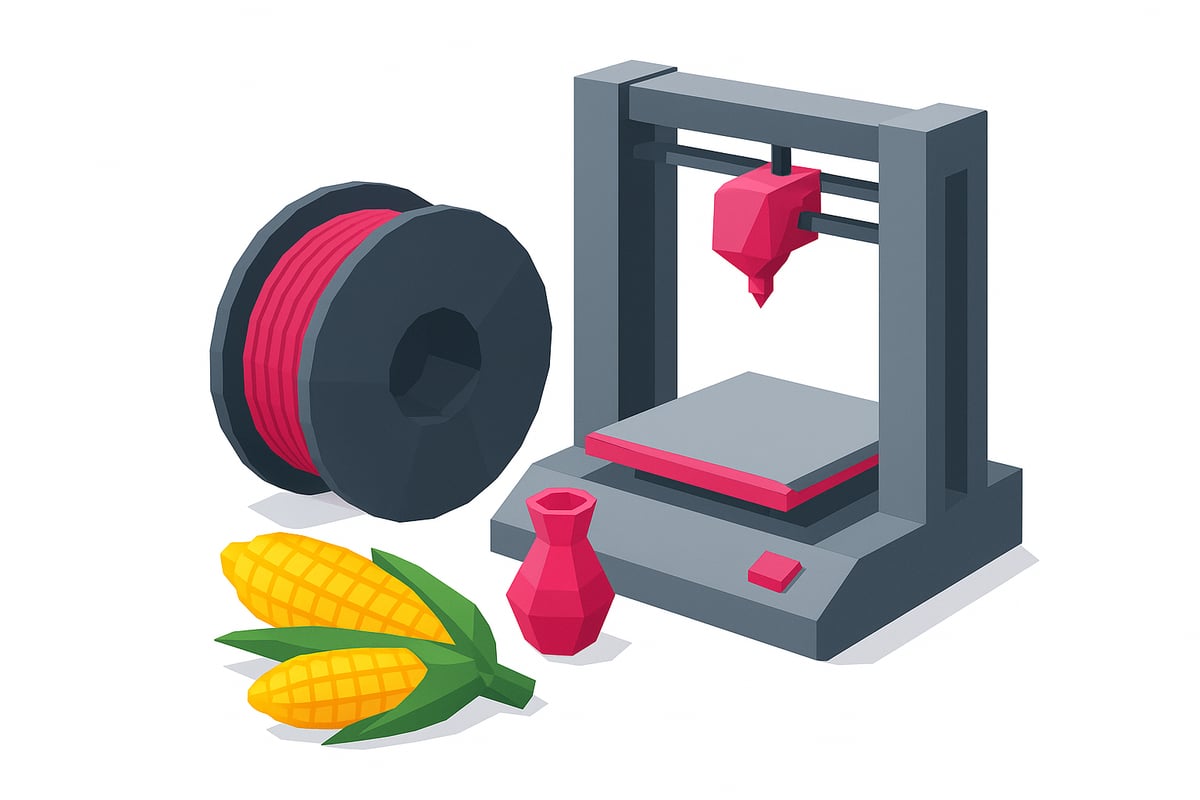
PLA, or polylactic acid, is the most popular 3D printing filament around — and for good reason. It's made from renewable resources like corn starch, sugarcane, or tapioca 🌽, making it one of the most eco-friendly options on the market. PLA is beginner-friendly, affordable, and far less toxic than traditional ABS, which is why it's the go-to choice for home users who want a safe and practical filament.
Did you know PLA is the most widely used filament in FDM 3D printing worldwide? According to 3Dnatives, it leads the industry thanks to its popularity among makers, businesses, and educational institutions alike. Key advantages include industrial biodegradability, minimal warping, and excellent edge definition — perfect for detailed, accurate prints.
Here's a quick comparison:
| Property | PLA | ABS |
|---|---|---|
| Source | Renewable | Petroleum-based |
| Toxicity | Low | High |
| Ease of Use | Very easy | Requires experience |
| Biodegradability | Yes (industrial) | No |
PLA is ideal for rapid prototyping, decorative parts, gadgets, toys, and educational projects. That said, it does have limitations — it doesn't handle heat well and isn't suited for parts that need to withstand mechanical stress or high temperatures.
Companies like Polymaker and BASF are pushing PLA printing even further, developing advanced PLA variants for new industrial and technical applications. If you want to dive deeper into this material, check out the Complete Guide to PLA Filament for 3D Printing, where you'll find everything you need to know about its properties and current uses.
PLA Pros and Cons in 2025
PLA printing remains the top choice for makers and professionals alike — but what exactly makes it so popular? Let's break down the key advantages and disadvantages so you can decide whether PLA filament is the right fit for your 2025 projects.
Advantages of PLA
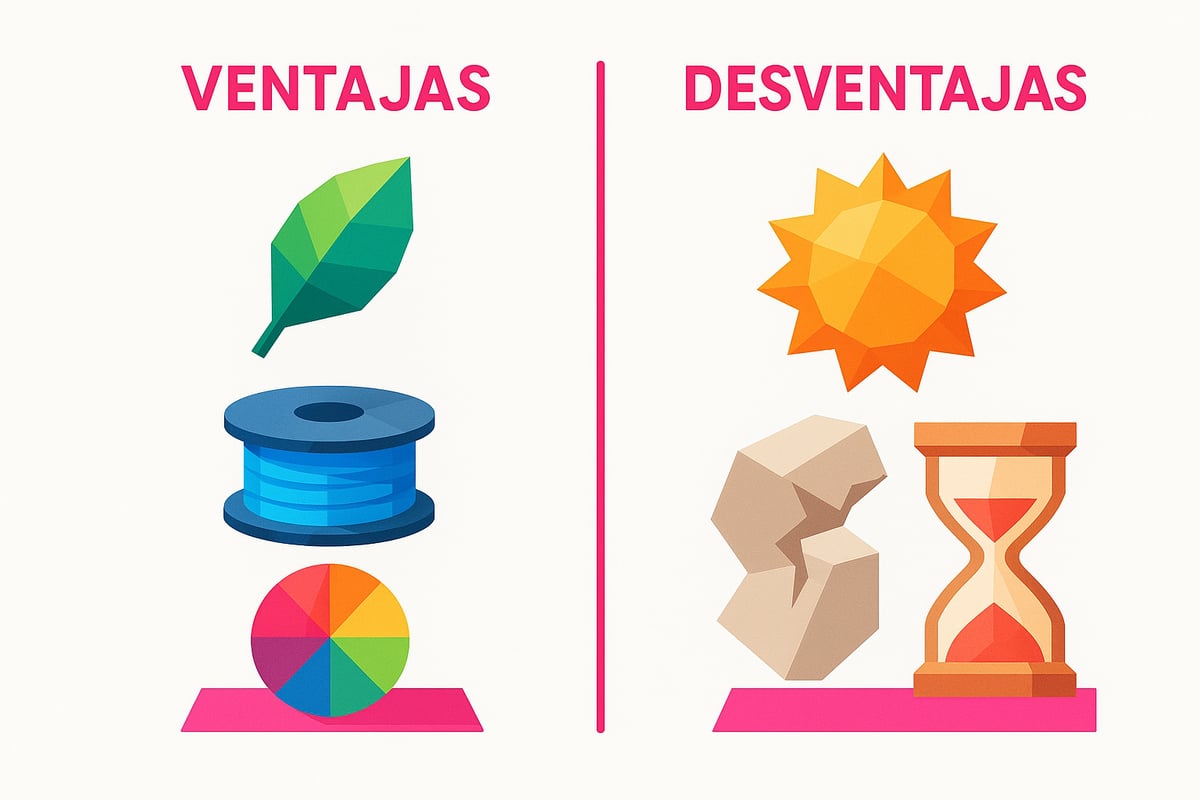
- ♻️ Sustainable: PLA is made from renewable resources and is compostable in industrial settings.
- Easy to use: No heated bed or enclosed printer required — perfect for beginners just getting started with PLA printing.
- Safe: Low fumes and particle emissions make it ideal for home use or classrooms.
- 🎨 Variety: Available in a huge range of colors and finishes, including specialty blends like wood PLA and matte PLA.
- Long shelf life: Store it properly (15–25°C, away from moisture) and it will last a long time.
- 🌱 Real example: PolyTerra™ PLA by Polymaker — eco-friendly and supports global reforestation efforts.
Looking for more PLA filament options? Browse our PLA filament collection for 3D printing and find the perfect match for your next project.
Disadvantages of PLA
- ☀️ Heat sensitivity: PLA warps easily above 60°C, so avoid using it for outdoor parts or anything exposed to direct sunlight.
- 💪 Limited strength: Less flexible and durable than other thermoplastics like ABS or PETG, which limits its use in functional parts.
- 🌎 Only partially biodegradable: While PLA is compostable, it requires industrial composting conditions. In nature, it can take decades to break down.
- 🔨 Brittleness: PLA can crack under impact, and prolonged UV exposure causes it to degrade.
- 🚗 Example: Not suitable for automotive parts that need to withstand heat or mechanical stress.
In short, PLA 3D printing stands out for being eco-friendly and beginner-friendly — but knowing its limitations is key to getting the best results.
Step-by-step guide: How to get perfect PLA prints every time
Ready to master PLA 3D printing? This practical, easy-to-follow guide will take your results to the next level. Follow each step and you'll notice the difference from your very first print. Let's go! 🎯
1. Choosing the right PLA filament
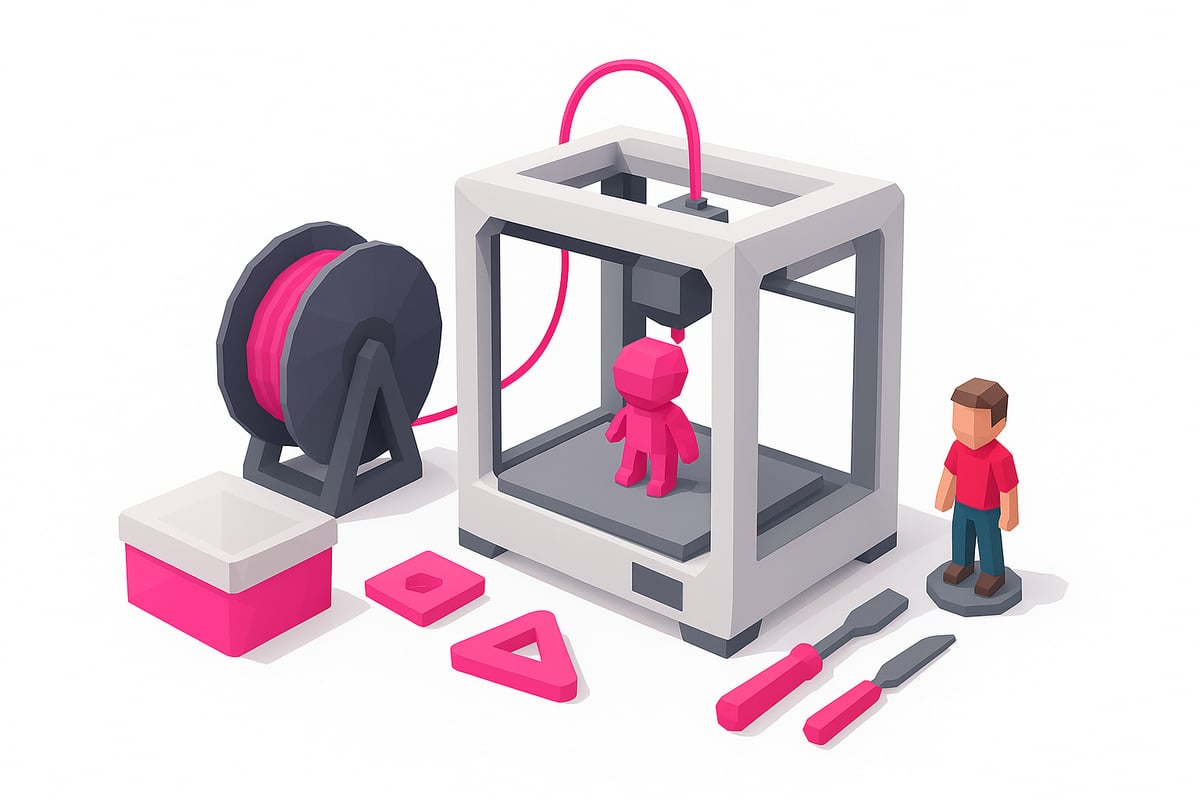
Start with a quality PLA filament from trusted brands like Smart Materials 3D or BASF. Consider specialty options — PLA+, wood-fill, or matte PLA — depending on your project needs. Always check compatibility with your printer and look for consistent color and diameter throughout the spool.
Not sure which filament to pick? Check out this complete guide to choosing 3D printer filament — it'll point you in the right direction!
2. Printer setup and bed leveling
Before printing, clean the nozzle and print bed thoroughly. Level the bed and calibrate the Z-offset so your first layer adheres perfectly. Use adhesion aids like hairspray, glue stick, or specialized print surface tape for reliable bed adhesion.
Reference: Ultimaker 3D printer bed leveling (source: official website).
3. Optimal print settings for PLA
Set your extrusion temperature between 190°C and 220°C, and print speed between 40 and 60 mm/s. If using a heated bed, set it to 40–60°C. Enable the part cooling fan to sharpen layer definition and improve print quality. These settings will give your PLA prints cleaner edges and better dimensional accuracy.
Recommended settings based on Prusa and Bambu Lab guidelines.
4. Post-processing and finishing
Sand down any imperfections lightly for a professional finish. You can paint your prints with acrylics or varnishes to protect them and add colour. Supports are easy to remove, especially when using soluble materials.
Real image: Miniature painted with Vallejo paints on PLA (source: Mr Resin).
5. Filament storage and preservation
Store your spools in airtight bags with silica gel to keep moisture out. Keep filament between 15 and 25°C and check the expiry date. Moisture causes bubbles and failures in PLA printing, so keep it dry for the best results.
Example: Filaments stored in dry boxes in prototyping labs.
PLA printing trends and updates for 2025
PLA 3D printing is evolving at a rapid pace in 2025. Every year brings new formulas, colours, and applications that transform the way we print and create. Imagine printing parts that are stronger, more eco-friendly, and more versatile than ever before — here are the biggest trends to watch this year.
Innovations in PLA materials
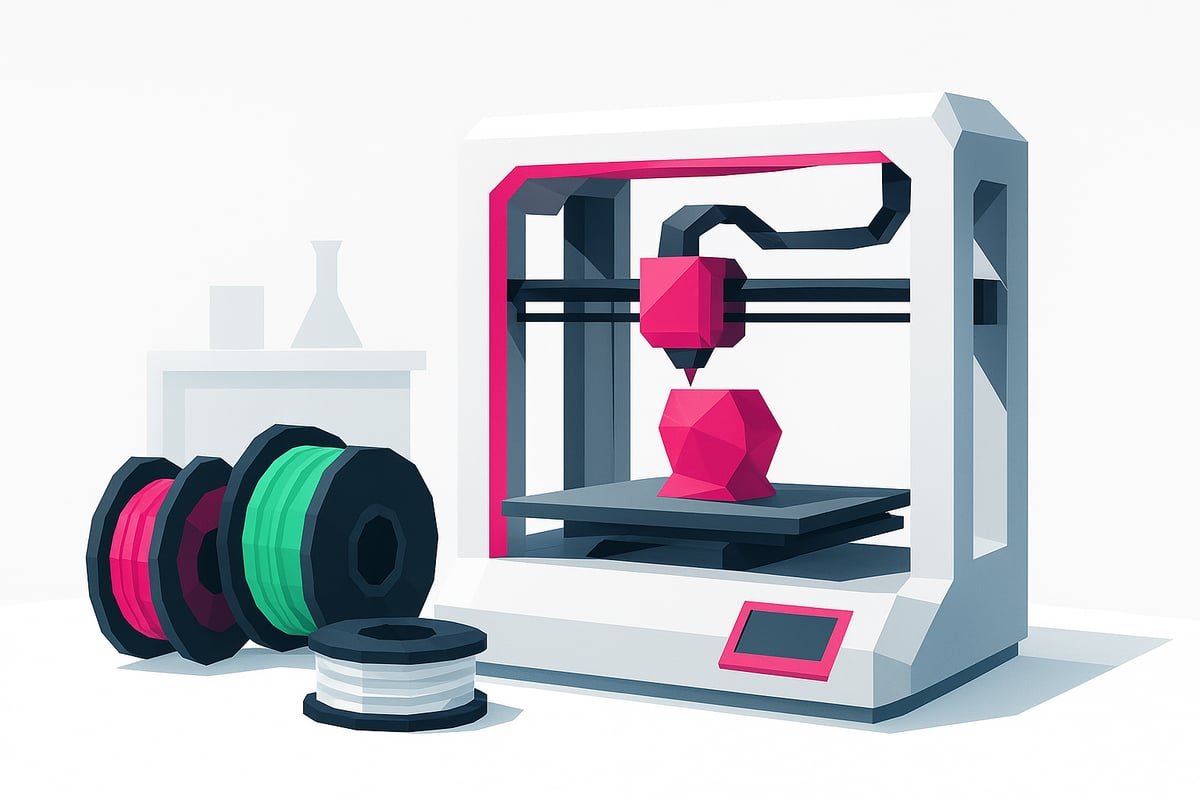
PLA keeps pushing boundaries! In 2025, carbon fibre and glass-filled PLA filaments are leading the way, delivering improved strength without sacrificing ease of use. We're also seeing recycled PLA and eco-additive versions gaining traction — ideal for anyone looking to make their PLA printing more sustainable.
Flexible and high-temperature PLA is another exciting development, opening the door to industrial-grade applications. BASF, for example, has launched new PLA ranges with enhanced durability, broadening the scope of what's possible. To learn more about how PLA printing and its materials work, check out What is filament 3D printing and how does it work.
Sustainability and the circular economy
Sustainability is at the forefront of PLA printing. This year, demand for recycled and compostable PLA is surging. Many companies are now collecting filament waste to recycle it and cut down on material waste.
There's also a growing push for more eco-friendly packaging and reducing the carbon footprint of production. Did you know that an estimated 30% of new PLA filaments in 2025 will come from recycled sources? It's a major step forward for the circular economy and the health of our planet. 🌎
New applications and emerging sectors
PLA printing is breaking into sectors we never imagined before. In education, it's used for prototypes and teaching models. In medicine, for temporary prosthetics and surgical guides. Architects and designers are turning to PLA for sustainable scale models, while multi-material printing is unlocking exciting new creative possibilities.
Thanks to PLA printing, producing eco-friendly architectural models or custom healthcare components has never been easier. The only limit is your imagination!
Expert tips to get the most out of your PLA prints
Want every PLA print to come out perfectly? Here are the tricks that experienced makers rely on to achieve professional results from the very first attempt. 🏆
- Run temperature tests with every new filament batch. This lets you fine-tune your PLA printing settings to the actual material and avoid unexpected issues.
- Print test models like the classic Benchy or calibration cubes. These help you dial in your settings before tackling larger projects.
- Keep your extruder and nozzle clean. A small clog can ruin even the most promising PLA print.
- Join online communities or our Telegram group to share questions, print profiles, and tips. Collaboration makes everyone better!
- Invest in post-processing tools: sanding kits, acrylic paints, and varnishes. They'll make your PLA prints look truly spectacular.
- Attend webinars and events to stay on top of the latest trends and innovations. Continuous learning makes all the difference.
- Want more details? Check out perfect prints from the very first try and take your PLA printing to the next level.
Remember, the key is to test, adjust, and share your experiences with fellow makers. That's how your PLA prints will consistently hit professional quality. Let's print! 🎨🤖
Now that you know how to get the most out of PLA and you're up to speed with the 2025 trends, why not take the next step and level up your projects with the best materials? At Mr Resin, you'll find an amazing selection of PLA filaments for every type of print — from prototypes to highly detailed miniatures. Whether you want to experiment with new colours, unique finishes, or simply need reliable quality, you'll find exactly what you're looking for right here.
Browse all the options and pick your next favourite filament: Shop all 3D Printing Filaments