

Want to learn how to print PETG and get professional results from your very first try? 🖨️✨ If you're looking to take your 3D printing projects to the next level in 2025, this guide is for you.
Here you'll find a complete step-by-step guide on how to print PETG — from choosing the right filament and dialing in your settings to troubleshooting the most common issues. With practical tips and expert tricks, you'll avoid costly mistakes and make the most of everything PETG has to offer.
We'll cover real-world examples, comparisons with other materials, and how to optimize every parameter for strong, flexible, and long-lasting prints. Get ready to explore innovative applications and pick up some exclusive insider tips along the way.
Keep reading and become a PETG 3D printing expert this year! 🚀
What is PETG and Why Should You Use It in 2025?
PETG (Polyethylene Terephthalate Glycol) is an incredibly versatile filament that has come a long way in recent years. Perfect for anyone looking to print PETG with strong, flexible results, this material stands out for its clarity and durability. It works equally well for functional and decorative parts, and it's a great fit for modern desktop 3D printers.
Among its standout properties, PETG offers greater impact resistance than PLA and warps far less than ABS. It's also non-toxic and produces beautiful glossy, translucent finishes. Check out this comparison table:
| Property | PETG | PLA | ABS |
|---|---|---|---|
| Strength | ⭐⭐⭐⭐⭐ | ⭐⭐⭐ | ⭐⭐⭐⭐ |
| Flexibility | ⭐⭐⭐⭐ | ⭐⭐ | ⭐⭐⭐ |
| Clarity | ⭐⭐⭐⭐⭐ | ⭐⭐ | ⭐ |
| Ease of Use | ⭐⭐⭐⭐ | ⭐⭐⭐⭐⭐ | ⭐⭐ |
By 2025, we're expecting a major surge in PETG use for prototypes, mechanical components, and electronics enclosures. Experts recommend it for both advanced makers and beginners alike, thanks to its ease of use and professional-quality results. If you want to explore the top-rated options available, check out the curated selection of PETG Filaments for 3D Printing and get ready to level up your projects.
Getting Ready to Print PETG: Tools, Printers, and Filaments
Before you start printing PETG and chasing those pro-level results, it's essential to set up your workspace properly. Choose a compatible 3D printer — options like the Prusa MK4, Bambu Lab P1S, or Creality K1 all deliver excellent temperature control and the stability this material demands. Filament quality makes a huge difference too, as trusted brands consistently deliver better surface finishes and fewer failed prints. If you're unsure which filament to go with, check out the guide How to Choose the Right Filament for Your 3D Printer to make the right call every time.
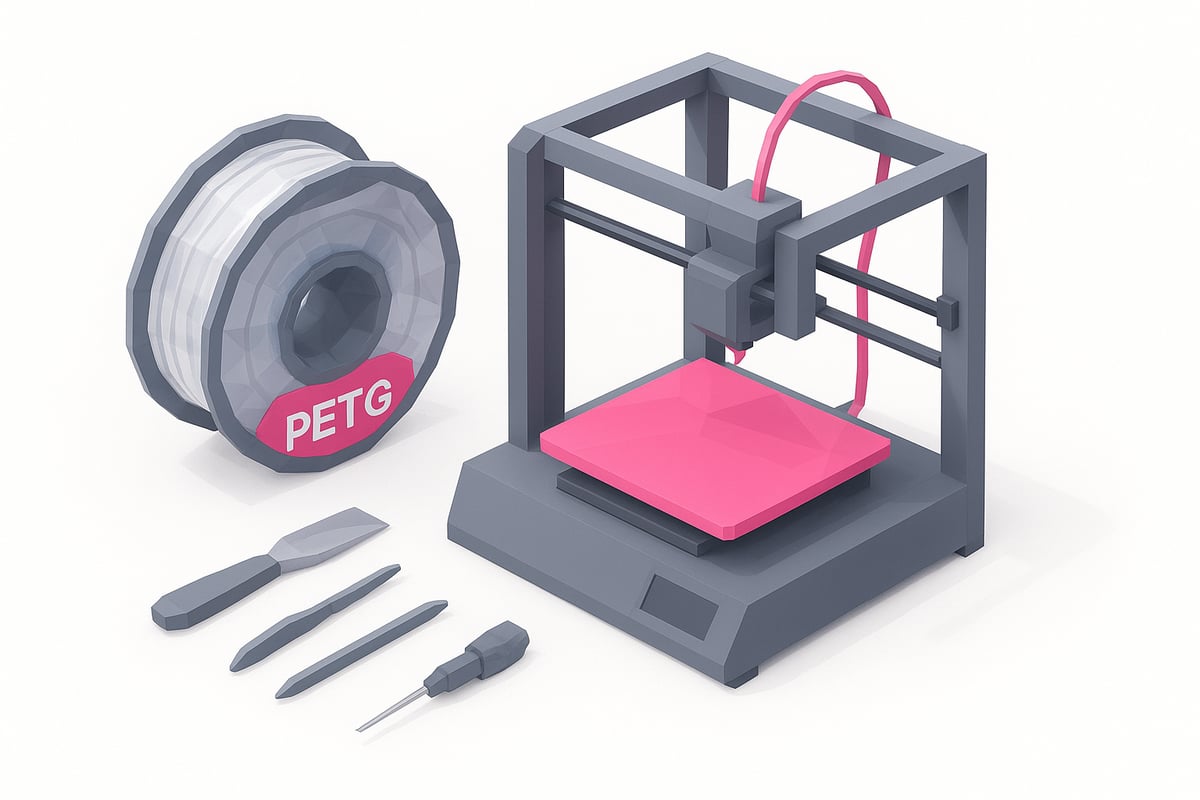
Make sure to store your filament somewhere dry and use a filament dryer if you live in a humid climate — PETG absorbs moisture easily and that can ruin a print. Here are some essential tools to have on hand before printing PETG:
- Spatula for removing parts without damaging them 🛠️
- Precision tweezers for removing filament strings
- Nozzle cleaning tool to prevent clogs
- Soft brush for cleaning the print bed
Bed preparation is critical. Clean it thoroughly and use dedicated adhesives or Kapton tape to improve adhesion. Always level your bed before printing, whether manually or with an auto-leveling system. Make sure you're working in a well-ventilated area and wear a mask if needed — safety first throughout the whole process.
Comparing finishes can help you choose the right filament:
| Filament Type | Surface Finish | Strength | Ease of Printing |
|---|---|---|---|
| Premium | Glossy, smooth | High | Very easy |
| Budget | Matte, rough | Medium | Can be problematic |
Properly preparing your workspace and materials is the foundation for printing PETG successfully — giving you strong, great-looking parts from the very first print. It's all in the details!
Ideal PETG Print Settings for 2025: Key Parameters and Adjustments
Ready to get pro-level results from your very first PETG print? Let's dial in a winning configuration! Getting your settings right is essential for strong, clean parts with no failures. Here's a step-by-step breakdown with real-world examples and community-tested tips.
Nozzle and Bed Temperature: Your First Step to Success
The most important setting when printing PETG is temperature. You'll want to work between 220°C and 250°C depending on your filament brand and printer. For example, premium filaments typically print best at 235°C, while others perform well at 245°C.
A heated bed is also essential. Keep it between 70°C and 90°C for good first-layer adhesion and to prevent warping. If your print starts lifting, try bumping up the bed temperature slightly or applying a dedicated adhesive.
Here's a quick reference for recommended settings:
| Parameter | Recommended Range |
|---|---|
| Nozzle Temperature | 220°C – 250°C |
| Bed Temperature | 70°C – 90°C |
Keep in mind that every printer behaves differently, so run some test prints and fine-tune based on your results.
Print Speed, Retraction and Cooling Fan: Balancing Quality and Time
Print speed for PETG should generally fall between 40 and 60 mm/s. If your model has a lot of fine detail, slow it down for a better surface finish. For larger, simpler parts, you can push the speed a little higher.
Retraction is your best weapon against stringing. Start with 4.5 mm at 40 mm/s and adjust based on your extruder setup. If you're still seeing strings, try dropping the nozzle temperature by a few degrees and test again.
The part cooling fan should run at 50% after the first layers, especially if you're aiming for transparency or smooth surface finishes. If you notice poor bed adhesion, reduce the fan speed during those initial layers.
Nozzle size, flow rate, and a real-world example: the perfect PETG Benchy
The standard nozzle diameter for printing PETG is 0.4 mm, which works great for most models. If you're printing large parts, a 0.6 mm nozzle can save time and add strength.
Flow rate is another critical setting. Keep it at 100% as your baseline — if you see over-extrusion on your layers, drop it to 98%. If you notice gaps or under-extrusion, nudge it up slightly.
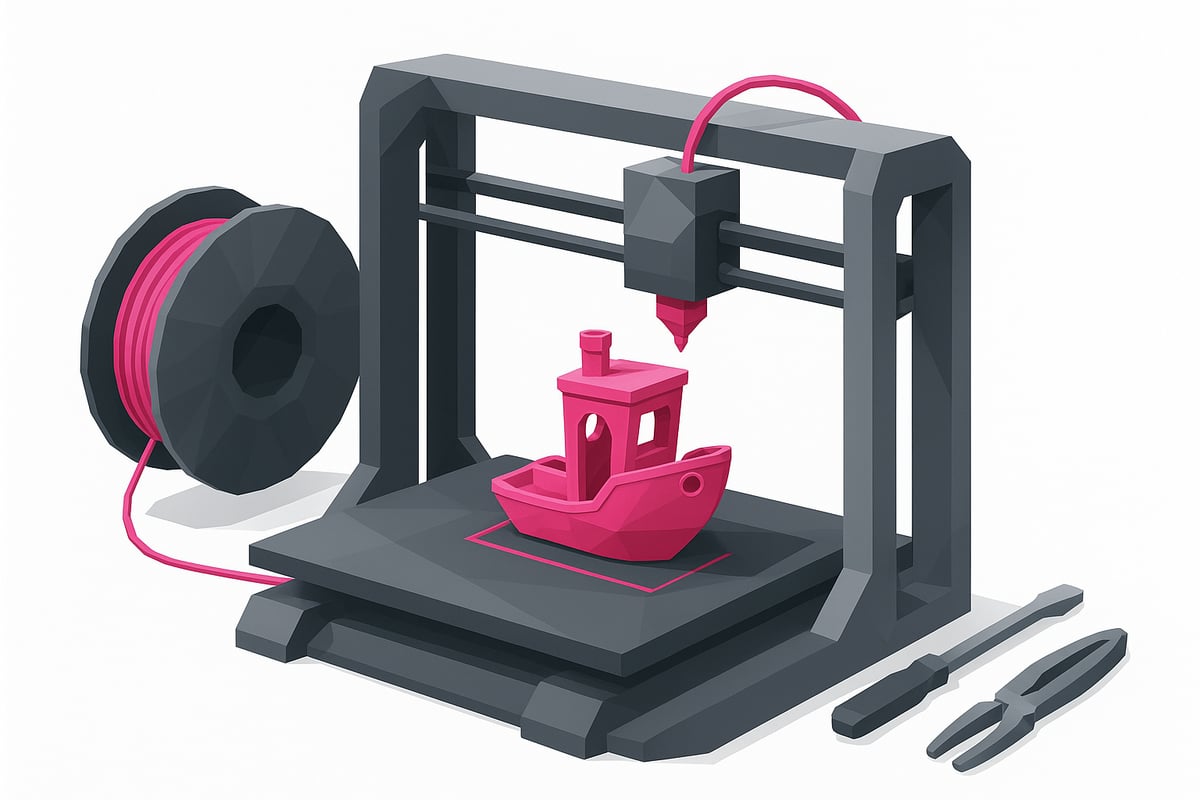
A real example: to print a display-quality PETG Benchy, try 235°C nozzle temperature, 80°C bed, 50 mm/s print speed, 4.5 mm retraction, and 60% fan after the base layers. The results will blow you away!
Pro tips and extra resources for flawless PETG prints
The key to printing PETG without headaches is patience and fine-tuning. Use pre-built profiles in your slicer and run small test prints before committing to large parts.
Want more tricks and real-world examples? Don't miss Perfect Prints From the First Try, packed with advanced tips and fixes for the most common problems.
With these settings and tips, printing PETG in 2025 will be as easy as making a cup of coffee. Give it a go — you'll be amazed at the difference!
Common PETG printing problems and how to fix them
Ever printed PETG only to end up with stringing, poor bed adhesion, or a clogged nozzle? 😅 Don't worry — you're definitely not alone! Let's walk through the most common issues and exactly how to solve them so your prints come out perfect.
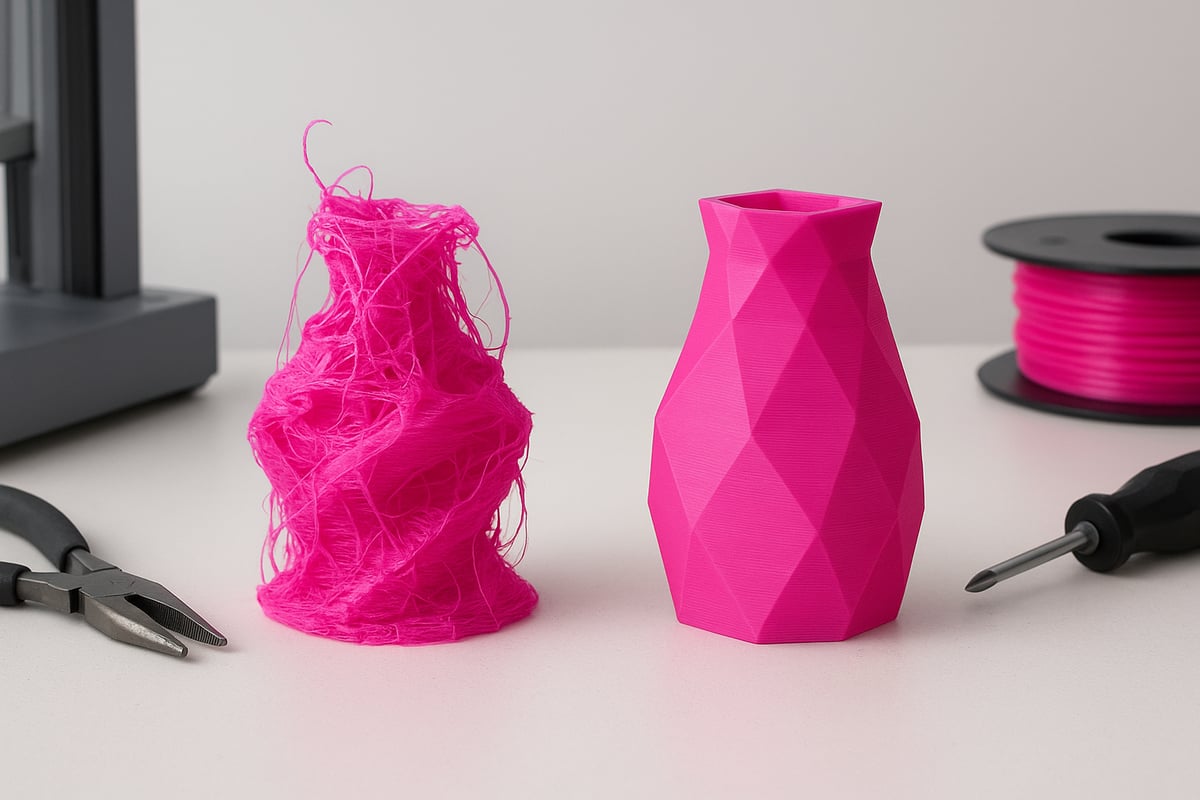
Here's a quick reference table covering the most frequent issues and their solutions:
| Problem | Main cause | Quick fix |
|---|---|---|
| Stringing | Temperature too high, retraction too low | Lower temperature and adjust retraction |
| Poor bed adhesion | Dirty or cold print bed | Clean the bed thoroughly and raise bed temperature |
| Nozzle clog | Debris or low-quality filament | Clean the nozzle and switch to premium filament |
| Warping and deformation | Bed temperature too low, drafts | Raise bed temperature and enclose the printer |
| Blobs and bubbles | Wet/moist filament | Dry your filament before printing |
For example, I once printed a PETG electronics enclosure that came out covered in strings. I adjusted the retraction and dropped the temperature slightly — and the very next print came out flawless! Surveys show that over 60% of users run into these issues on their first PETG prints, but 90% manage to fix them by applying tips like these.
If you're just getting started, I'd recommend brushing up on the basics at What Is FDM 3D Printing and How Does It Work — it'll help you understand why these problems happen and how to prevent them.
With these tips in your toolkit, printing PETG will be a whole lot easier and more enjoyable! 😃
PETG 3D Printing Applications and Trends for 2025
Printing with PETG has become the go-to choice for creating functional prototypes, mechanical parts, and all kinds of everyday objects. This material stands out for its strength and flexibility, making it ideal for both hobbyists and professionals alike.
One of the most popular uses is printing electronic enclosures — the parts come out clean, durable, and with a stunning translucent finish. But printing with PETG goes far beyond DIY projects.
In industry, PETG is already making waves in sectors like automotive, medical, robotics, and education. Its ability to withstand mechanical and chemical stress positions it as a top-tier filament for demanding applications.
So what are the trends for 2025? Recycled PETG is gaining serious momentum, alongside blends with special additives that improve heat resistance and post-processing ease. According to PETG Filament Market Growth Projections, steady market growth is expected, driven by demand for sustainable and versatile solutions.
On top of that, printing with PETG offers clear advantages over other materials: it's easier to work with, has excellent chemical resistance, and pairs perfectly with the latest smart 3D printers. The future looks bright, with ongoing innovations in filament technology and ever-growing compatibility across platforms.
Conclusion:
You now have everything you need to print with PETG and achieve professional-level results in 2025! Remember, every setting matters — from temperature to the type of filament you choose.
We invite you to visit Mr Resin, where you'll find filaments, resins, and accessories with real product photos so you can compare and pick the best option for your projects.
Want to stay in the loop? Join our Telegram group at https://t.me/MrResin3D and subscribe to our Newsletter. Get discounts, exclusive coupons, and enter community giveaways.
To learn more about trends and market growth for materials like PETG, check out the 3D Printing Plastics Market Analysis.
Don't get left behind! ✨ Happy Printing! 🚀
Now that you've got a solid grasp on PETG 3D printing and all the tips to get pro-level results, the next step is choosing the right filament for your projects. Trust me — the difference between an average print and an outstanding one comes down to material quality. At Mr Resin you'll find a wide range of PETG filaments to suit every need, backed by expert advice just a click away. Ready to start experimenting and see what you're capable of? Browse all 3D Printing Filaments and let's make something amazing!