

🚀 3D printing keeps growing at an incredible pace in 2025, and choosing the right 3D printer filament types can mean the difference between a stunning result and a disappointing one. 🌈
Today, there's an impressive variety of materials available, each with unique advantages, disadvantages, and applications. Knowing which one to choose for your project is essential for producing strong, detailed, and functional parts.
In this guide, you'll discover the key characteristics of each filament, real-world examples, and practical tips to help you make the best decision. Ready to take your prints to the next level? Keep reading and become an expert! 💡
What Is 3D Printer Filament and How Does It Affect Your Prints?
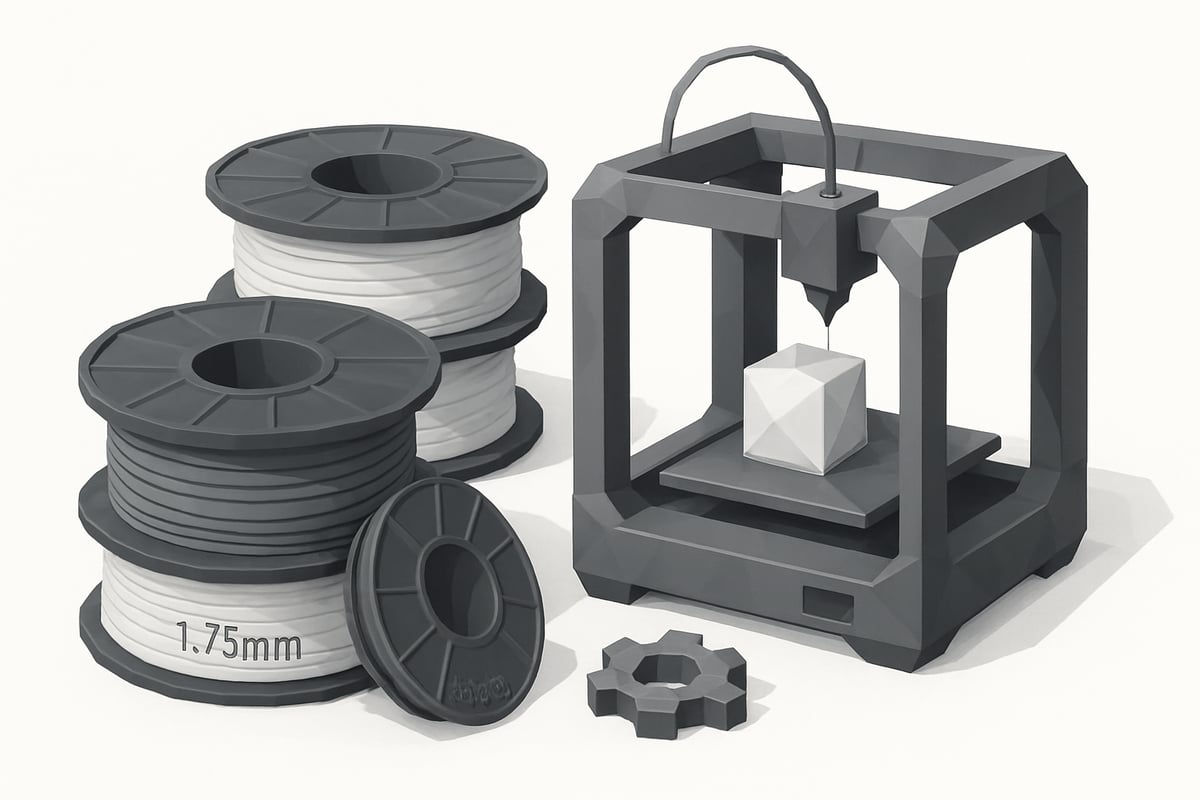
Did you know that 3D printer filament is like the "magic thread" of 3D printing? 🎯 It's a thermoplastic material that comes on a spool, used primarily in FDM/FFF printers, which melts and is deposited layer by layer to create three-dimensional objects.
Your choice of filament directly affects the quality, strength, and appearance of your prints. Low-quality filament can cause clogs, uneven layers, or even brittle parts. In fact, 80% of 3D printing problems are related to choosing the wrong material. 😬
The most common standard diameters are 1.75mm and 2.85mm, and it's essential to make sure your printer is compatible. Beginners typically go for easy-to-use filaments like PLA, while professionals look for advanced options for technical applications.
Depending on the filament type you use, you can produce anything from simple prototypes to functional parts and detailed miniatures. If you want to dive deeper into the process, I recommend checking out How to Print with 3D Filament to better understand how each material influences your final results. 🚀
3D Printer Filament Types: Complete List and Examples 2025
Ready to discover the most popular 3D printer filament types and their uses in 2025? 😎 If you want amazing results from your prints, understanding the differences between each material is key. Here's a practical, straightforward, and up-to-date guide to 3D filament types, so you always choose the right one for your project.
1. PLA (Polylactic Acid)
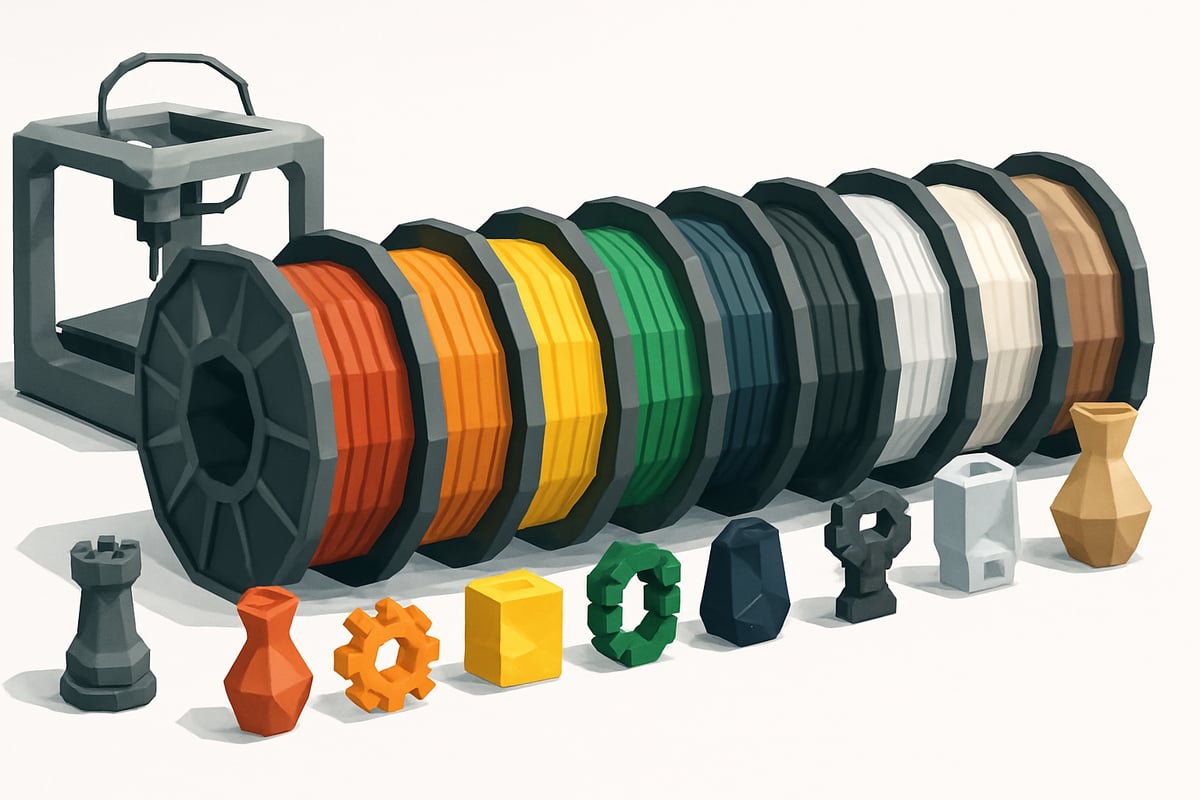
PLA is the go-to filament type for beginners. It's biodegradable, easy to print with, and comes in a huge range of colors and finishes. No advanced printer or prior experience required.
- Pros: non-toxic, minimal warping, great for schools and makers.
- Cons: low heat resistance.
It's used for prototypes, toys, and decorative parts. If you want to browse your options, check out this selection of PLA filaments for 3D printing. Example: educational models and rapid prototypes.
2. ABS (Acrylonitrile Butadiene Styrene)
ABS is one of the most durable 3D printer filament types available. Perfect for functional parts, it handles impact and high temperatures well. You'll need a heated bed, good ventilation, and some experience to get the best results.
- Pros: high mechanical strength.
- Cons: emits fumes, prone to warping.
Ideal for housings, gears, and automotive parts. Example: parts exposed to stress or heat.
3. PETG (Polyethylene Terephthalate Glycol)
PETG combines the best of PLA and ABS. It's easy to print, water-resistant, and chemical-resistant. Its clarity makes it a popular choice for containers and visible components.
- Pros: great bed adhesion, durability.
- Cons: can stick to the nozzle.
Widely used for mechanical parts, containers, and enclosures. Example: moisture-resistant boxes.
4. Nylon (Polyamide)
Nylon is a flexible, strong, and wear-resistant 3D printing filament. It absorbs moisture, so proper storage is essential.
- Pros: high strength, smooth surface finish.
- Cons: challenging to print, requires high temperatures.
Perfect for gears, hinges, and moving parts. Example: components subject to friction.
5. Flexible Filament (TPU/TPE)
TPU and TPE let you print elastic, flexible parts. If you need shock absorption or soft components, this is your material.
- Pros: elasticity, chemical resistance.
- Cons: slow print speeds, requires fine-tuning.
Used for cases, covers, and shoe soles. Example: device protective cases.
6. Carbon Fiber (blended with PLA, PETG, Nylon)
Need maximum rigidity and lightweight performance? Carbon fiber reinforced 3D printing filaments are top-tier. Hardened nozzles are required.
- Pros: high structural strength.
- Cons: abrasive, higher cost.
Perfect for drones, robotics, and automotive applications. Example: lightweight yet strong brackets.
7. HIPS (High Impact Polystyrene)
HIPS is well known as a support material. It dissolves in limonene and is compatible with ABS.
- Pros: easy to remove, good surface finish.
- Cons: requires a dual extruder.
Used for supports on complex prints and scale models. Example: temporary internal structures.
8. PVA (Polyvinyl Alcohol)
PVA is a water-soluble filament, ideal for supports on dual extruder printers.
- Pros: biodegradable, easy to remove.
- Cons: highly sensitive to moisture.
Perfect for parts with complex geometries. Example: internal supports that dissolve when washed.
9. PC (Polycarbonate)
Polycarbonate offers high thermal and mechanical resistance. It's one of the toughest 3D printing filament types available, but demands a capable printer.
- Pros: transparency, exceptional hardness.
- Cons: difficult to print, warping risk.
Ideal for functional prototypes and industrial use. Example: electrical components and heavy-duty enclosures.
10. Specialty Filaments (wood, metal, ceramic)
Filaments with wood, metal, or ceramic particles are available, achieving unique finishes and realistic textures.
- Pros: distinctive appearance and texture.
- Cons: nozzle wear, higher price.
Used for miniatures, art, and decoration. Example: figures with a wood or bronze effect.
Quick comparison chart of 3D printing filament types:
| Filament | Ease of Use | Strength | Main Application |
|---|---|---|---|
| PLA | ⭐⭐⭐⭐⭐ | ⭐⭐ | Prototypes, toys |
| ABS | ⭐⭐⭐ | ⭐⭐⭐⭐ | Functional parts |
| PETG | ⭐⭐⭐⭐ | ⭐⭐⭐⭐ | Containers, mechanical parts |
| Nylon | ⭐⭐ | ⭐⭐⭐⭐⭐ | Gears, moving parts |
| Flexible (TPU/TPE) | ⭐⭐ | ⭐⭐⭐ | Cases, dampeners |
| Carbon Fibre | ⭐⭐ | ⭐⭐⭐⭐⭐ | Robotics, drones |
| HIPS | ⭐⭐⭐ | ⭐⭐ | Support structures |
| PVA | ⭐⭐ | ⭐ | Soluble supports |
| PC | ⭐ | ⭐⭐⭐⭐⭐ | Industrial, enclosures |
| Wood/Metal/Ceramic | ⭐⭐⭐ | ⭐⭐ | Art, decoration |
Have you figured out which 3D filament type is right for your next project? Explore, experiment, and share your experience in our Telegram group — or subscribe to our Newsletter so you never miss a thing.
How to choose the right 3D filament for your project
Choosing the right material can make or break your prints. The wide range of 3D filament types lets you tailor every project to your exact needs — but where do you start? 🤔
| Factor | Consideration |
|---|---|
| Printer type | Compatibility with PLA, ABS, PETG, etc. |
| Extrusion temperature | Make sure your printer supports the required temperature range |
| Strength and flexibility | Do you need rigid parts, flexible parts, or both? |
| End use | Quick prototype, functional part, or decorative piece |
| Budget | Weigh up costs and local availability |
For example, if you're looking to produce quick, budget-friendly prototypes, PLA is usually the go-to choice. If you need parts that are water-resistant or wear-resistant, PETG or Nylon could be ideal. Always check your nozzle compatibility and your printer's maximum temperature rating.
Just getting started? Beginners tend to begin with PLA thanks to how easy it is to work with, while more experienced makers reach for technical materials depending on the challenge at hand. Check out what other makers are saying and compare their results.
If you'd like to dive even deeper into choosing the ideal material across the different 3D filament types for your project, don't miss this 3D Filament Choosing Guide. It'll help you make the best decision and avoid the most common mistakes! 💡
Tips for storing and handling 3D filaments
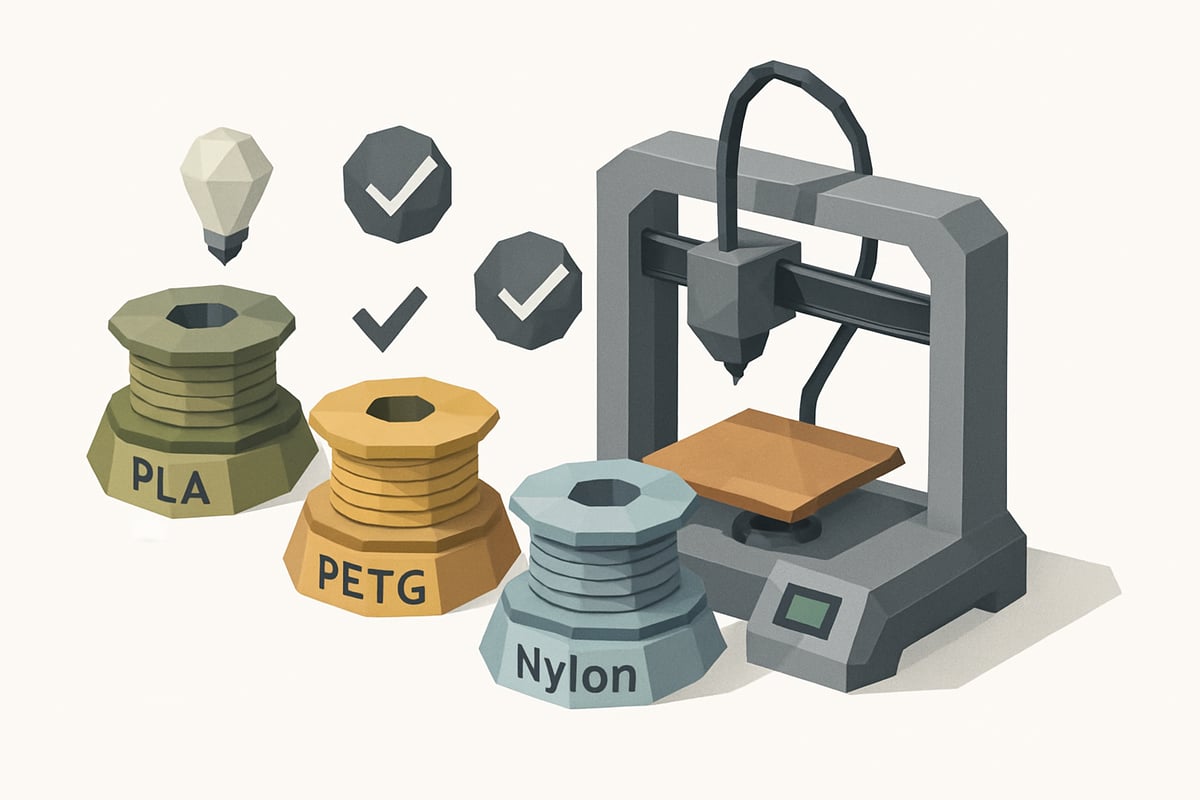
Want to avoid problems with your prints? 😎 Proper storage is essential to getting the most out of every 3D filament type and ensuring consistently high-quality results.
Follow these essential tips:
- Store filaments in airtight bags with desiccants. 💧
- Keep them away from direct light and moisture.
- Label and organize your spools by material type and color for easy access.
- Before printing, check that the filament has no bubbles or brittle sections.
- If you use nylon, keep in mind it absorbs moisture quickly and can warp if not stored properly.
Want to get even more out of your materials? Check out more tips for budget filaments and take your results to the next level.
Join our Telegram group for exclusive discounts and subscribe to our Newsletter! Never miss deals, coupons, and the latest from the 3D printing world. 😉
Where to buy quality 3D filaments with expert support
Looking for the best types of 3D filaments and expert advice? 🧑🔬 Mr Resin is your specialist 3D printing store, with an amazing catalog of PLA, PLA+, and PETG filaments, plus resins and post-processing accessories.
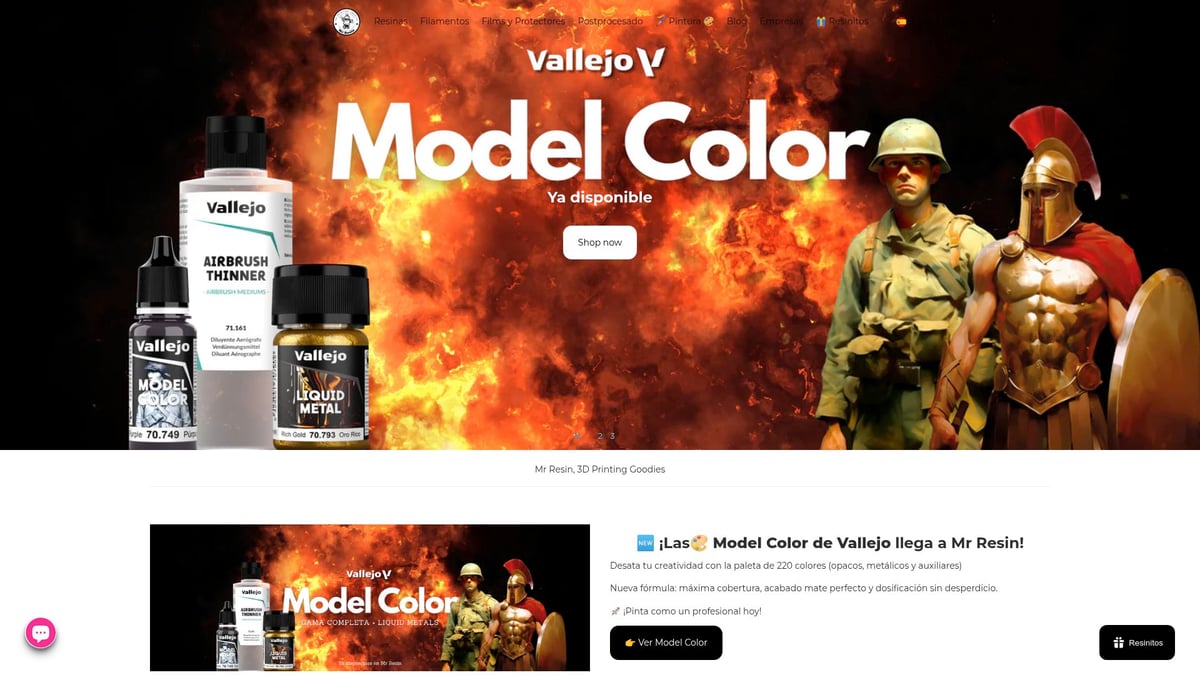
Choose from a wide range of colors and finishes for any project, all backed by hands-on technical support and practical content on their blog. Prices are highly competitive too, with exclusive deals like Anycubic resins from €17.99.
Whether you're a maker, professional, business, or educational institution, you'll find reliable materials and the support you need. Happy customers regularly highlight how Mr Resin's personalized advice helped them level up the quality of their prints.
Join the community on Telegram for exclusive discounts and deals, and don't forget to subscribe to the Newsletter to stay up to date with new arrivals, coupons, and exclusive events. Take your 3D printing experience to the next level! 🚀
Now that you know everything about the different types of 3D filaments and how they impact your projects, why not take the next step and explore what's out there for you? Sometimes seeing the full range of available filaments gives you a clearer picture — and even sparks new ideas for your next print. At Mr Resin we have an incredibly complete selection, and if you ever have questions, there's always someone ready to help. So if you want to find the perfect filament for your next print, I invite you to Browse all 3D Printing Filaments. Let's create something amazing together!