

Imagine being able to create anything you dream of, right from your own home. 🏠✨ With today's technology, discovering what a 3D printer can do is like opening the door to an entire universe of creativity and possibility.
In this 2025 guide, we'll show you how 3D printing is revolutionizing industries and households alike. You'll learn what a 3D printer is used for, with real applications in medicine, education, rapid prototyping, and everyday life.
Want to know how to get started, see real-world examples, and find out which materials work best? 🚀 We've put together everything you need to begin your 3D printing journey. Keep reading — you won't believe what's possible! 😍
What Is a 3D Printer and How Does It Work?
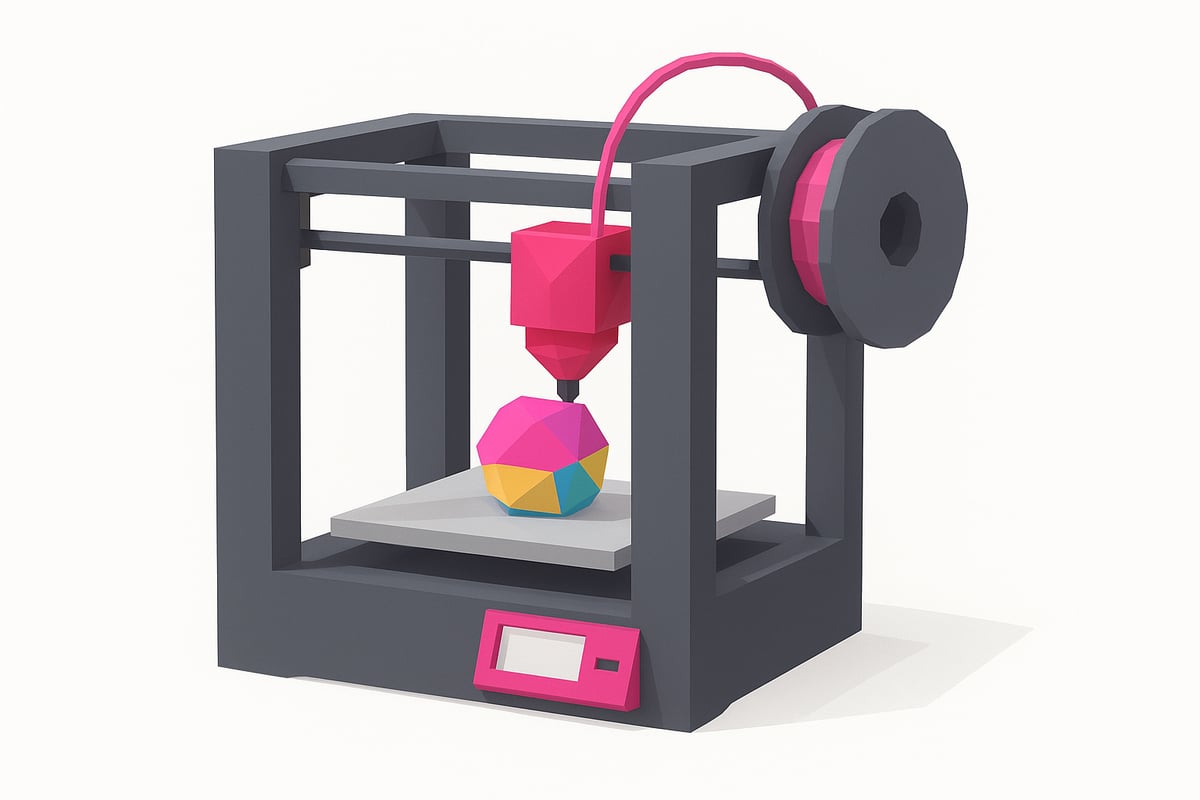
Ever wondered what a 3D printer is actually used for? 🤔 It's a machine that creates physical objects from digital designs, building them up layer by layer — kind of like stacking tiers on a cake.
Unlike traditional 2D printing, which just puts ink on paper, 3D printing uses plastics, resins, or specialty powders to bring real figures, parts, and prototypes to life. The process is called additive manufacturing, and it can produce everything from toys to industrial components — all starting from a CAD file.
There are several main technologies:
| Technology | Materials | Common Use |
|---|---|---|
| FDM | Plastic filaments (PLA, ABS) | Home use, prototyping |
| SLA/DLP | Photosensitive resins | Miniatures, jewelry |
| SLS | Nylon powder | Engineering, functional parts |
The core components of a 3D printer include:
- Extruder (or resin vat)
- Heated print bed
- Touchscreen display
- SD card or USB reader
Want a quick example of how it works? Simply choose a design, load it into your printer, and watch your object take shape — one layer at a time. In 2024, home and professional 3D printing saw significant growth, with more households and businesses than ever discovering what a 3D printer can do.
To learn more about the different materials available, check out FDM Printer Filaments and find the right one for your projects.
Real-World Uses and Applications of 3D Printing
3D printing is changing the way we create and solve problems across just about every field. If you've ever wondered what a 3D printer is used for, here are some of its most impressive real-world applications.
Manufacturing and Rapid Prototyping
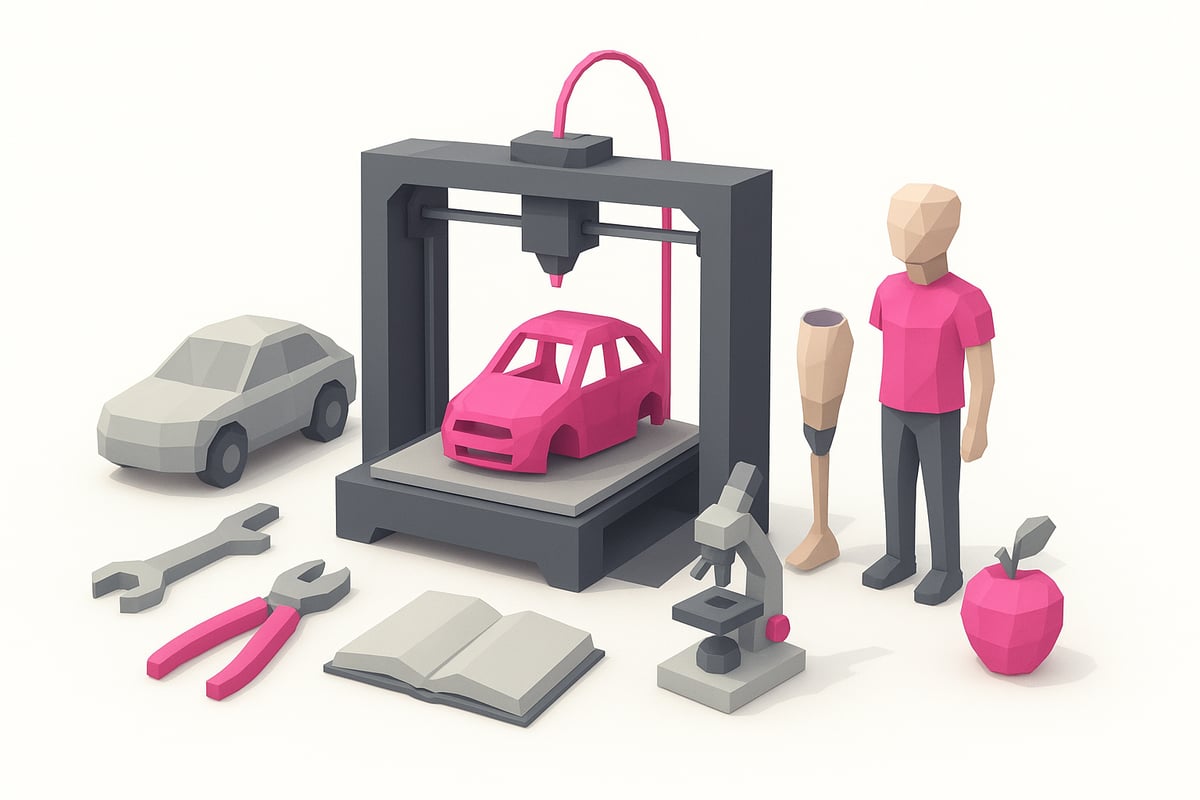
🏭 Companies use 3D printing to produce functional prototypes in just a matter of hours. When it comes to what a 3D printer is used for in industry, the answer is clear: faster product development and dramatically lower costs. In the automotive sector, for example, custom parts can be printed and tested long before committing to full-scale production.
Compared to traditional manufacturing methods, 3D printing can cut prototyping costs by up to 70%. Ideas get validated and refined quickly, giving businesses a real competitive edge and fueling innovation at every stage.
Medicine and Healthcare
🦾 3D printing has revolutionized medicine by enabling the creation of custom prosthetics and anatomical models for complex surgeries. If you're wondering what a 3D printer is used for in healthcare, picture a hand prosthetic tailored to a child's anatomy, or custom-fitted splints designed for a more comfortable recovery.
Beyond that, the production of orthopedic braces and educational models is improving accessibility and personalization in medical care. You can read more about these advances at Medical Applications of 3D Printing, where real-world cases and their benefits are explored in depth.
Home, Education, and Creativity
🏠🎨 At home and in schools, 3D printing makes it possible to create replacement parts, toys, mounts, and fully customized objects. In education, it drives STEM learning by enabling students to print scale models, collectible figures, and hands-on teaching tools.
School adoption has grown by 35% annually, fueling creativity and practical, project-based learning. This technology is becoming accessible to everyone — from hobbyists and students to makers of all skill levels.
Types of 3D Printers and Available Materials
Curious about what a 3D printer can actually do? It all starts with understanding the different types of printers and materials out there. This is essential knowledge for choosing the right setup for your project. 🛠️

The Main Types of 3D Printers
There are three primary technologies to choose from:
- FDM: Uses plastic filament such as PLA, ABS, or PETG. Great for functional parts and prototypes.
- SLA/DLP: Uses photosensitive resins to achieve fine detail — ideal for miniatures and jewelry.
- SLS: Works with nylon powder, allowing the creation of strong, complex parts.
Each technology offers distinct advantages depending on what you need your 3D printer to do day to day.
Most Common Materials and Their Uses
The most widely used materials include:
- PLA: Biodegradable and easy to print with — a perfect starting point for beginners.
- ABS: Durable and heat-resistant, built to last.
- Resins: Available in standard, flexible, and high-resolution formulas. For examples and a full range of options, browse the 3D printing resin types to find your match.
These materials are used for decorative pieces, prototypes, scale models, and even custom tools.
How to Choose the Right Printer and Material
Before making a decision, consider:
- Compatibility with your project and software
- Your budget and experience level
- Ease of maintenance and available technical support
Choosing the right combination will make it much easier to unlock what a 3D printer can do for your creative workflow.
The Pros and Challenges of 3D Printing in 2025
3D printing continues to impress in 2025 — and if you've ever wondered what a 3D printer is actually used for, the short answer is: almost anything. Today, anyone can produce one-of-a-kind parts from home or completely transform the way they run a business.
Key advantages include:
- Full customization 🛠️: Create custom objects, from prosthetics to collectible figures.
- Speed and savings ⏱️💸: Prototypes and replacement parts are made in hours. Printing a small object takes between 2 and 6 hours on average.
- Accessibility 🏡: It's no longer just for large companies — makers, students, and families are all getting in on it.
Need an example? Imagine being able to print that impossible-to-find replacement part for your coffee maker. All you need is the design and your printer!
But it's not all smooth sailing. There are real challenges: the learning curve can be steep, post-processing (sanding, painting, curing) takes patience, and quality depends on your materials and calibration. If you want to improve your finish, check out this Paint and Post-Processing Guide to achieve professional results.
Looking ahead to 2025, we'll see more automation, advanced materials, and AI integration — making the process even easier and pushing the boundaries of what's possible.
Tips for getting started with 3D printing
Wondering what a 3D printer can do for you and how to get started? Here's a straightforward guide to taking your first steps and avoiding common frustrations.
1. Choose the right printer
Think about what kind of objects you want to create. If you're a beginner, an FDM printer is ideal — easy to use and budget-friendly.
2. Install slicing and modeling software
Programs like Ultimaker Cura or PrusaSlicer convert your designs into instructions for the printer. You can create your own models or download ready-made files.
3. Find free and paid 3D files
Platforms like Thingiverse, MyMiniFactory, and Cults3D offer thousands of printable models. Look for simple beginner projects like phone stands or keychains.
4. Recommended projects for beginners
60% of home users start with practical, easy projects — like household replacement parts, organizers, or decorative figures. You'll see useful results fast!
5. Post-processing: the finishing touch
Lightly sand your prints, then paint or glue as needed. This step improves both the finish and durability of your parts.
6. Safety and maintenance
Never leave your printer running unattended. Clean the nozzle and lubricate the rails regularly. Always use compatible materials.
7. Learn and connect
Make the most of YouTube channels, blogs, and online courses to troubleshoot issues and level up your skills. The 3D printing community is incredibly active and always ready to help.
Most importantly — experiment and have fun! You'll soon discover just how much a 3D printer can do in your everyday life, letting you create unique and functional objects.
Real-world examples and 3D printing success stories
Wondering what a 3D printer can actually do in the real world? Success stories prove it every day. Users have printed replacement parts for home appliances, saving themselves from having to buy new ones. In the medical field, families have created custom prosthetics for children — changing lives with accessible, fast solutions.
Automotive companies and startups have cut prototype development time from weeks to days, saving up to 70% in manufacturing costs. If you want to see more examples of how businesses are streamlining their workflows, check out these resources and tips for businesses.
These achievements prove that with the right materials and a bit of creativity, anyone can innovate and transform their world using 3D printing!
Conclusion:
Now that you know what a 3D printer can do — from building prototypes and one-of-a-kind parts to revolutionizing education and home projects — it's clear that its impact is massive and still growing. With a wide range of printer types, cutting-edge materials, and real-world applications, you have everything you need to take your creativity and projects to the next level. In fact, market trends show that consumer 3D printing will continue to expand in the years ahead (Consumer 3D Printing Market 2025–2034).
Ready to get started? Visit our store to discover premium materials and accessories, join our Telegram group at https://t.me/MrResin3D, and don't forget to subscribe to our Newsletter for exclusive discounts, coupons, and events. We're here to help you bring your ideas to life! ✨ Happy Printing! 🚀
Now that you've seen everything a 3D printer can do — from crafting unique home pieces to detailed projects and stunning miniatures — you're probably itching to try it yourself. Remember, choosing the right material is key to bringing your vision to life and getting results that match exactly what you had in mind. If you're ready to take the next step and explore all the resin options available for your projects, take a look here:
Shop all 3D printing resins
Your next creation could start today!