

3D resin printing has revolutionized the industry, becoming the go-to choice for anyone looking for professional-level detail and finish in 2025. This complete guide covers everything you need to know about resin for 3D printing, whether you're a beginner or an experienced user. You'll learn how to tell the different resin types apart, choose the right one for your project, master the printing process, apply post-processing techniques, and follow essential safety guidelines. Discover the latest trends and key tips for printing like a pro this year. Ready to master the technology?
https://mrresin.es/blogs/mr-resin-3d-blog/mejor-tienda-resina-3d-espana
Types of Resin for 3D Printing in 2026
3D printing resin has diversified enormously in 2025, offering solutions for all kinds of projects. Understanding the differences between the main resin categories lets you choose the best material for your application, producing parts with exactly the finish and technical properties you need.
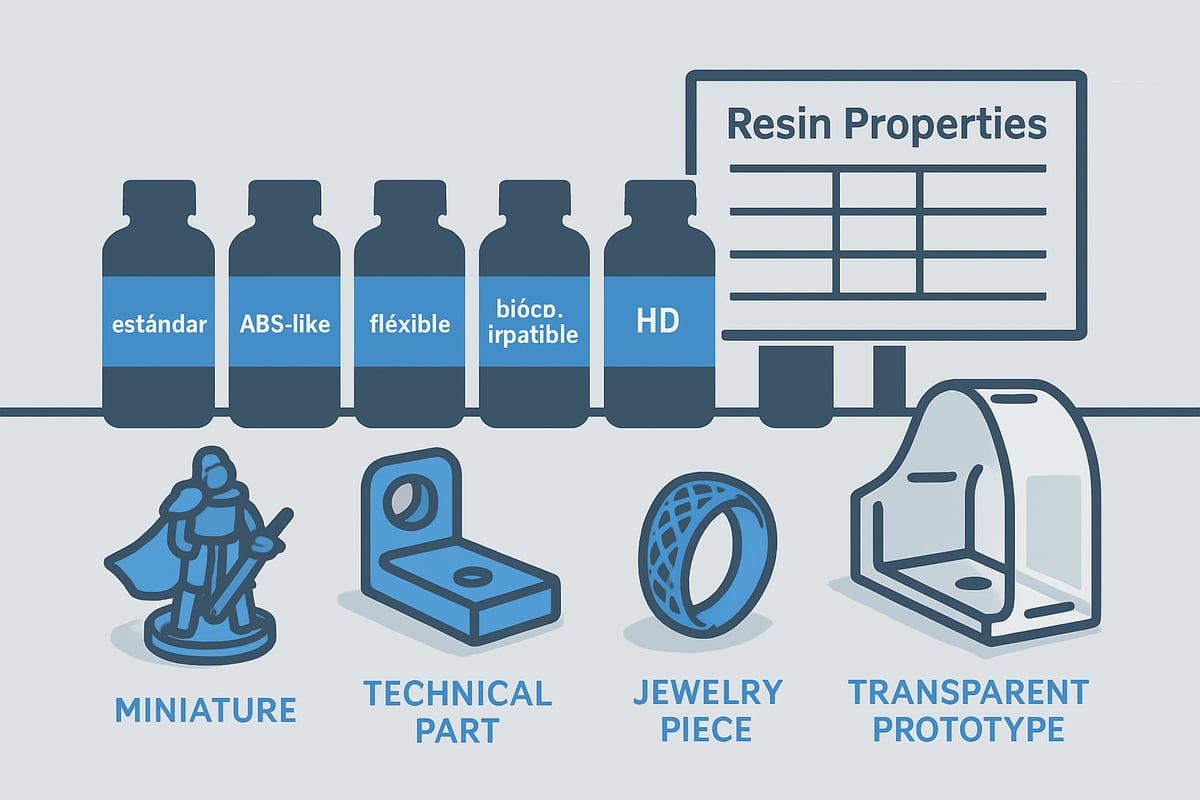
Standard, ABS-like, and specialized resins
Standard resin is the most widely used option in 3D resin printing — ideal for prototypes, figures, and miniatures thanks to its ease of use and affordable price point. ABS-like resins mimic the properties of traditional ABS plastic, delivering greater impact resistance and durability, making them a perfect fit for functional and technical parts.
In 2025, specialized resins have moved into the spotlight. Flexible resins stand out for parts that need elasticity, while high-strength resins are engineered to handle mechanical stress. Biocompatible resins are also available and are essential for medical and dental applications.
Leading manufacturers like Anycubic and Elegoo confirm that ABS-like resin delivers smooth surfaces and superior strength, while standard resin remains the top choice for fine detail work. Market data from Spain shows that ABS-like and standard 3D printing resins together accounted for more than 60% of sales in 2024–2025.
The latest generation of specialized resins — such as ABS Resin 3.0 — makes it possible to produce functional parts with high precision and an excellent surface finish. To dive deeper into the different varieties and their applications, check out the guide to resin types for 3D printing.
Water-washable and eco-friendly resins
Water-washable resins have been a game-changer for 3D resin printing, letting you clean printed parts with plain tap water instead of isopropyl alcohol. This significantly cuts down on chemical waste and simplifies post-processing — especially in home and educational settings.
The environmental impact of these resins is considerably lower, supporting a more sustainable approach to printing. In 2024–2025, water-washable resin sales grew by 30%, reflecting a clear shift toward greener solutions. Plant-based resins — formulated with ingredients derived from natural sources — are also available and help minimize the overall carbon footprint.
Common use cases include school projects, rapid prototyping, and decorative parts. That said, it's essential to follow post-processing guidelines to avoid tacky surfaces or incomplete curing. A standout example is Anycubic Water Wash+, which combines easy cleanup with excellent detail reproduction in 3D resin printing.
High-definition, fast, and clear resins
Advances in 3D resin printing have led to high-definition (HD) resins capable of capturing extreme detail, with resolutions exceeding 14K on advanced printers. These resins reproduce textures and micro-details with precision, making them essential for scale modelling, jewellery making, and visual prototyping.
High-speed resins, on the other hand, are engineered to dramatically cut print times without sacrificing quality. They're ideal for batch production or rapid prototyping, where efficiency is critical in 3D resin printing workflows.
Clear resins have also come a long way, offering improved optical clarity and better resistance to yellowing over time. They're widely used for lenses, architectural scale models, and optical components. According to manufacturer data, demand for HD and clear resins has grown by 40% in sectors such as engineering and industrial design.
The table below summarises the key characteristics:
|
Resin type |
Maximum resolution |
Cure speed |
Applications |
|---|---|---|---|
|
High-definition (14K) |
Very high |
Medium |
Scale modelling, jewellery, prototypes |
|
High-speed |
High |
Very high |
Batch production, rapid prototyping |
|
Clear/transparent |
High |
High |
Optics, visualisation, design |
Notable examples in 2025 include the 14K Textured Resin, which delivers ultra-high-resolution surface finishes, and high-clarity transparent resin, increasingly sought after in professional 3D resin printing applications.
How to Choose the Right Resin for Your Project
Choosing the right 3D printing resin is crucial for getting the best results and avoiding unexpected issues during the process. In 2025, the sheer variety of options makes it essential to consider compatibility, technical properties, and budget before starting any project.
Compatibility with LCD, DLP, and SLA Printers
Matching your resin to the right printer technology is key to successful prints. There are three main technologies: LCD, DLP, and SLA — each requiring resins with specific formulations and curing properties.
Here's a recommended compatibility overview:
|
Technology |
Recommended Resin Type |
Common Use Case |
|---|---|---|
|
LCD |
Standard resin, ABS-like resin |
Miniatures, prototypes |
|
DLP |
High-precision DLP resin |
Jewellery, technical parts |
|
SLA |
Biocompatible resin, dental resin |
Prosthetics, medical models |
Using an incompatible 3D printing resin can lead to curing failures and adhesion problems. Recent data suggests that 80% of print failures come down to choosing the wrong resin for the printer being used. To avoid issues, always check the manufacturer's recommendations and run exposure tests before committing to a full print.
Key Factors: Colour, Viscosity, Hardness, and Toxicity
When selecting a 3D printer resin, it's important to consider properties such as colour, viscosity, hardness, and toxicity. Colour affects the visual finish and ease of post-processing — darker colours tend to hide surface imperfections more effectively.
Viscosity determines how well the resin flows and captures fine details. A low-viscosity resin is ideal for models with intricate engravings, while a thicker resin works better for building sturdy supports.
Hardness and flexibility should be matched to the intended use: moving parts call for a flexible resin, while structural components need something harder and more rigid. Always check the safety data sheet, as some resins are more hazardous than others. Choosing a low-toxicity 3D printing resin is especially important in home and educational settings.
Budget, Availability, and Recommended Brands
Budget is a key factor when choosing a 3D resin printer resin, as prices vary depending on the type and brand. Standard resins typically cost between €25 and €35 per litre, while specialised resins can exceed €60.
Availability also plays a role. Leading brands like Anycubic and Elegoo are more widely available in both online and physical stores, and benefit from strong user reviews. Generic brands, while more affordable, can show inconsistencies in quality and performance. Comparing prices and reviews is essential to get the most out of your investment in 3D printing resin.
Specialist Materials and Support for Resin 3D Printing
If you're weighing up your resin options and want to make the right call, choosing the right store matters. In our guide on the best 3D resin store in Spain, we cover what really makes a difference when buying resin online — from real stock levels and fast shipping to specialist technical support.
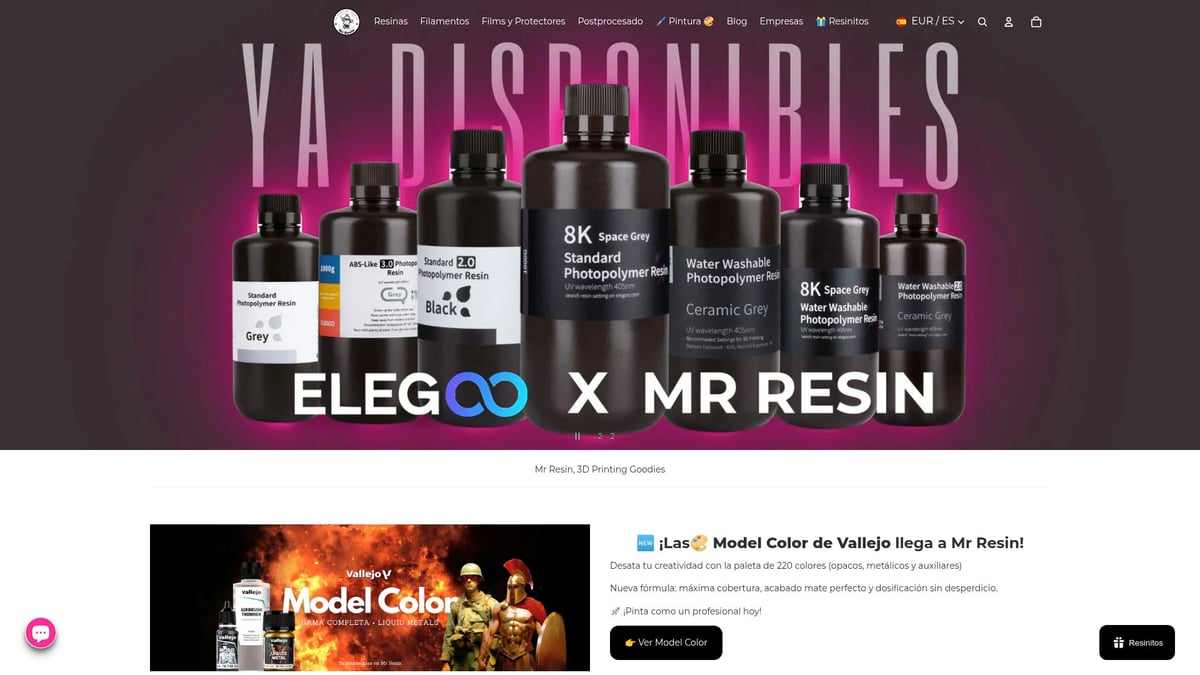
The online store makes it easy to find the right material, with filters by printer type and application, plus educational resources and product comparisons. Whether you're a beginner or an experienced user, you can take advantage of exclusive discounts, additional tools, and expert guidance to achieve professional results with every resin print.
Step-by-Step Process: Resin 3D Printing in 2025
Mastering the resin 3D printing process is essential for achieving professional results in 2025. Below, we walk you through each critical stage — from model preparation to final finishing — to ensure quality and efficiency with every print.
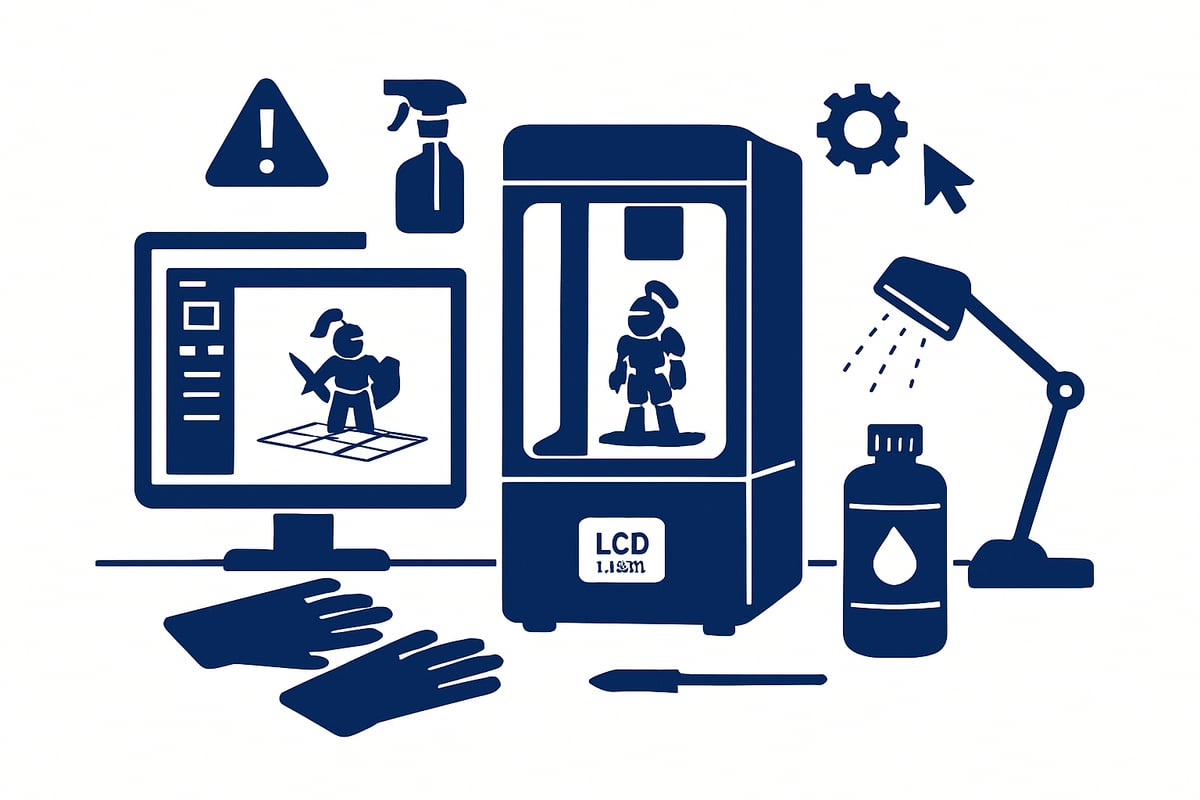
Model Preparation and Printer Setup
The first step in resin 3D printing is selecting and preparing your model. Use up-to-date slicing software such as Lychee Slicer or Chitubox to optimise orientation and add supports. A good layout reduces the need for excessive supports and improves surface finish.
Configure key parameters: exposure time, layer height, and ambient temperature. For high-definition miniatures, for example, use 0.02 mm layers and the manufacturer's recommended exposure settings. Check for updated profiles, as manufacturers like Anycubic and Elegoo publish optimised settings for each resin.
|
Parameter |
HD Miniatures |
Functional Parts |
|---|---|---|
|
Layer Height |
0.02 mm |
0.05 mm |
|
Bottom Exposure |
30 s |
35 s |
|
Normal Exposure |
2.2 s |
2.8 s |
Following recommended profiles can reduce print failures by 20%. If you're looking for a detailed, hands-on guide, check out the Complete Guide to Resin 3D Printing, where you'll find examples and tips tailored to every skill level.
Safe Handling and Pouring Resin
Safety comes first when working with resin 3D printing. Always wear nitrile gloves and a mask, and work in a well-ventilated area. Before pouring your resin, shake it thoroughly and filter it to remove any particles that could affect print quality.
Pour resin carefully to avoid spills and contamination. Wipe up any drips immediately and keep the bottle sealed when not in use. Follow the safety guidelines recommended by Anycubic and Elegoo to protect both your health and your workspace.
This approach minimizes risk and ensures every step of your resin 3D printing process is efficient and safe.
The Printing Process: Monitoring and Troubleshooting
During resin 3D printing, keep a close eye on the first few layers. Most issues — such as poor adhesion or air bubbles — occur right at the start. If the print isn't sticking to the build plate, stop the print and check your leveling.
Common problems include under-curing, poorly placed supports, and trapped air bubbles. Adjust your settings in real time if needed. Actively monitoring the first 10 layers can prevent up to 70% of resin 3D printing failures.
-
Keep an eye on ambient temperature
-
Check the resin level in the vat
-
Clean the LCD screen if you notice any uncured areas
Catching problems early improves your success rate and reduces waste in resin 3D printing.
Cleaning and Initial Post-Processing
Once your resin 3D print is complete, carefully remove the part using a flexible spatula. Wash the print according to your resin type: isopropyl alcohol for standard resins, or water for water-washable resins.
Remove supports while the part is clean but still slightly flexible — this helps prevent damage. Use a Wash & Cure machine to automate the cleaning process and achieve better overall results.
Proper post-processing is essential for getting professional-quality resin 3D prints with a flawless finish.
Final Curing and Surface Finishing
UV curing is the final step in resin 3D printing. Place the part in a UV curing station or under a dedicated UV lamp for the manufacturer's recommended time, typically between 5 and 15 minutes.
To improve the surface finish, lightly sand the part, apply primer, and paint with suitable products if desired. Using equipment like the Wash & Cure 3 Plus ensures even, long-lasting curing results.
Taking care of this process ensures your resin 3D printed parts are durable, visually polished, and ready for any application.
Pro Tips for Perfect Resin 3D Printing Results
Mastering resin 3D printing takes more than quality materials — it requires advanced techniques and a sharp eye for detail. Here we've gathered the key tips for achieving flawless results, from initial setup through to maintenance and storage. This guide is designed for those who want to print like true professionals and get the most out of their equipment.

Optimising Print Parameters
Dialling in the right parameters is essential for getting flawless parts from your resin 3D printer. Exposure time, lift speed, and layer height all vary depending on the resin type and printer being used. ABS-like resins, for example, require longer exposure times than standard resins to achieve the right strength and detail.
Using manufacturer-recommended profiles reduces failures and improves print quality. A great reference is the Anycubic and Elegoo resin settings page, which provides up-to-date configurations to optimise resin 3D printing across different printer models.
Don't forget to level the build plate and keep ambient temperature consistent. Recent studies show that fine-tuning print parameters can reduce print failures by up to 25%. Testing with smaller objects before tackling large projects will help you find the best balance between speed and quality.
Support Placement and Model Orientation
Correct support placement is critical in resin 3D printing — it prevents warping and makes part removal much easier. Place supports in strategic areas, prioritising less visible zones to minimise surface marks.
-
Use thin supports for fine details.
-
Orient the model at a diagonal angle to reduce the number of supports needed.
-
Adjust support density based on the weight and size of the part.
Good model orientation not only saves material — it also reduces the risk of curing errors and improves the overall surface finish. Experiment with different orientations to find the optimal balance for each project.
Troubleshooting Common Issues
The most common resin 3D printing problems include parts sticking to the FEP film, incomplete prints, and warping. Identifying the root cause is key to preventing them from recurring.
|
Issue |
Main cause |
Recommended fix |
|---|---|---|
|
Parts stuck to the FEP |
Overexposure |
Reduce exposure time |
|
Incomplete print |
Poor initial adhesion |
Re-level the build plate and clean the FEP |
|
Warping |
Temperature issues or inadequate supports |
Improve ventilation and add supports |
Preventive maintenance and monitoring the first few layers will help you catch failures early. Keep in mind that 40% of technical support queries are related to adhesion problems, so checking resin compatibility for 3D printing and keeping components clean is essential.
Printer and resin vat maintenance
To maximise the lifespan of your printer and ensure consistent 3D printing resin quality, clean the vat regularly and replace the FEP film as soon as you notice wear or scratches. Periodically inspect the LCD screen for cloudiness or dead pixels.
-
Clean the vat after every print using soft cloths.
-
Avoid sharp or pointed tools when removing cured resin residue.
-
Level the build plate before any important print.
Proper maintenance prevents breakdowns and reduces the risk of cross-contamination between different types of 3D printing resin, keeping your results consistent every time.
Storing and reusing resin
Storing unused 3D printing resin correctly is key to preventing degradation. Use opaque, airtight containers and label them with the date opened. Always strain the resin through a filter before reusing it to remove any cured particles.
-
Store resin in a cool location away from direct sunlight.
-
Check for changes in colour, smell, or consistency before use.
-
Never mix resins of different types or brands.
The shelf life of 3D printing resin varies depending on its formulation, but when stored properly, most resins retain their properties for several months.
Safety and Sustainability in Resin 3D Printing
Safety and sustainability are cornerstones for anyone working with resin 3D printing in 2025. As additive manufacturing continues to grow, understanding how to protect your health and reduce environmental impact is essential for printing responsibly and professionally.
Health precautions and safe handling
Working with resin 3D printing requires strict safety precautions. These resins contain chemical compounds that can cause skin, eye, and respiratory irritation. Always wear nitrile gloves, a respirator mask with filters, and safety goggles whenever you handle liquid resins.
Proper ventilation in your workspace reduces exposure to potentially toxic fumes. It's also important to read and follow CLP labeling and current European regulations in 2025. Many workshops and home setups use strict protocols, such as dedicated wash stations and never reusing resin containers for other purposes.
A practical example is using complete safety kits recommended by leading resin 3D printing manufacturers. These kits minimize risks and make safe handling easier throughout the entire printing and post-processing workflow.
Waste management and recycling
Proper resin 3D printing waste disposal is essential to prevent contamination. Leftover liquid resin and used isopropyl alcohol must be taken to authorized hazardous waste facilities — never poured down the drain. Always check your local regulations for safe disposal guidelines.
More sustainable alternatives include water-washable and biodegradable resins, which simplify post-processing and minimize hazardous waste. A standout example of sustainability is the CTCR project, which manufactures soles and heels from tanned leather waste using 3D printing — proving that innovation and environmental responsibility can go hand in hand. Find out more at 3D Printed Soles and Heels from Leather Waste.
Eco-friendly and sustainable resin trends
The eco-friendly resin 3D printing market is growing significantly across Europe. In 2025, demand for plant-based and eco-friendly resins has risen by 35%, driven by both home users and professionals looking to reduce their environmental footprint.
Manufacturers are innovating with formulas that cut emissions and waste, including bio-based resins and water-washable options. Products like Anycubic Eco resin fit seamlessly into educational and professional settings thanks to their low environmental impact and high print quality.
This shift toward more sustainable resin 3D printing materials supports a circular economy and helps protect the environment — without compromising performance or print precision.
Innovations and Trends in 3D Printing Resins for 2025
Resin 3D printing is undergoing a revolution in 2025, driven by demand for greater precision, new applications, and sustainable solutions. The industry is moving toward more versatile materials and smarter technologies that are transforming the experience for both professional users and hobbyists alike.
New Formulas and Emerging Applications
Throughout 2025, 3D printing resin has advanced significantly, with high-speed formulas, rapid curing, and enhanced functional properties. Standout developments include conductive resins for electronics and biocompatible resins for medical use — such as dental prosthetics and custom orthopaedic devices. In jewellery making, casting resins deliver ultra-fine detail and flawless surface finishes, while heat-resistant and impact-resistant resins are gaining traction in automotive and robotics applications.
|
Application |
Featured Resin |
Key Property |
|---|---|---|
|
Electronics |
Conductive |
Electrical conductivity |
|
Medical |
Biocompatible |
Safety and sterility |
|
Jewellery |
Casting |
Extreme detail and clean burnout |
|
Automotive |
High-strength |
Mechanical durability |
Innovation in this space also includes plant-based resins, which reduce environmental impact and appeal to sustainability-conscious industries. According to AIMEN's industrial additive manufacturing initiative, the uptake of 3D printing resin across Spanish industry has accelerated through industry consortia and collaborative R&D projects, driving forward a wide range of emerging applications.
Advances in Compatible Printers and Accessories
Resin 3D printers have seen major improvements heading into 2025. Current machines feature 14K resolution screens capable of capturing microscopic detail, smart resin vats that monitor fluid condition in real time, and automated levelling and cleaning systems. Leading models include the Anycubic Photon Mono M7 Max, complemented by accessories such as the Wash & Cure 3 Max — both designed to streamline the workflow and deliver consistently professional results.
Integrated air filters and ambient air quality sensors are also trending, improving safety and reducing exposure to volatile compounds. These innovations make resin 3D printing more accessible and reliable for end users, delivering professional-quality results in less time.
The Future of the Market: Pricing, Availability, and Customization
The resin 3D printing market is moving toward lower prices and greater access to premium materials, bringing the technology within reach of households and small businesses alike. On-demand customization of colors and mechanical properties is becoming increasingly common, allowing resin to be tailored to specific project needs.
Annual sales growth of 20% is projected, driven by expanding applications and improved global availability. According to the 3D Printing Industry Report 2025, resin 3D printing will play a pivotal role in additive manufacturing across sectors such as medicine, automotive, and education — cementing its place as a key driver of innovation and competitiveness.
Conclusion
In 2025, resin 3D printing has firmly established itself as one of the most versatile, precise, and sustainable technologies in additive manufacturing. The wide range of available resins — from standard and ABS-like formulas to biocompatible, eco-friendly, and high-definition options — covers an impressive variety of needs, including prototyping, functional parts, medical applications, and artistic projects. The rise of water-washable resins, plant-based formulas, and specialized materials reflects a clear industry shift toward sustainability and reduced environmental impact, without compromising quality or performance.
Advances in printers, smart accessories, and post-processing techniques have also made it easier than ever for both beginners and professionals to achieve industrial-grade results. Safety and proper waste management remain essential pillars, while the market continues to evolve toward greater accessibility, customization, and democratization of this technology.
Ultimately, 3D printing resin in 2025 has not only transformed the way we create objects — it is shaping the path toward a more efficient, responsible, and opportunity-rich future for innovation across countless industries.
✨Happy Printing! 🚀