

Are you passionate about 3D printing and want to master resin 3D printing in 2026? 🚀 You've come to the right place! Whether you're a complete beginner or an experienced maker, this guide is designed to take your projects to the next level.
Here you'll find practical tips, expert tricks, and the latest trends. Get ready to discover cutting-edge developments, real-world applications, and examples of professional-quality results. We'll also give you access to exclusive resources to make your resin printing journey easier and more enjoyable.
Ready to explore resin types, choose the best printer, learn every step of the process, and stay on top of what's new in the industry? Stick around — the best is yet to come. 🙌
What Is Resin 3D Printing and Why Should You Choose It?
Resin 3D printing is a revolutionary technique that uses technologies like SLA, DLP, and MSLA (LCD) to produce parts with an incredible level of detail. Unlike traditional methods such as FDM or SLS, resin 3D printing delivers far smoother, more precise results — ideal for anyone looking for professional-quality output at home or in industrial settings.
Wondering why so many people prefer it? Here are some key advantages:
- 🔬 Extreme precision: fine details and complex geometries.
- ⚡ Fast prototyping and quick design iterations.
- 💎 Versatility: perfect for jewelry, dental models, functional prototypes, and miniatures.
Real-world applications include custom dental aligners, collectible miniatures, automotive components, and electronic parts. Recent data shows resin usage is growing at 22% annually in sectors like medicine and jewelry, with more makers and professionals adopting this technology every day.
It's worth noting the material costs and post-processing steps involved, though the investment typically pays off through the quality of results achieved. If you want to explore the full range of materials and applications, check out the 3D Printing Resins collection for real examples and the latest products on the market.
Bottom line: resin 3D printing has become the go-to choice for anyone who demands precision, speed, and unlimited creative possibilities.

Types of Resin for 3D Printing: Which One Should You Choose in 2026?
Choosing the right resin for 3D printing is essential to getting great results, whether you're just starting out or you're an experienced maker. Today's market offers a wide range of options, each designed to meet specific needs and deliver professional finishes. Not sure which one is right for you? Let's break it down!
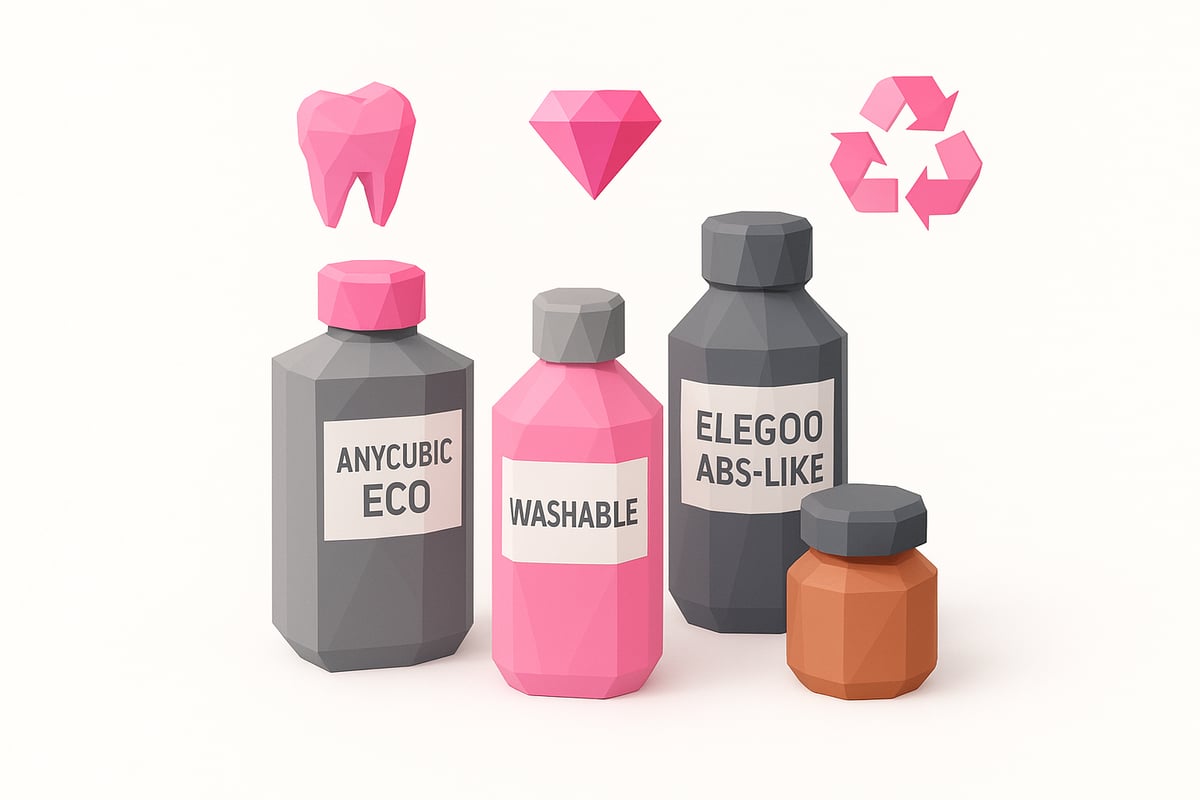
Standard resins are ideal for anyone getting started with resin 3D printing who needs detailed, affordable prints. On the other hand, technical resins — such as ABS-like, flexible, and heat-resistant formulas — offer greater durability and advanced applications, making them perfect for functional prototypes or parts that need to withstand stress.
Water-washable resins have grown in popularity thanks to their eco-friendly profile and easy cleanup, helping reduce the use of harsh chemicals. If you're interested in exploring these modern, sustainable options, check out Water-Washable 3D Resins to browse available options and learn about their benefits.
For specialized applications, there are dental resins, jewelry resins, and engineering resins — each optimized for fine detail, strength, or precision. Popular examples include Anycubic Eco (biodegradable and low-odor), Elegoo ABS-Like (excellent impact resistance), and water-washable resins from trusted brands.
What should you look for? Pay attention to viscosity, toxicity, odor, color range, available finishes, price, and compatibility with your printer. If you're a beginner, stick with standard or water-washable resins; if you're chasing professional results, explore more advanced formulations suited to your project and skill level.
How to Choose the Right Resin 3D Printer
Picking the perfect resin 3D printer can feel overwhelming — but a few key factors make the decision much easier! 🎯
Key Factors to Consider
Before you buy, think through these points:
- Build Volume: Do you need to print large parts, or are you focused on miniatures and small details?
- Resolution and Speed: Look for high-resolution screens (e.g., 12K) paired with a fast print speed.
- Resin Compatibility: Not all printers work with every resin — always check the manufacturer's specifications.
- Technical Support and Spare Parts: Reliable after-sales support makes a real difference when something goes wrong.
Top Models in 2026
Two printers dominating the market this year:
| Model | Resolution | Build Volume (mm) | Screen | Estimated Price |
|---|---|---|---|---|
 |
14K | 223x126x250 | LCD | 550–700€ |
 |
12K | 153x77x165 | LCD | 350–500€ |
Both deliver outstanding print quality and have readily available spare parts and consumables.
LCD, DLP, or SLA: Which Is Best?
- LCD: Fast, affordable, and capable of excellent detail. Ideal for makers, hobbyists, and rapid prototyping.
- DLP: Precise light projection and lower maintenance requirements, though typically at a higher price point.
- SLA: The gold standard for print quality, but requires more experience and careful post-processing.
If you're just starting out, an LCD printer is the ideal entry point. For professional-grade or industrial parts, consider stepping up to a DLP or SLA machine.
Final Tips and Where to Buy
Consider your budget, the types of projects you have in mind, and the level of support you'll need. Stick with trusted brands and specialist retailers like Mr Resin, where you'll also find an active community and expert guidance.
Step by Step: The Resin 3D Printing Process
Let's dive into the fascinating world of resin 3D printing! Here's a clear, easy-to-follow guide to help you achieve stunning results — whether you're a complete beginner or already experienced with the process. 🧑🔬✨
Model and Printer Preparation
The first step in resin 3D printing is choosing your 3D file — whether STL or OBJ. Use your preferred slicing software, such as Photon Workshop, to set your layer height and add supports.
Make sure your build plate is properly leveled and that the resin vat is clean and ready to go. An intuitive interface like Anycubic Photon Workshop makes this process much easier. Never underestimate the importance of solid preparation!
Printing Process and Monitoring
Carefully pour the resin into the vat, wearing gloves and a mask for protection. Set key parameters such as exposure time and layer height before starting the print.
During the print, keep an eye on progress via the printer's screen. If you notice adhesion issues or insufficient supports, pause and make adjustments. Good monitoring saves you both time and material.
Post-Processing and Curing
Once printing is complete, remove the part and drain off any excess resin. Wash the print with isopropyl alcohol or water, depending on your resin type. Use tools to remove supports, then lightly sand any imperfections.
UV curing is essential for hardening your print — devices like Wash & Cure make this step much more straightforward. To streamline the entire process, you can find post-processing accessories that will help you achieve professional-quality finishes on all your resin 3D printing projects.
Safety and Waste Management
Always prioritize safety: wear gloves and a mask, and ensure your workspace is well ventilated. Store resin and chemical products in a safe location, out of reach of children and pets.
Follow local regulations for disposing of waste and recycling materials responsibly. A clean workspace also means higher-quality prints!
Advanced Tips and Tricks for Professional Results
Ready to take your resin 3D printing projects to the next level? Here are the techniques professionals use to achieve flawless finishes and impressive functional parts. 🔬✨
Fine-Tuning Print Parameters
Dialing in your exposure time, layer height, and anti-aliasing settings is key to improving print definition. For maximum precision in resin 3D printing, try testing different exposure times using a test matrix. Anti-aliasing smooths edges and reduces the staircase effect — ideal for detailed miniatures and prototypes.
Improving Adhesion and Preventing Warping
To prevent parts from delaminating or warping, make sure your build plate is perfectly leveled and clean the resin vat before each use. Use a textured print surface and fine-tune your supports to reinforce critical areas. If your project demands extra durability, explore high-temperature resistant 3D resins, perfect for demanding technical applications.
Professional Finishing and Post-Processing
After printing, carefully remove supports and lightly sand any surface imperfections. Washing with isopropyl alcohol or water (depending on your resin) ensures clean surfaces that are ready to paint or varnish. Apply acrylic paints and UV varnish for a durable, professional-grade finish.
Troubleshooting Tips and Essential Tools
Dealing with bubbles, under-cured layers, or broken supports? Check the viscosity and condition of your 3D printing resin, and make sure your mirrors and LCD screen are clean. Precision cutters, jeweller's files, and portable UV lamps will help you fine-tune every detail.
With good habits and the right adjustments, you can reduce print failures by up to 60% and achieve superior quality results. Don't be afraid to experiment — and share your results with the community!
Trends and the Future of Resin 3D Printing in 2026
The future of resin 3D printing is bright and packed with exciting developments. By 2026, we'll be seeing increasingly sustainable and durable materials, including new biodegradable resins for 3D printing made from plant-based sources. These eco-friendly options are ideal for anyone looking to reduce their environmental footprint. 🌱
Automation will take centre stage, with smart IoT-connected printers enabling faster and more precise workflows. Ultra-fast and impact-resistant resins are also making significant inroads in industries such as personalised medicine, aerospace, and education. Imagine prosthetics, aeronautical components, or educational materials printed in minutes with professional-grade finishes. 🚀
The maker and professional community continues to grow, driving collaborative projects and online learning resources. According to recent data on the 3D printing resin market size, the sector is expected to maintain solid growth through to 2027, opening up new opportunities for businesses and enthusiasts alike. Staying informed and keeping up with global trends will be the key to success!
Conclusion:
Mastering resin 3D printing opens up a world of possibilities — from miniatures and figurines to functional parts and professional prototypes. You've learned about resin types, printers, post-processing, and expert tips for achieving top-level results in 2026.
Ready to take your projects to the next level? Visit Mr Resin to explore printers, resins, accessories, and expert support. Join our Telegram community (https://t.me/MrResin3D) for exclusive discounts, voucher codes, and events.
Don't forget to subscribe to our Newsletter to receive the best deals and latest news straight to your inbox.
✨ Happy Printing! 🚀
After this deep dive into the world of resin 3D printing, you've probably already got a project in mind that you're itching to take to the next level. Can you picture yourself trying out new resins, experimenting with different finishes, or simply enjoying the process? Remember — the key is choosing the right material for what you want to achieve and being willing to give it a go. If you want to browse all the options available, compare quality, and find exactly what your printer needs, take a look here:
Browse all 3D printing resins
Start your next creation with confidence!