

Are you wondering whether in 2025 the best option is a resin or filament 3D printer? 🤔 You're not alone! Choosing between these two technologies can make all the difference in your projects, your wallet, and even your printing experience.
The decision between resin vs filament 3D printer is more important than ever, as technological trends evolve quickly and each system has unique advantages. Here you'll find an in-depth comparison so you can choose the perfect equipment for your needs.
In this article you'll see the technological differences, print quality, available materials, real costs, ease of use, and which applications each option is best suited for. Get ready to discover the latest innovations and make an informed decision that brings you closer to the results you dream of. Let's go! 🚀
How do resin and filament 3D printers work?
Have you ever wondered how a resin vs filament 3D printer actually works? Let's find out together! Understanding the technology behind each system is key to making the best decision in 2025. Here's what you need to know, with current examples and data.
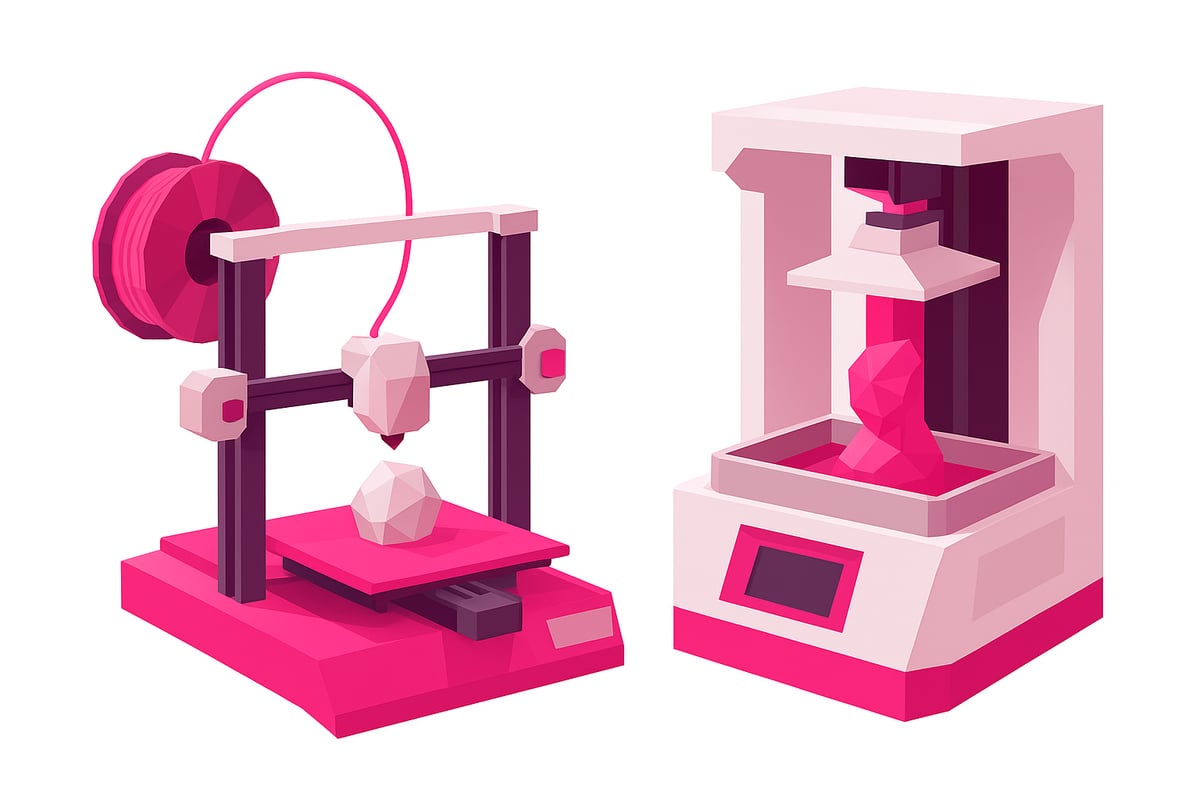
FDM printing technology (Filament)
The resin vs filament 3D printer comparison starts with the FDM method, the most popular for home use. This process involves heating a thermoplastic filament and depositing it layer by layer to form the model. Top examples like the Anycubic Kobra 2 or the Prusa i3 stand out for their ease of use, low cost, and enormous variety of materials.
- Advantages: simple setup, affordable materials, easy maintenance.
- Statistic: according to All3DP, FDM continues to lead the home market.
- Want to go deeper? Find out more at What's better, filament or resin?.
FDM 3D printers are great for those looking to get started and experiment with different projects.
Resin printing technology (SLA, LCD, DLP)
And what about the resin vs filament 3D printer in the world of resin? Here, the magic happens by curing a photosensitive liquid resin with UV light, using technologies such as SLA (laser), LCD, or DLP (projector). A standout example is the Elegoo Mars 4 Ultra, renowned for its high precision and sharp details.
- Key differences: SLA uses a laser, LCD uses screens, DLP projects light.
- Advantages: smooth finishes, ultra-fine details.
- Fact: resin 3D printer sales grew by 15% in 2024.
If you're looking for miniatures or detailed parts, resin technology is your ally.
Visual comparison of the process
Here's a quick table to see the key differences:
| Process | Print time | Preparation | Post-processing |
|---|---|---|---|
| FDM (Filament) | Medium-Long | Easy | Basic |
| Resin (SLA/LCD) | Medium | More steps | Washing and curing required |
This way you can compare the advantages and challenges of each method at a glance!
Print quality and level of detail: Who wins in 2025?
Looking for the best quality in your prints? 💎 The eternal resin vs filament 3D printer battle is still going strong in 2025, and the difference shows from the very first layer.
| Feature | Resin (SLA/LCD/DLP) | Filament (FDM) |
|---|---|---|
| Layer precision | Up to 0.01 mm | 0.1 - 0.2 mm |
| Surface finish | Smooth, fine details | Visible lines |
| Post-processing | Washing, UV curing | Remove supports |
| Best use | Miniatures, jewelry | Functional parts |
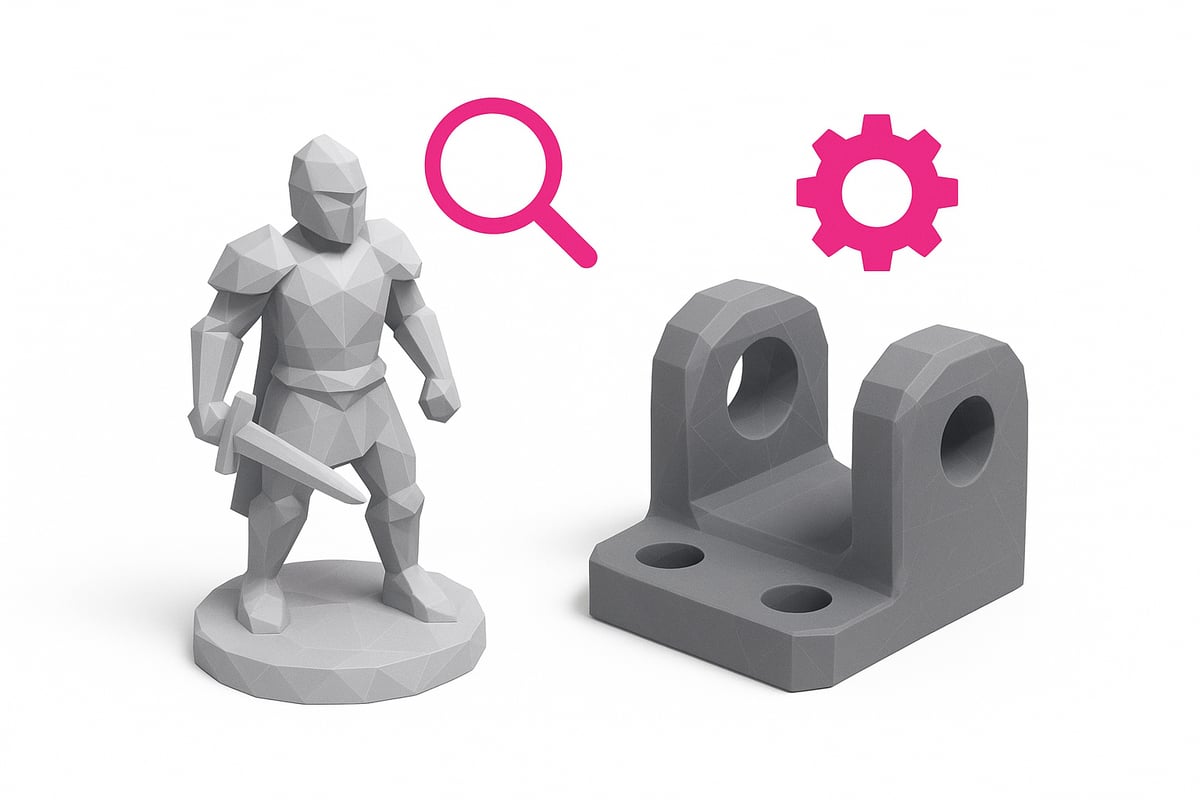
Resin printers stand out for their sharp details and smooth surfaces, ideal for miniatures, figures, and high-definition prototypes. 80% of resin users choose it for its superior level of detail, according to surveys in makers communities. Filament, on the other hand, is perfect for functional parts, gadgets, and supports, although layer lines are sometimes noticeable.
Did you know that advances in FDM have greatly improved precision? Finer nozzles and special filaments make it possible to achieve cleaner results, getting ever closer to the finish of resin.
That said, resin requires washing and curing after printing, while filament is usually simpler to finish. If you want to dig deeper, don't miss this explanation of print quality in resin vs filament.
In short, if you're looking for extreme detail, resin is king. For strong and practical parts, filament will give you the best quality/durability ratio.
Material variety and cost: Resin or filament?
Choosing the right material is key when we talk about resin 3D printer vs filament. 😎 Each system has its own universe of options, and that affects both the results and your budget. Have you ever wondered what's behind each spool or bottle?
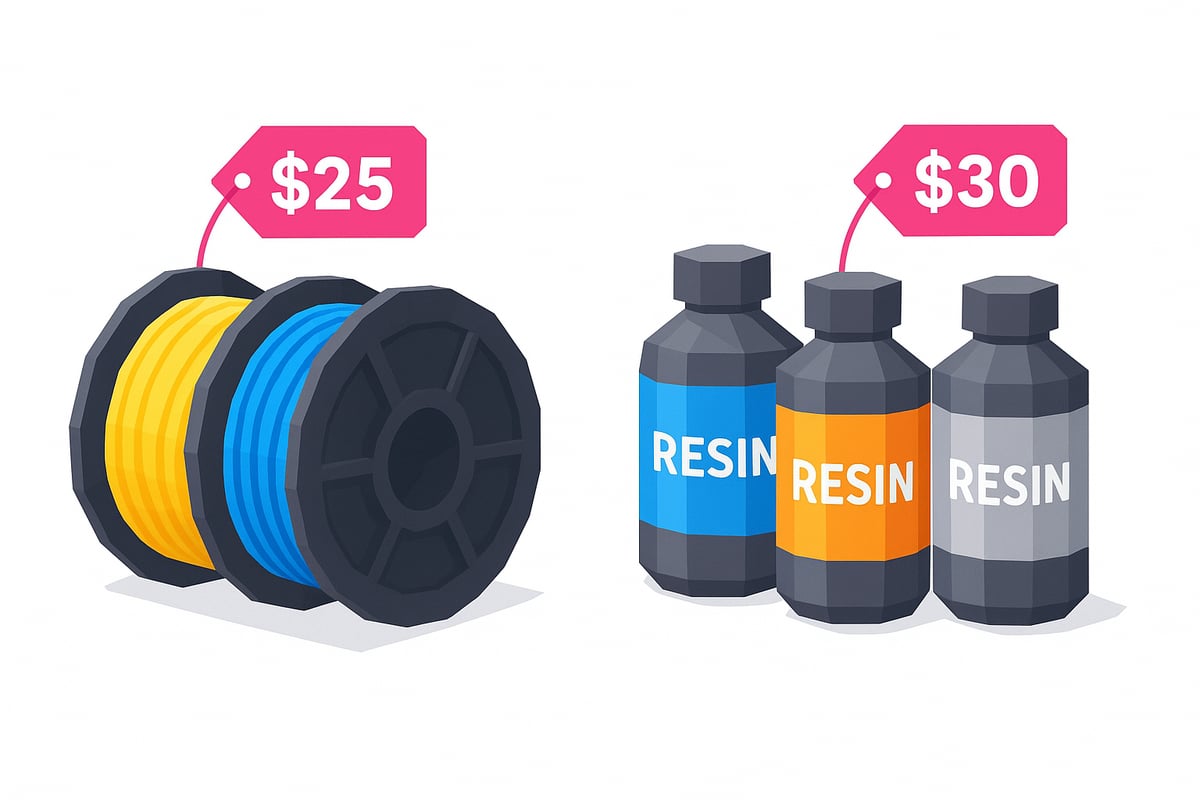
Material types and prices
Today, the variety of filaments is enormous: PLA, PETG, ABS, flexible, and even blends with wood or metal. On the other hand, resins have evolved and you can now find standard, ABS-like, flexible, transparent, biocompatible, and water-washable options. There's something for everyone!
Here's a quick comparison table:
| Material | Main varieties | Approx. price (kg) | Ideal uses |
|---|---|---|---|
| Filament | PLA, PETG, ABS, flexible, blends | From €13.99 | Functional parts |
| Resin | Standard, ABS-like, flexible, water-washable | From €15.99 | Details and miniatures |
Did you know that filament tends to be more resistant to impact and stress? This makes it perfect for mechanical parts, spare parts, or everyday gadgets. Resin, on the other hand, shines when it comes to detail: miniatures, high-definition prototypes, or scale modeling parts.
Durability, detail, and storage
With resin 3D printer vs filament, durability is a strong point for filament, while resin gives you much smoother and more defined finishes. That said, resin requires more care: it must be kept away from light, stored tightly sealed, and its expiration date must be taken into account.
Want to dive deeper into how to choose the ideal material for your project? I recommend taking a look at this guide to choosing 3D filament, where you'll find tips and tricks to make the right purchase.
In summary, the choice between a resin 3D printer vs filament depends on your goal: are you looking for strength and functionality, or detail quality and finish? There's no single answer, only the perfect material for each need!
Ease of use, maintenance and safety
Wondering which is easier to handle: a resin 3D printer vs filament? 🤔 Let's find out together! Ease of use is key, especially if you're just starting out in the world of 3D printing.
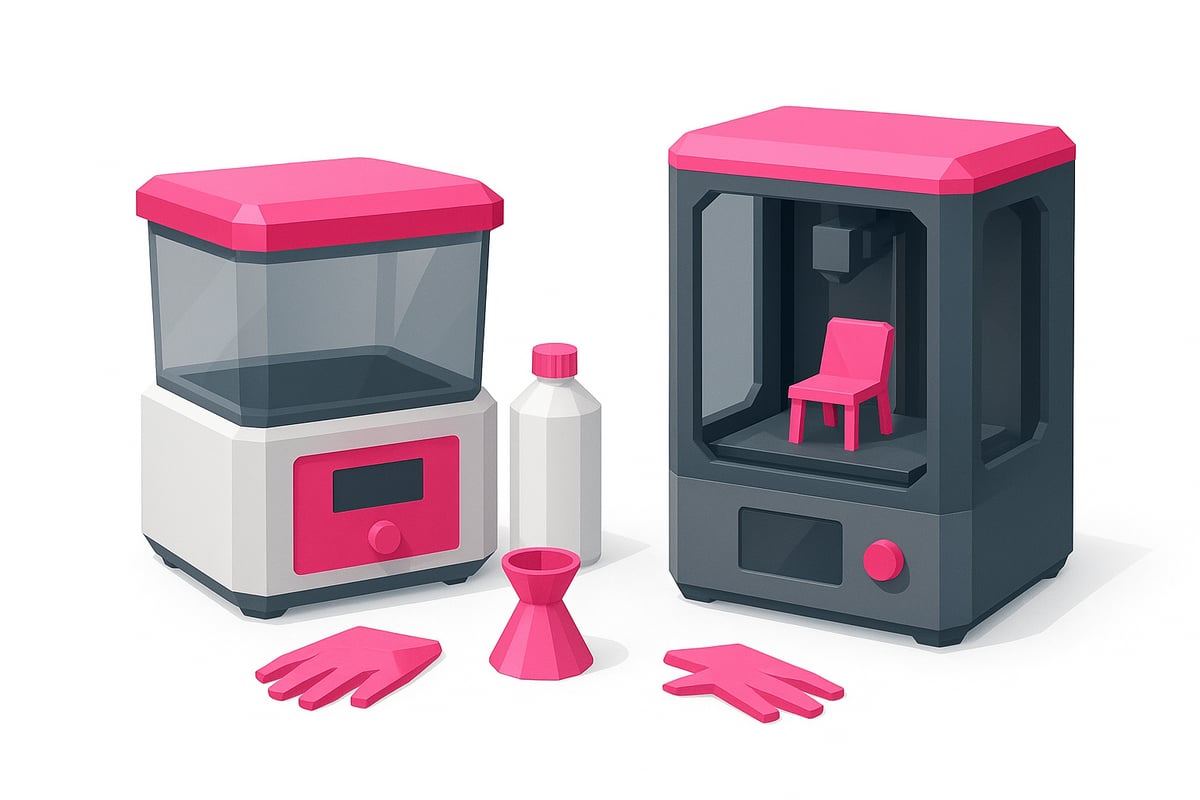
FDM printers (filament) stand out for their simple setup and beginner-friendly learning curve. You just need to load the filament, level the bed and start printing! Maintenance is minimal: occasionally clean the nozzle and make sure there are no leftover filament residues.
On the other hand, resin printers require a little more attention. Here you need to handle liquid resins, wear gloves and clean both the part and the printer itself after each use. In addition, after printing, resin parts must be washed and cured with UV light to achieve their final strength.
In terms of safety, resin can emit odours and vapours, so it is essential to ventilate the space well and protect your skin. Filament, except for ABS, is generally safe and does not produce strong odours. This makes many beginners prefer FDM.
The post-processing stage is another important factor. While with filament you normally just need to remove supports, with resin you have to wash, cure and sometimes sand the parts. Regular maintenance includes:
- FDM: cleaning the nozzle and print surface.
- Resin: changing and cleaning vats, filters and protecting the LCD screen.
If you're looking for a practical comparison of the day-to-day experience with both systems, take a look at this comparison of FDM and resin 3D printers, where you'll find the advantages and challenges in the daily routine of each type.
In summary, for those who value simplicity and cleanliness, the resin 3D printer vs filament debate usually tips the scales towards filament. However, if you don't mind spending more time on post-processing and are looking for exceptional finishes, resin is a top choice.
Ideal applications and use cases in 2025
Wondering when it makes sense to choose a resin 3D printer vs filament? Let's look at it with clear examples and real-life situations! 🤩 Each technology shines in different areas, so here's a quick guide to help you decide based on your project.
Who is FDM printing best for?
FDM printing is perfect if you're looking for quick prototypes, resistant functional parts, or need to manufacture large-sized objects. It's ideal for education, engineering, household spare parts, and toys. If you have projects like supports, gadgets, or components for robotics, the resin 3D printer vs filament debate usually leans toward filament for its ease of use and low cost.
- Functional prototypes and proof-of-concept tests
- Large volumes without worrying about fine details
- Users who value speed and low maintenance
For a detailed comparison, you can check out this Comparison of resin and filament 3D printers.
Who is resin printing best for?
Now, if miniatures, collectible figures, jewelry, or high-definition prototypes are your thing, the resin 3D printer vs filament choice clearly leans toward resin. Models with fine details, smooth finishes, and a professional appearance are its specialty. For example, it's ideal for making molds, scale modeling parts, or medical prototypes where precision is everything.
- Miniatures and collectible figures with incredible detail
- Jewelry or dentistry projects
- Product prototypes with a professional finish
Resin allows you to achieve a level of detail that any maker will fall in love with!
Trends and news in 2025
In 2025, trends in resin 3D printers vs filament point toward water-washable resins that are less toxic and safer. Eco-friendly and recycled filaments are gaining ground, helping the planet. In addition, the integration of AI to optimize prints and the arrival of high-resolution 3D printers at accessible prices make both technologies more attractive and easier to use than ever. 🚀
Total cost of ownership and sustainability
Let's talk about what really matters when choosing between a resin 3D printer vs filament: your wallet and the planet! 🤑🌱
The initial price of an FDM 3D printer usually starts from €180, while a resin one starts at around €220. But watch out — it's not just the cost of the machine: you also need to consider consumables like nozzles, FEP films, vats, and filters, which add up over time.
In terms of material consumption, PLA filament stands out for being biodegradable, ideal if sustainability is a concern for you. Resins are advancing, with eco-friendly options becoming increasingly accessible, although they still generate more liquid waste and require special handling for disposal.
In terms of power consumption, FDM 3D printers tend to be more efficient for long prints, while resin ones may use more energy due to UV curing. If you're interested in a more in-depth analysis of differences and costs, I recommend this detailed analysis of resin 3D printers vs filament.
Here is a summary table:
| FDM (Filament) | Resin (SLA/LCD/DLP) | |
|---|---|---|
| Starting price | From €180 | From €220 |
| Material/kg | From €13.99 | From €15.99 |
| Sustainability | Biodegradable PLA | Emerging eco-friendly resins |
| Waste | Low, easy to manage | Liquid, requires special handling |
| Electricity | More efficient | Higher consumption during curing |
Choosing the right 3D printer — resin vs filament — impacts both your budget and the environment. Research, compare, and choose what best suits your projects and values! 🌎✨
Conclusion:
Is the resin vs filament 3D printer debate clearer to you now? You know the key differences in technology, print quality, material types, costs, and which option is best for each type of project.
If you want to see and try real materials, stop by our Mr Resin online store. There you'll find top resins and filaments, and if you're up for it, join our Telegram group https://t.me/MrResin3D] to share questions, tips, and get exclusive discounts.
Don't forget to subscribe to our Newsletter! That way you'll receive offers, news, and events directly in your inbox.
✨Happy Printing! 🚀
After going through all the differences between resin and filament 3D printing, you're sure to have a much clearer idea of which one suits what you're looking for in 2025. If detail quality and professional finishes catch your eye, I get it — I was won over by the possibilities of resin myself! Plus, at Mr Resin you have a huge range of options to experiment with and find the perfect resin for every project. Take a look at everything on offer here:
View all 3D printing resins
and start creating incredible pieces right now.