

Have you ever wondered how you could transform your ideas into real objects without leaving home? 🤔 The 3D printing revolution is closer than ever, and now anyone can be a creator, inventor, and artist from their own desk.
In this essential guide to first 3D prints for beginners in 2026, you'll discover how to avoid the most common mistakes and achieve incredible results from the very first attempt. You'll learn how to choose the right 3D printer, the perfect materials, and how to shape your first projects with practical tips and real examples.
Ready to take the leap and explore all the creative possibilities that 3D printing has to offer? Keep reading and start your adventure in the world of digital manufacturing today. 🌟
What is 3D printing and why is it trending in 2026?
Can you imagine being able to manufacture your own ideas with just the press of a button? 🤯 3D printing is a technology that converts digital designs into real objects, layer by layer, using materials such as filaments or resins. In recent years, this technique has evolved enormously, moving from being exclusive to laboratories to being present in homes and schools.
According to Statista, the adoption of 3D printing grows by 24% annually, and it's no wonder! Today, first 3D prints are used in education, medicine, prototypes for startups, art, and even home hobbies. You can print everything from toys and miniatures to tools and spare parts.
In 2026, innovations are making all the difference: more affordable and precise 3D printers, eco-friendly materials, and easy-to-use software. Take a look at this table with the key trends:
| 2026 Innovation | Brief description |
|---|---|
| Accessibility | Prices from €150 |
| Eco-friendly materials | PLA and recyclable resins |
| Improved precision | Details down to 0.05 mm |
Want a real example? Many people are already printing phone cases, desk stands, and custom parts at home. This way, first 3D prints are revolutionizing personalized manufacturing, allowing anyone to create their own objects. If you want to learn more about how to get started, check out this Definitive guide to getting started in 3D printing.
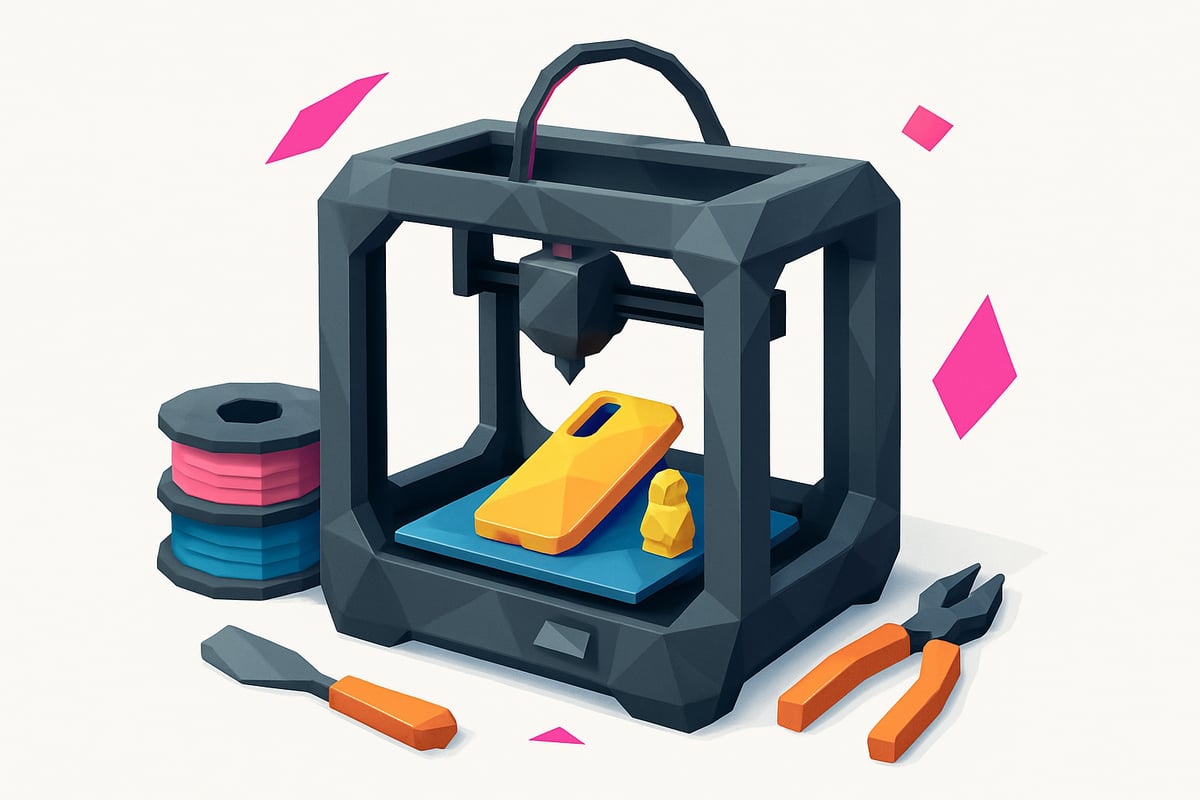
First steps: What do you need to get started?
Ready to dive into the world of first 3D prints? 🚀 Before printing your first object, you need to know the basic equipment, materials, and accessories that will ensure a fun and safe experience right from the start. Let's go step by step!
Types of 3D printers for beginners
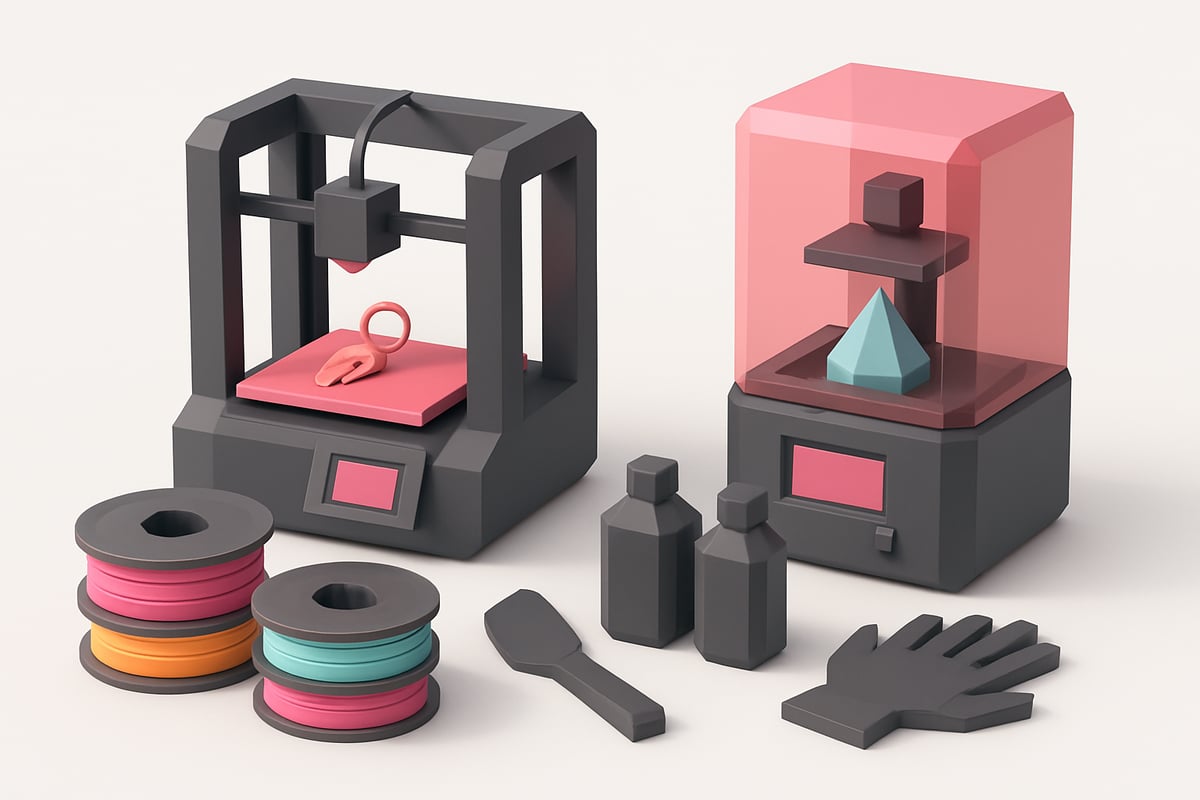
The first step is choosing the type of 3D printer. FDM (fused deposition modeling) 3D printers are ideal for beginners: they print using plastic filaments such as PLA and PETG, and are easy to use and maintain. SLA or resin 3D printers offer more detail but require more care and ventilation.
| Type | Ease | 2026 Price | Example |
|---|---|---|---|
| FDM | ⭐⭐⭐⭐⭐ | 180-350 € | Creality Ender 3, Anycubic Kobra Go |
| SLA/Resin | ⭐⭐⭐ | 200-400 € | Elegoo Mars 3, Anycubic Photon Mono |
Want to dive deeper into the differences and uses? Take a look at this complete guide on Types of 3D printers and their uses to make the best decision before your first 3D printing projects.
Material selection: filaments and resins
For your first 3D printing projects, the most recommended material is PLA: easy to print, safe, and available in many colors. PETG is resistant and flexible, ideal for functional parts. Standard resins offer fine detail, but require careful handling.
- PLA: safe, affordable (15-25 €/kg), perfect for beginners.
- PETG: more flexible, impact-resistant, from 22 €/kg.
- Standard resins: precise detail, price from 28 €/L.
Remember: 65% of those who start out choose PLA for its simplicity and great finish. Always check material compatibility with your printer.
Basic tools and accessories
Don't forget the essential accessories for successful first 3D printing projects:
- Spatula for removing parts
- Gloves and mask for handling resins
- Adhesives to improve bed adhesion
- Cleaning kit for nozzles and bed
Ventilation is key, especially if you use resins. A starter kit usually costs between 25 and 40 €, and includes everything you need to get started safely and comfortably.
The step-by-step process: From idea to printed object
Ready to see your ideas come to life? Here is the basic journey to achieve your first 3D printing projects from scratch, explained in a simple and practical way. Let's go! 👇
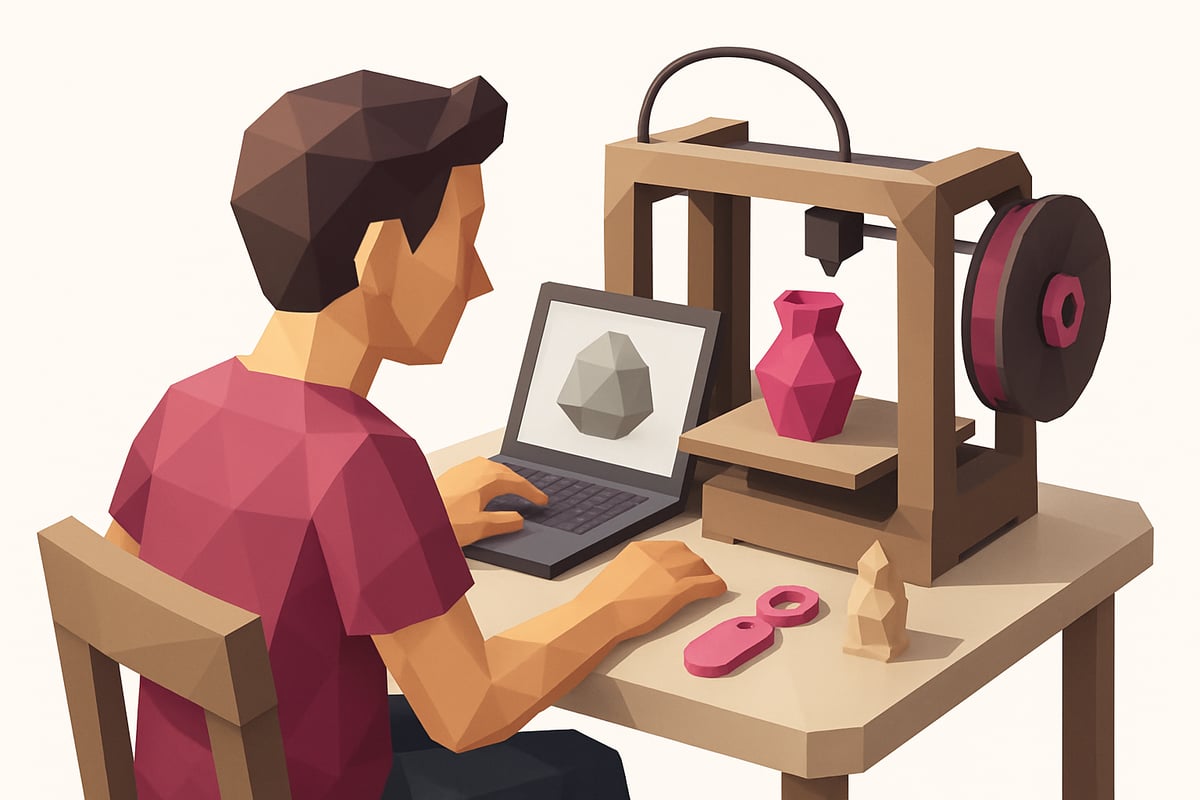
Step 1: Prepare the 3D model
To get started with your first 3D printing projects, you need a digital model. You can search for ready-made files in free repositories such as:
- Thingiverse
- Printables
If you want to create your own designs, try easy and visual software like Tinkercad or Fusion 360. Always remember to check the copyright and licenses of the models you download. This way you will avoid legal issues and support the creative community.
Step 2: Configuring the slicing software (slicer)
The slicer is the program that "translates" your model so the printer can understand it. Some popular ones are Cura and PrusaSlicer.
Here is a quick table with basic settings:
| Parameter | Recommendation for beginners |
|---|---|
| Layer height | 0.2 mm |
| Infill | 15% |
| Supports | Automatic as needed |
Start with the standard settings and adjust as you go based on the results. Experiment, but don't be afraid!
Step 3: Prepare the printer and materials
Before printing, make sure the bed is properly leveled and the printer is calibrated. This will prevent most initial issues.
Load the filament or resin depending on the type of printer. Do a quick check: is everything clean and in place? A few extra minutes here will save you headaches later.
Step 4: Printing and monitoring
During printing, watch the first few minutes: this will help you detect any detachments or jams. If an error appears, don't worry, it's part of the learning process in your first 3D printing attempts.
Do you have frequent issues? I recommend reading this guide on Common errors in 3D printing, where you'll find practical solutions and expert tips.
With patience and practice, each print will be better than the last! 🎉
Common mistakes and how to avoid them
Has it happened to you that your first 3D prints don't turn out as expected? 😅 Don't worry! It's completely normal to make mistakes when starting out, but recognizing them will help you improve quickly and enjoy the process more.
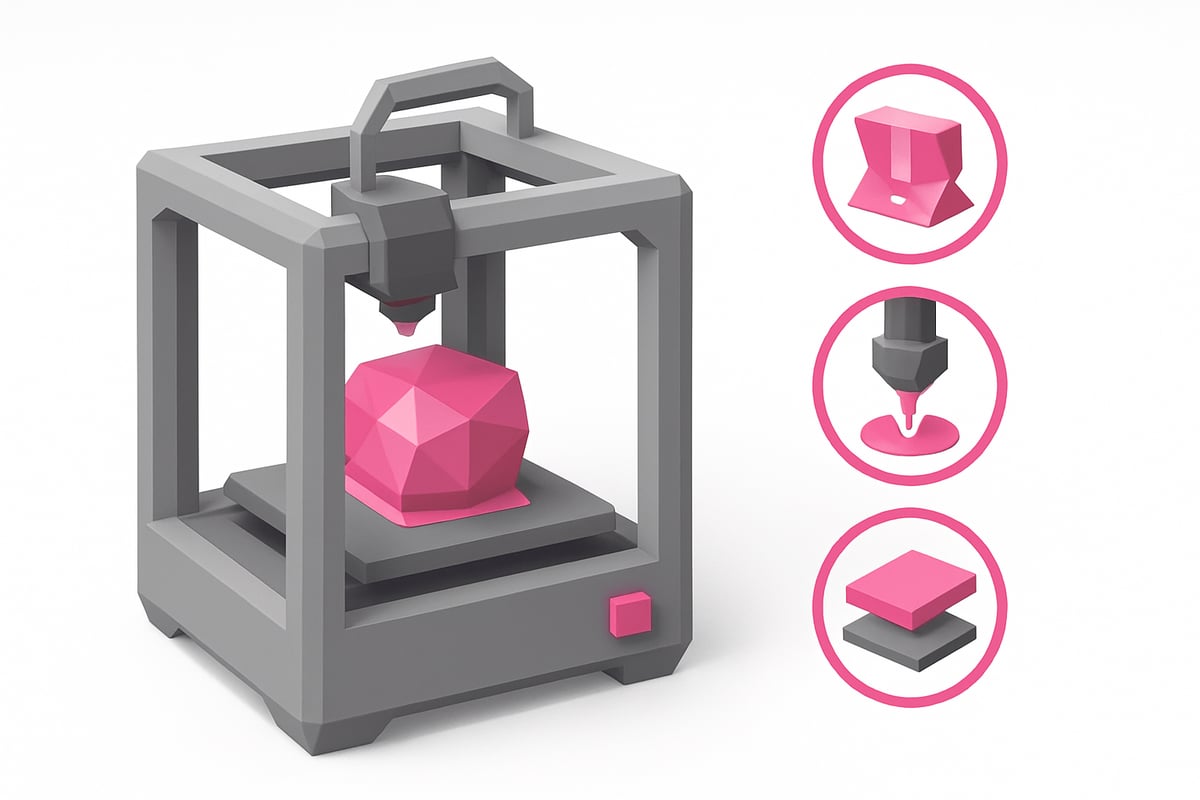
Main mistakes and solutions
| Common mistake | Why does it happen? | Quick solution |
|---|---|---|
| Poor bed adhesion 🤔 | Dirty or poorly leveled bed | Clean, level and use adhesive |
| Extruder jams 😨 | Low-quality filament | Use reliable filament and check |
| Defective layers 🧐 | Incorrect temperature or speed | Adjust settings in the slicer |
| Warped prints 😬 | Incorrect calibration | Recalibrate the 3D printer |
| Poorly placed support 🛠️ | Inadequate settings | Use support only where needed |
Remember, 70% of beginners have issues with their first 3D prints! Don't get frustrated, every mistake is an opportunity to learn.
To avoid many of these failures, choosing the right filament is key. I recommend this practical guide on how to choose filament for your 3D printer, where you'll find useful tips for your first 3D printing projects.
Still have questions? Join online communities, like our Telegram group, and consult reliable sources. Every print brings you closer to the result you're looking for!
Practical tips to improve your results
It's time to level up with your first 3D prints! 🌟 Before you start, make sure your space is well ventilated, especially if you're using resins or special filaments. Wear gloves and goggles if necessary, and always keep your work area clean and tidy.
Here are some key tips to achieve pro results:
- Adjust settings based on the object: Not all models need the same resolution or infill. Start with standard settings and experiment gradually.
- Perform regular maintenance: Clean the nozzle, lubricate the axes, and check the bed level after each project.
- Don't underestimate post-processing: Sanding, painting, or varnishing your pieces can transform a basic print into a work of art.
- Practice with simple projects: Keychains, phone stands, and miniatures are ideal for learning and building confidence.
| Project | Difficulty | Estimated Time |
|---|---|---|
| Simple keychain | 🟢 Easy | 30 minutes |
| Phone stand | 🟡 Medium | 1 hour |
| Miniature | 🟢 Easy | 45 minutes |
Want to improve your first 3D prints even further? Join online communities, share your questions, and learn from the experience of others. According to 3D Printing Statistics in 2023, the community grows every year and there is always someone willing to help you.
Don't forget to visit our Telegram group and subscribe to the Newsletter to access exclusive discounts, coupons, and resources. Every day is a new opportunity to create something unique!
Now that you have a clear idea of how to get started in the world of 3D printing and know which materials best suit your first projects, I want to share something that helped me enormously: choosing the right resin makes all the difference between a frustrating print and a great experience. If you feel like exploring everything you can create, take a look at the resin selection at Mr Resin. You'll find options for miniatures, prototypes, or functional parts, and there are always useful guides and tips so you never get lost. Check it out here:
View all 3D printing resins