

Did you know that 3D printing is revolutionizing the way we create, produce, and live in 2025? 🚀 Businesses and individuals are betting on different types of 3D printing to transform entire industries and make everyday life easier.
Today there are many 3D printing technologies, each with unique advantages and applications. Choosing the right method can make all the difference in your projects, from prototypes to final products.
In this article you will discover the 6 most relevant and widely used types of 3D printing in 2025. We will explore their characteristics, differences, advantages, and use cases so you can make informed decisions and get the most out of this technology. Ready to find out which one best fits your needs? Keep reading and become a 3D printing expert! 😃
Why Is It Important to Know the Types of 3D Printing?
Choosing the right types of 3D printing can make all the difference in the quality, cost, and functionality of any project. Printing a medical prosthetic is not the same as a quick prototype for university, right? Each technology offers unique characteristics that can optimize — or complicate — the final result.
Today there are countless materials and technologies on the market, and each one responds to specific needs. Industries such as healthcare, automotive, architecture, education, and manufacturing are increasingly relying on 3D printing to innovate and accelerate processes.
The 3D printing market is growing at an enormous pace, and the demand for personalized solutions keeps rising. In fact, according to recent statistics on the 3D printing market, more businesses and SMEs adopt this technology every year to improve their competitiveness.
Knowing the most relevant types of 3D printing helps you make informed decisions, save costs, and maximize results. Choosing the right method is key to innovating, adapting, and standing out in an increasingly digital and personalized world. 🚀

6 Types of 3D Printing You Need to Know in 2025
Want to discover the most widely used and revolutionary types of 3D printing for this year? Let's go! Each technology has its own magic and unique applications. Here I present the six that truly make a difference in 2025, with real examples and fresh data.
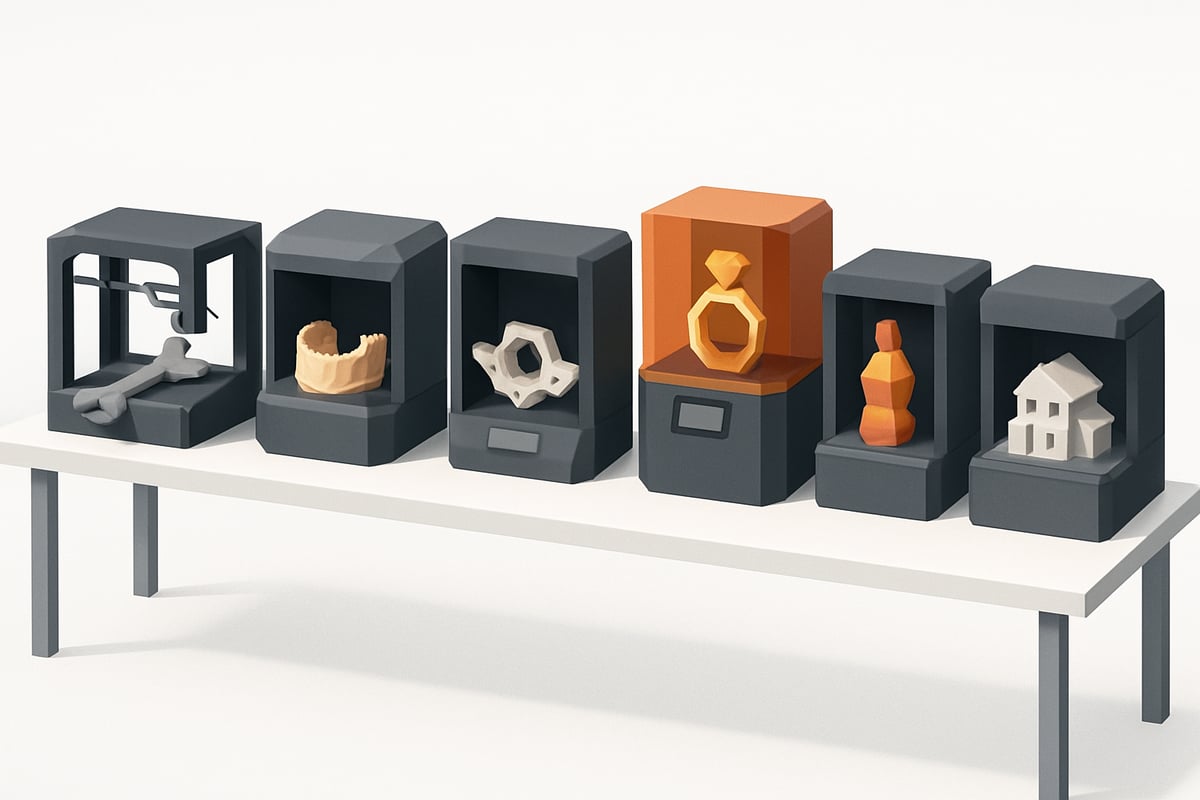
1. FDM/FFF 3D Printing (Fused Deposition Modeling)
FDM/FFF technology is the queen of desktop types of 3D printing. It works by extruding thermoplastic filament (such as PLA, ABS, or PETG) layer by layer. It is extremely popular because it is affordable, easy to use, and accepts a wide variety of materials.
Advantages:
- Low entry cost
- Compatibility with many filaments
- Ideal for prototypes and functional parts
Limitations: Medium resolution, visible layer lines and not-so-fine details. FDM accounts for more than 60% of desktop 3D printers sold. If you want to know more, discover all the details about what filament 3D printing is and how it works. Perfect for makers and education! 🛠️
2. SLA (Stereolithography)
If you are looking for precision and detail, SLA is your ally among the types of 3D printing. It uses a UV laser to cure liquid photosensitive resins, achieving super smooth surfaces and very fine details. It is ideal for applications in dentistry, jewelry and medical models.
Advantages:
- High resolution and premium finish
- Complex details
Limitations: Resins are more expensive and require post-processing. Additionally, parts can be sensitive to sunlight. SLA is the favorite for high-quality prototypes, such as dental crowns and anatomical models. Can you imagine printing a part as detailed as a piece of jewelry? 💎
3. SLS (Selective Laser Sintering)
Do you need resistant parts with impossible geometries? SLS is the top choice among industrial types of 3D printing. It uses a laser to fuse polymer powder, such as nylon or reinforced compounds, without the need for support.
Advantages:
- Allows very complex designs
- No support needed
- Functional and robust parts
Limitations: Expensive equipment, somewhat rough finish and post-processing required. SLS is the preferred option in automotive and medical devices, being the star technology for on-demand manufacturing. 🚗
4. DLP (Digital Light Processing)
DLP is the fast cousin of SLA within the types of 3D printing. It uses a digital projector to cure complete layers of resin, meaning fast and precise prints. It is perfect for jewelry, miniatures and electronic components.
Advantages:
- High printing speed
- Great precision on small parts
Limitations: Reduced print size and specific resins. DLP is a trend in high-resolution professional printing, ideal for manufacturing jewelry molds and detailed parts in minutes. Are you ready to try the speed of light? ⚡
5. Material Jetting (MJ)
Imagine printing full-color prototypes with multiple materials in a single part. Material Jetting makes it possible within the types of 3D printing. It deposits droplets of photopolymer material cured with UV light, achieving realistic finishes and amazing details.
Advantages:
- Multicolor and multi-material printing
- Excellent surface finish
Limitations: Expensive equipment and materials, less resistant parts. It is the leading technology in presentation prototypes for design and marketing, simulating real textures and colors, as if they were display models. 🎨
6. Binder Jetting (BJ)
Binder Jetting binds powder (metal, ceramic, plaster or sand) layer by layer with a liquid binder. It is ideal for printing architectural models, color prototypes and casting patterns.
Advantages:
- Scalability and low cost per part
- Full-color printing
Limitations: Fragile parts that often require sintering or infiltration. BJ is on the rise for color prototyping and metal parts in industrial and creative sectors. Can you imagine a scale model of your building in just a few hours? 🏗️
Key Factors For Choosing The Right Type Of 3D Printing
Choosing between the different types of 3D printing can seem like a challenge, but don't worry! 😉 There are key factors that will help you make the best decision for your projects.
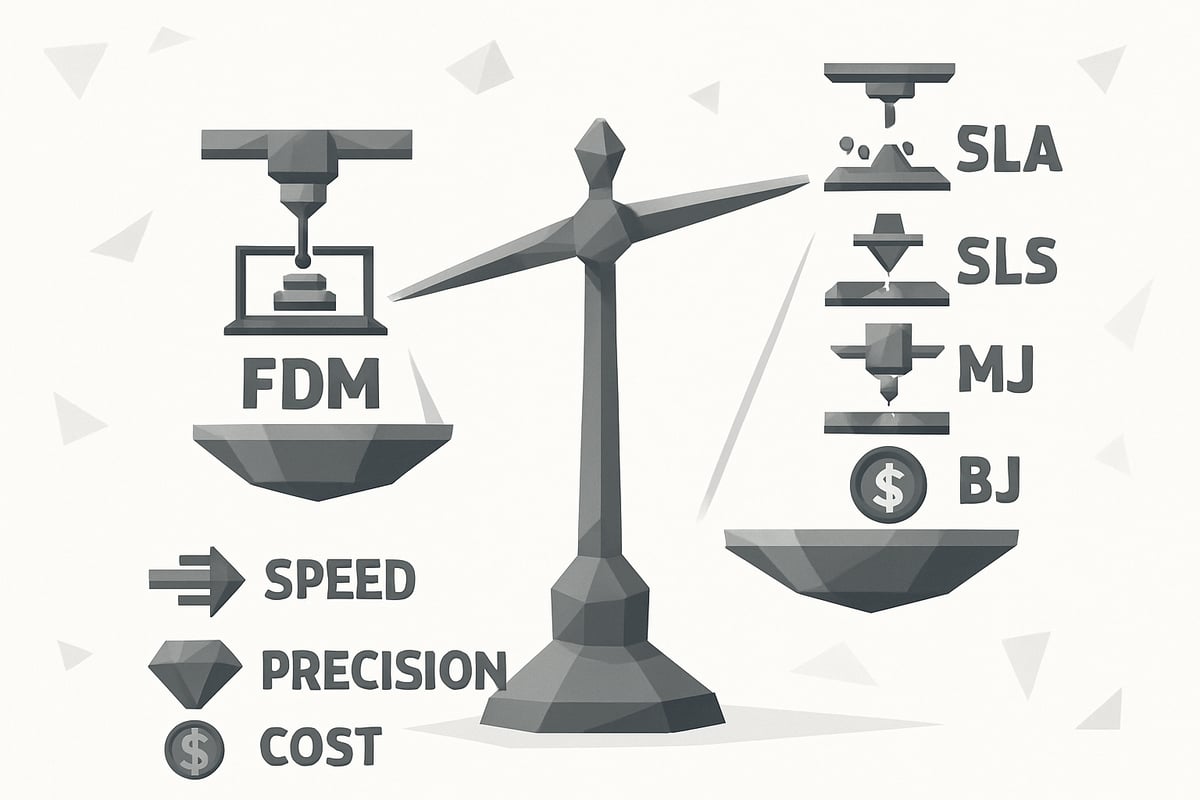
Here is a quick table with the main criteria to compare:
| Factor | Precision 📏 | Speed 🚀 | Cost 💸 | Materials 🧩 | Volume 🏗️ |
|---|---|---|---|---|---|
| FDM/FFF | Medium | High | Low | Very varied | Small/Medium |
| SLA/DLP | Very high | Medium | Medium | Resins | Small |
| SLS | High | High | High | Polymers | Medium/Large |
| MJ/BJ | Very high | Medium | Very high | Multi-material | Small |
Looking for affordable prototypes? FDM is usually ideal. Need fine details? Better go with SLA or DLP. If you want functional and complex parts, SLS is the top choice.
The type of project, your budget, and the desired material are all essential. If you have doubts about which technology suits you best, check out this guide on differences between filament and resin to clarify key concepts.
My advice: define your needs, research the types of 3D printing, and stay up to date. Ongoing learning is key in this ever-evolving world.
Remember, if you want more tips and deals, join our Telegram group at https://t.me/MrResin3D and subscribe to our Newsletter so you don't miss anything from the community! 📨
Trends And The Future Of 3D Printing For 2025
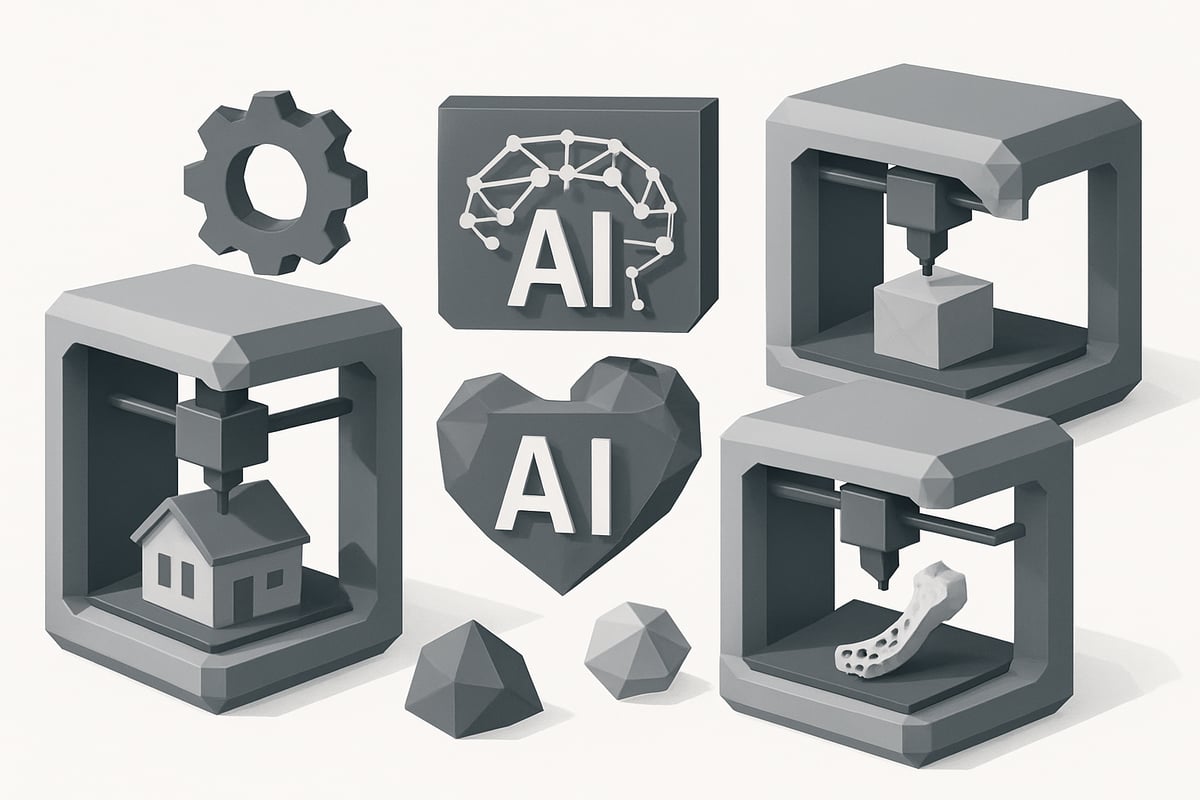
The revolution in types of 3D printing continues to accelerate in 2025. 🌐 We are seeing advances such as multi-material printing, artificial intelligence integration, and full automation. New resins and filaments enable stronger parts and incredible applications, from bioprinted organs to entire houses.
The global market is growing at a rate of 20% per year and access to advanced technologies is becoming increasingly democratised. If you want to dive deeper, you can check out our article on the Future of 3D Printing to discover where we are headed.
Would you like to always stay ahead of the curve? Join our Telegram group at https://t.me/MrResin3D and subscribe to our Newsletter so you never miss news, discounts, and surprises from the community. ✨Happy Printing! 🚀
Now that you know the 6 most important types of 3D printing for 2025, you surely have a much clearer idea of which one best suits your projects and needs. Whether you're starting out with your first pieces or looking to improve the quality of your creations, the material you choose will make all the difference. If you're curious about experimenting with new resins and discovering which one helps you achieve those perfect details and finishes, I invite you to take a look at all the options we have for you.
View all 3D printing resins