

Ready to take your 3D printing projects to the next level in 2025? If you're looking for strong and durable parts, printing with ABS is the key, but also a challenge that requires technique, patience, and a few tricks.
In this guide you'll discover everything essential to master ABS: from what it is and why to choose it, to how to configure your 3D printer, avoid common mistakes, achieve professional finishes, and learn the latest trends for this year.
Are you ready to discover the secrets to getting perfect results? Keep reading and make your 3D printing truly pro! 🚀
What is ABS and why choose it for 3D printing?
ABS (Acrylonitrile Butadiene Styrene) is a super popular thermoplastic polymer in the world of 3D printing. Its composition combines three monomers that give it that unique combination of strength, flexibility, and heat tolerance. If you're looking to print with ABS parts that can handle daily wear and tear, this material is your best ally. 💪
And why prefer ABS over other filaments like PLA or PETG? Here's a quick comparison:
| Property | ABS | PLA | PETG |
|---|---|---|---|
| Strength | ⭐⭐⭐⭐⭐ | ⭐⭐⭐ | ⭐⭐⭐⭐ |
| Heat tolerance | Up to 100°C | Up to 60°C | Up to 80°C |
| Durability | Very high | Medium | High |
| Finish | Matte, smooth | Glossy | Glossy |
ABS is ideal for printing functional parts, prototypes, automotive and electronic components with ABS. It is estimated that more than 20% of the professional FDM market uses ABS for its performance and versatility. 🚗🔧
That said, it's not all perfect: ABS can release strong odors when printing, and requires a heated bed and a controlled environment. But the results are worth it. For example, in scale modeling and industry, ABS has made it possible to manufacture strong and detailed prototypes that were previously unthinkable.
Want to explore the different variants of this material? Take a look at our ABS 3D Filaments section and discover which one suits your projects.
Optimal 3D printer settings for ABS in 2025
Let's get to it! If you want to master 3D printing and especially printing with ABS, settings are everything. Even the most experienced makers know that a few degrees more or less can ruin your project. Here are the keys to getting your parts out perfectly in 2025. 🔧🖨️
Extrusion and bed temperature
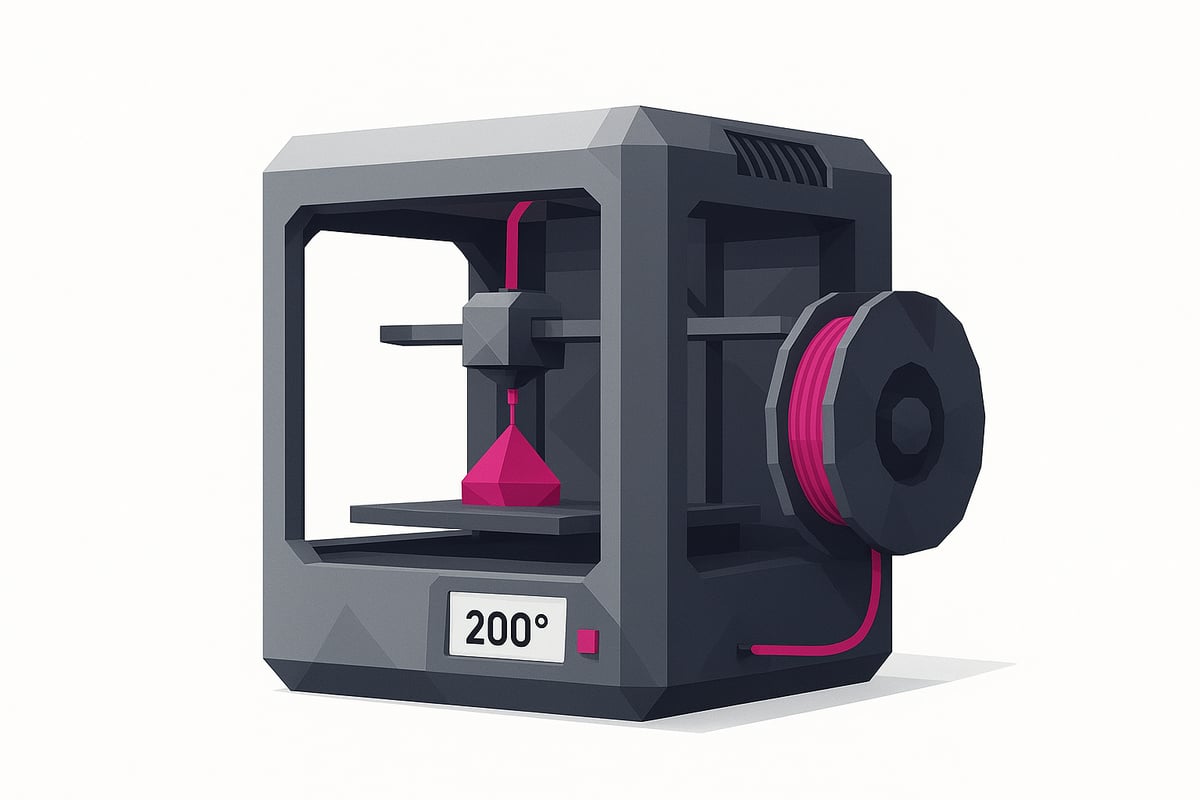
The correct temperature is the foundation for printing with ABS without headaches. The ideal range for the extruder is between 230°C and 260°C, while the bed should be kept between 90°C and 110°C. If you go below 230°C, the material doesn't flow well and you may see warping or poor adhesion. Raising the temperature too much can cause stringing and bubbles.
| Parameter | Recommended temperature |
|---|---|
| Extruder | 230°C – 260°C |
| Heated bed | 90°C – 110°C |
For example, when printing with ABS at 220°C, the part can end up weak and poorly adhered. But if you go up to 245°C, you'll see firmer layers and a uniform finish. Never underestimate the power of a few degrees!
Printing environment and ventilation
To print with ABS safely and stably, you need an enclosed enclosure to prevent air drafts. ABS is sensitive to sudden temperature changes, which can cause cracking or warping. Also, don't forget ventilation: use extractors, HEPA filters and, if you work in small spaces, a mask.
ABS releases styrene, a compound that can be harmful if inhaled in excess. So, in addition to taking care of your 3D printer, take care of your health. If you want to explore different filaments compatible with your 3D printer, check out this selection of Filaments for 3D printing.
Bed leveling and adhesion
A common mistake when printing ABS is underestimating bed leveling. Use automatic sensors if your 3D printer allows it, or calibrate manually with a sheet of paper. To improve adhesion, try hairspray, Kapton tape or a glue stick.
If the bed is poorly leveled, warping appears and the part detaches mid-print. There's nothing more frustrating! A few minutes of calibrating can save you hours of problems.
Advanced tips for printing with ABS without errors
Ready to take your parts to the next level? Printing with ABS can seem complicated, but with these advanced tricks, you'll avoid errors and achieve flawless finishes. Let's dive into techniques that make a difference, from warping to nozzle maintenance.
Minimizing warping and cracking
Warping is the number one enemy when printing with ABS, but it can be avoided with a few tricks:
- Use a brim, skirt or raft to improve adhesion.
- Maintain a stable ambient temperature, free from air drafts.
- If you have a thermal enclosure or heated chamber, activate it to prevent sudden changes.
These techniques help prevent your parts from detaching or cracking. Always remember to check the enclosure seal and the bed temperature!
Speed and retraction settings
Adjusting print speed is key. To print with ABS in detail, keep it between 40 and 60 mm/s. This way you avoid errors and achieve a smoother finish.
Configure retraction to reduce stringing and bubbles. Every 3D printer is different: on Prusa and Creality models, trying different values can make all the difference. For more tips and solutions, check out our 3D printing tips and tutorials and experiment with your own settings.
Nozzle selection and maintenance
Always choose hardened steel nozzles, especially if you use technical filaments. They are more resistant and last longer.
Don't forget to clean the nozzle regularly to prevent clogs from ABS residue. Simple maintenance prevents failures and extends the life of your 3D printer. If you use abrasive materials, check the condition of the nozzle frequently.
Troubleshooting Common Issues When Printing with ABS
Have you ever wondered why printing with ABS can sometimes feel like a real challenge? Don't worry! Here's a quick guide to identifying and solving the most common problems — perfect if you're looking for professional results without the frustration. 😉
Warping: Causes and Solutions
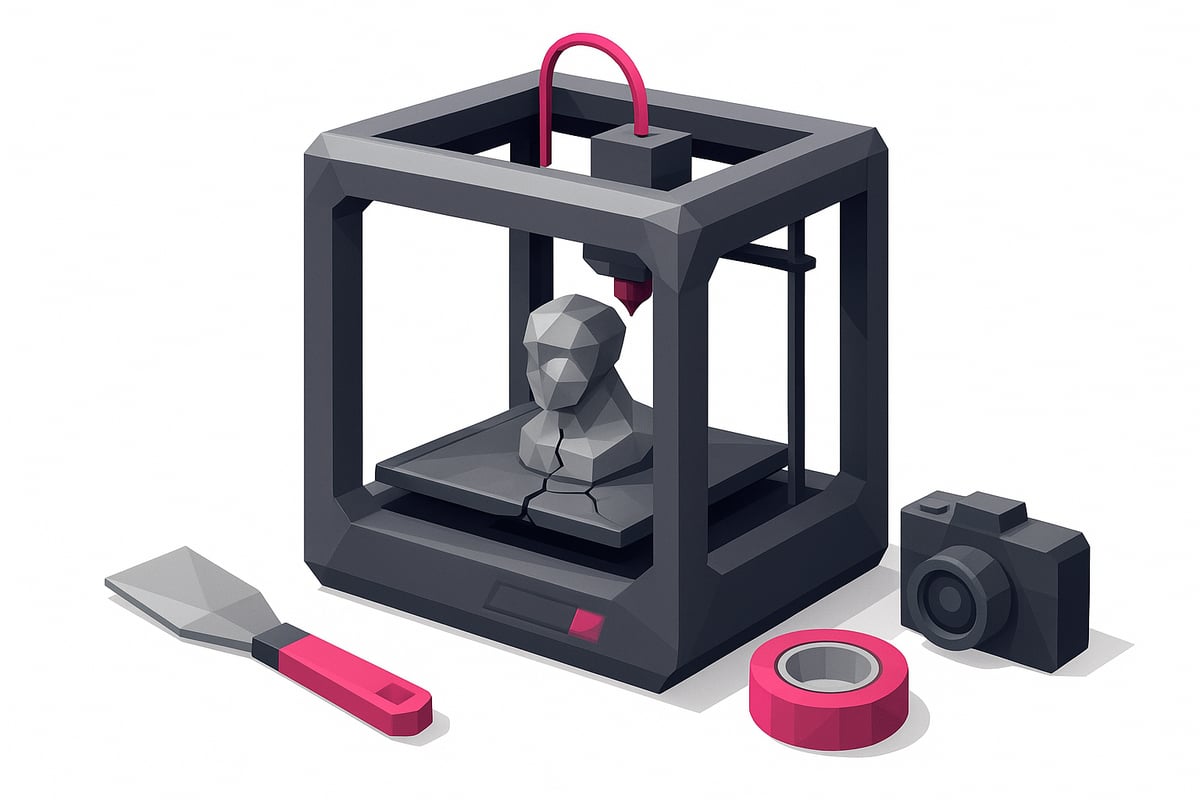
Warping occurs when the corners of your print lift off the bed. It usually happens due to temperature differences or poor adhesion. Use a heated bed, thermal enclosures, and adhesives such as hairspray or glue. One user reported that simply enclosing their 3D printer and controlling the temperature was enough to eliminate warping. Remember that 35% of failures when printing with ABS are caused by temperature and adhesion issues.
Delamination or Cracking
Delamination appears as cracks between layers. It occurs when there are drafts or the extrusion temperature is too low. Increase the extruder temperature and maintain a stable environment. Avoid opening the enclosure during printing. This way, printing with ABS will be much easier and your parts will gain in strength.
Stringing and Blobs
Seeing fine strings or small blobs? This is usually caused by poor retraction settings or excessive temperature. Adjust the retraction and gradually reduce the temperature. If you want to dive deeper into the best settings for printing with ABS, check out this complete guide to ABS filament in 3D printing.
Adhesion Problems
If your print is coming loose, check the bed leveling and try different adhesion methods, such as Kapton tape or a glue stick. Keep the bed clean and make sure the temperature is right for printing with ABS — this will help you achieve a perfect base.
Rough Surfaces or Defects
Rough or imperfect surfaces usually indicate that the filament has absorbed moisture. Store ABS in airtight bags with desiccant and dry the filament if necessary. This will help you avoid defects and improve the finish of your prints.
Post-Processing and Professional Finishes for ABS Parts
Achieving a professional finish on your parts after printing with ABS is key if you want them to look spectacular and be fully functional. 😎 Post-processing transforms an ordinary print into a polished, durable piece ready for any project.
To start, sanding with fine-grit sandpaper or abrasive sponges removes imperfections and smooths out visible layers. If you're after an ultra-smooth finish, chemical smoothing with acetone vapor is the go-to trick. Simply place the part in a sealed container with acetone, but remember to do this in a well-ventilated area while wearing a mask. The result is like magic!
Want to paint your parts? ABS takes acrylic paints and specialty sprays very well. Before painting, clean the surface with isopropyl alcohol (you can find alcohol and post-processing products ideal for this) and apply a primer to achieve vibrant, long-lasting colors.
If you need to join several pieces after printing with ABS, turn to special adhesives for ABS or even chemical welding using acetone. This technique fuses the parts together, achieving a strong and nearly invisible bond.
A golden tip: always wear gloves and protective goggles when handling chemicals. Notice the difference in finish: an untreated piece looks matte and rough, while after chemical smoothing it looks like it just came out of a factory. Dare to experiment and take your projects to the next level!
Trends and recommendations for printing with ABS in 2025
The world of 3D printing never stops innovating and ABS is at the center of many of these developments. Today there are "low odor" ABS filaments that make the experience easier, with lower odor emissions and better adhesion. Furthermore, market growth proves it, with a 15% annual increase in sales, according to the ABS Filament 3D Printing Material Market Analysis. 🚀
If you want to print with ABS like a professional in 2025, go for printers with an enclosed chamber and smart sensors. Models like the Prusa MK4, Bambu Lab X1 and Anycubic Kobra 2 (look for real images of these on our website) offer optimized slicing profiles and automated settings for perfect results.
Sustainability is also making its mark: there are more and more recycled and eco-friendly ABS options available. Don't forget to update your slicing software, make use of humidity sensors and always look for certified materials. This way you'll achieve strong, safe and planet-friendly pieces. 🌱
Conclusion:
Printing with ABS may seem like a challenge, but with the ideal settings, practical tips and the trends coming in 2025, you'll achieve strong and professional pieces. Remember, choosing the right filament and tuning your 3D printer make all the difference. If you're looking for the best filaments and accessories, the Mr Resin store has everything you need to power up your projects.
Want more? Join our community on Telegram and access exclusive discounts, coupons and events. You can also stay up to date and receive direct promotions by subscribing to our Newsletter.
To learn more about the growth of ABS and its relevance in 3D printing, we recommend this report on the thermoplastics market for 3D printing with updated data and trends.
✨Happy Printing! 🚀
After everything we've covered about how to get the most out of ABS in your 3D printing, you're probably eager to try these tips with the best materials. If you want professional results without the hassle, it's worth using quality filaments and the right support. At the Mr Resin store you'll find a wide variety of options for every project and skill level, so if you're looking for the perfect filament for your next creations, take a look at all our filaments here:
View all 3D Printing Filaments
Your next epic print is waiting for you!