Engineering Filaments: ASA, ABS, PC and Carbon Fibre

When PLA and PETG aren't up to the job, these take over: filaments that stand up to real sun, heat and load. Here you'll find ASA, ABS, polycarbonate, carbon fibre and glass fibre reinforced filaments, flame-retardant and anti-static (ESD) grades, high-performance polymers such as PEI, PPSU, PEEK and PEKK, and soluble PVA for supports. Before you buy, check what each one asks of your printer. If you're after something simpler, head back to our 3D printer filaments.

Skip to results list
24 items
Column grid
Column grid

Filter

Which engineering filament do I need?

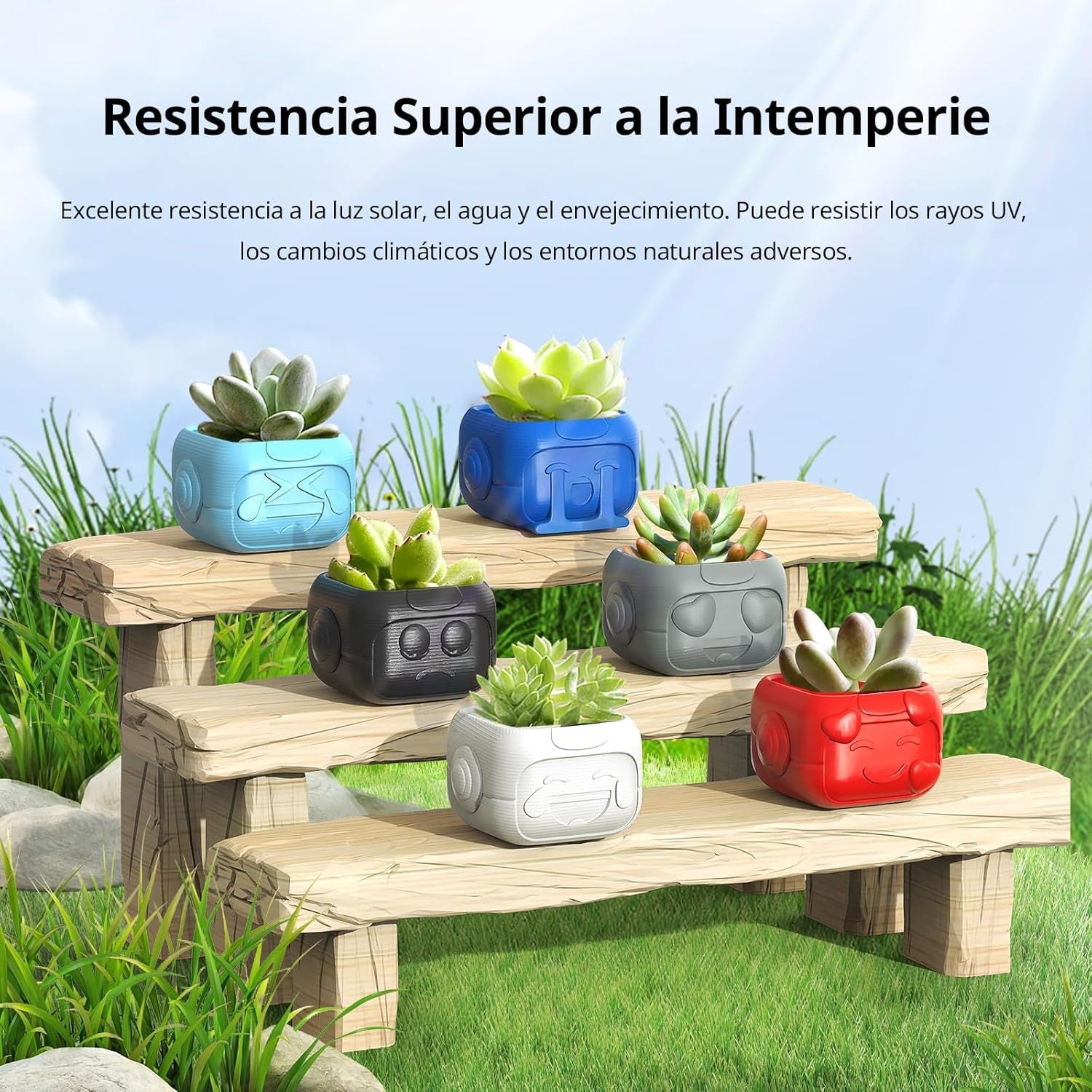
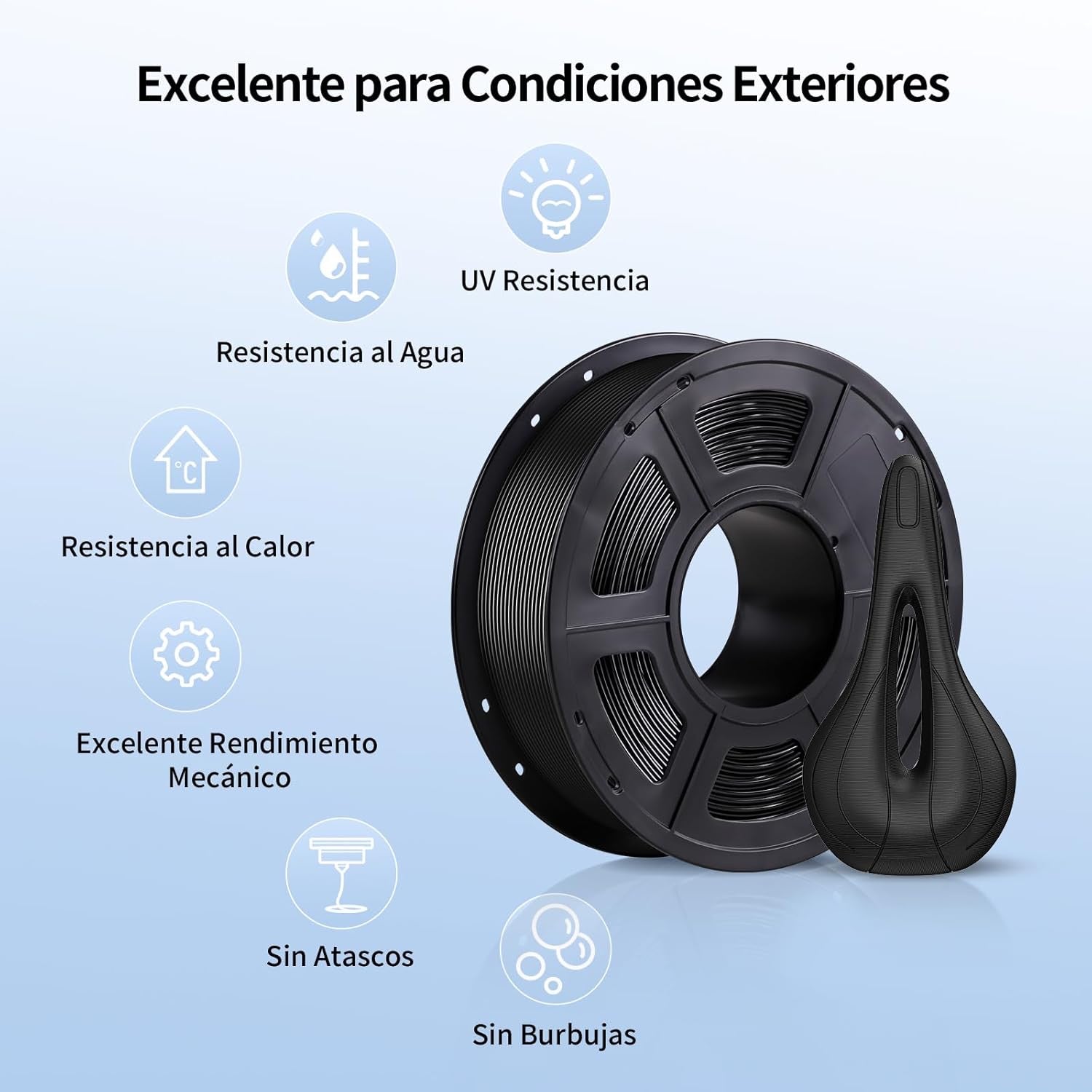
Outdoors and sun: ASA. It handles UV without yellowing or going brittle. It's what we'd use for any part that's going to spend the year outside.

ABS: similar to ASA in strength and heat resistance, but it doesn't like the sun as much. You can smooth it with acetone vapour.

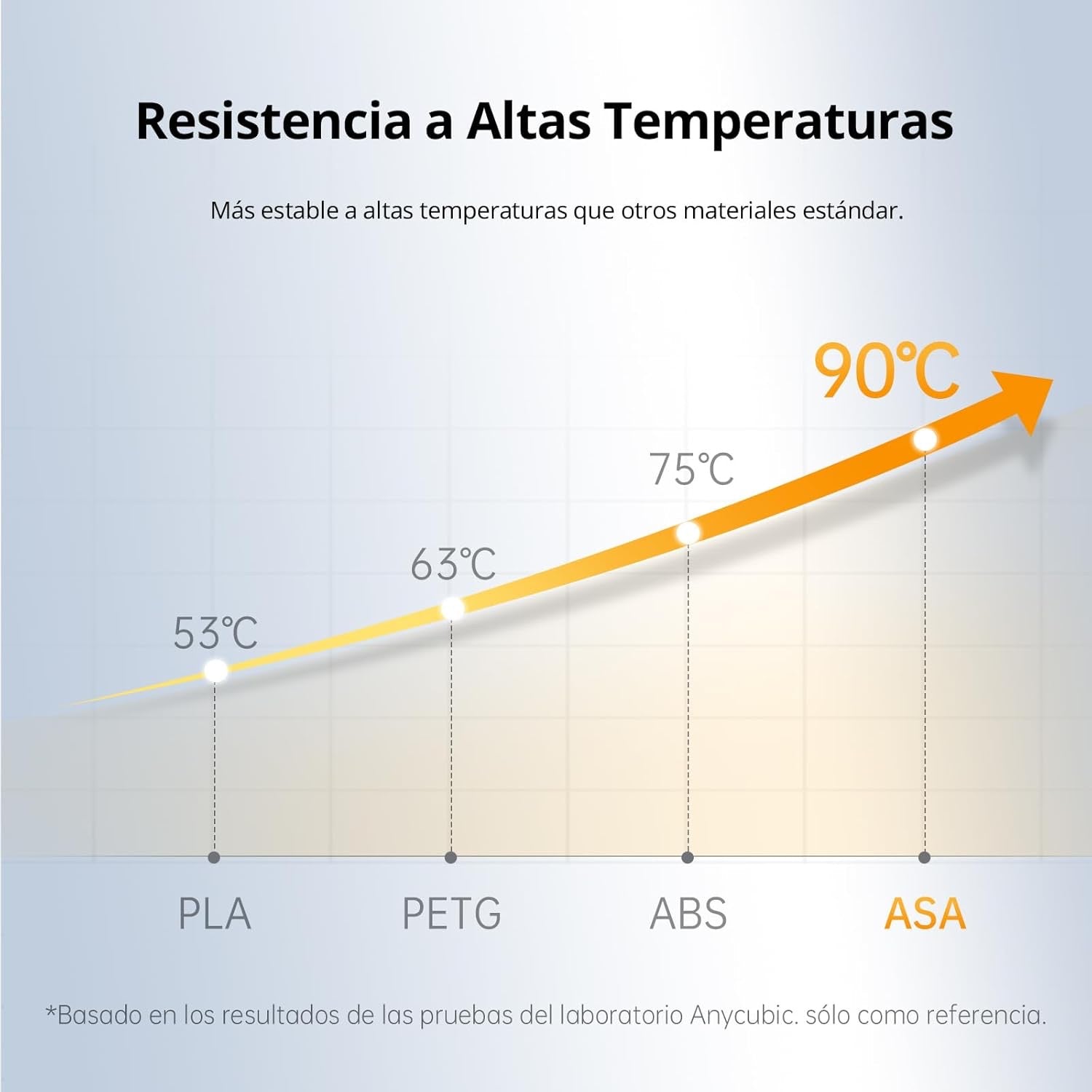
Polycarbonate (PC): the most heat- and impact-resistant of the filaments we stock on 1 kg spools. Anycubic rates its heat deflection temperature at 110 °C.

Carbon fibre: PLA-CF and PETG-CF for stiff, light parts with a matte finish; PA6-CF (nylon) and PET-CF when you need serious heat resistance, over 180 °C heat deflection according to the manufacturer.

PEI, PPSU, PEEK and PEKK: these are the high-performance polymers. They cope with temperatures and chemicals that would melt any other filament, but they need a 360-450 °C nozzle and a heated chamber. If your printer isn't a high-temperature machine, forget about them.

ESD: anti-static filaments for parts that sit next to sensitive electronics, such as trays, assembly jigs or housings.

PVA: not for parts, for supports. It dissolves in water and lets you print shapes that would otherwise be impossible. You need a printer that handles two materials.

We've written guides on some of them: ASA filament, how to print ABS, carbon fibre filament and nylon filament.

Filamento ASA Anycubic resistencia a la intemperie impresora 3D FDM - Mr Resin

What does my printer need?

This is what to check before you buy.

Enclosed printer: strongly recommended for ASA and ABS, and a must for polycarbonate and nylon. Without an enclosure, parts lift off the bed and crack.

Hardened steel nozzle: a must for anything with carbon fibre in it. A brass one won't last a single spool.

Temperature: polycarbonate needs 270-290 °C at the nozzle and a 100-120 °C bed, and PA6-CF up to 300 °C. The high-performance ones (PEI, PPSU, PEEK, PEKK) need 360-450 °C and a heated chamber. Check your hotend can get there.

Drying: nearly all of these need drying before you print. Nylon and PA6-CF especially: 90-100 °C for 8-12 hours, according to Anycubic.

ASA for outdoor use: what really lasts

If you need to print something that's going to live outside (planters, balcony brackets, car parts, sensor housings), ASA is the safe bet. It handles the sun without yellowing or going brittle, and it takes more heat than PLA and PETG too.

All it asks for is an enclosed printer or, at the very least, a spot with no draughts. It's all explained in our ASA filament guide.

What each engineering filament needs

MaterialBest forEnclosed printerHardened nozzle
ASAOutdoors, sun exposureRecommendedNo
ABSTough parts, acetone smoothingRecommendedNo
Polycarbonate (PC)High heat and impactsYesNo
PLA-CF / PETG-CFStiff, lightweight partsNoYes
PA6-CF (nylon)High temperature and loadYesYes
PET-CFHigh temperature, low moisture uptakeDepends on printerYes
PVAWater-soluble supportsNoNo
PEI (Ultem) and PPSUVery high temperature, insulationYes, heated chamberNo
PEEK and PEKKTop-end heat and chemical resistanceYes, heated chamberNo
ESD (anti-static)Parts near electronicsDepends on materialDepends on material

What if my printer is open-frame?

With an open printer, the sensible choice is to stick to PETG, PLA-CF or PETG-CF. You can get away with ASA and ABS on small parts with a makeshift enclosure and no draughts, but it's not ideal.

Anycubic PA6-CF de Anycubic, imagen 1

Carbon fibre and nylon: parts that do real work

Carbon fibre filaments are stiffer and lighter than their plain versions, and they leave a matte finish that hides layer lines. PLA-CF and PETG-CF print almost like their unfilled siblings; all you need is a hardened nozzle.

PA6-CF and PET-CF are proper engineering materials: Anycubic rates them at over 180 °C heat deflection. Think motor mounts, mechanical parts or anything that gets hot. More in our carbon fibre guide and our nylon guide.

PVA: supports that dissolve

PVA is used as a support material on printers that handle two materials. You print the part in PLA and the supports in PVA, drop it in water and the supports disappear. That way you get shapes you could never clean up by hand, like parts with internal cavities or mechanisms printed already assembled.

It's very sensitive to moisture: always keep it sealed and dry it before use.

Engineering filaments: frequently asked questions

Which 3D printing filament holds up best in the sun?

ASA. It's made for outdoor use and handles UV without yellowing or going brittle.

Which filament has the highest heat resistance?

The high-performance ones: PEEK, PEKK, PEI (Ultem) and PPSU, which need a 360-450 °C nozzle and a heated chamber. If your printer can't get that hot, Anycubic's PA6-CF and PET-CF go above 180 °C heat deflection according to the manufacturer, and polycarbonate reaches 110 °C.

Do I need a hardened nozzle for carbon fibre filament?

Yes. Carbon fibre is abrasive and will chew through a brass nozzle very quickly.

Can I print ASA or ABS on an open-frame printer?

Small parts, yes, with patience and no draughts. For big parts you need an enclosure, or they'll crack.

What is PVA filament used for?

Printing supports that dissolve in water afterwards. You need a printer that can print two materials at once.

Related Categories