

Would you like to learn how to print PETG and achieve professional results from the very first try? 🖨️✨ If in 2025 you want to take your 3D printing projects to the next level, this guide is for you.
Here you will discover step by step how to print PETG, from choosing the filament and optimal settings to solving common problems. With practical tips and expert tricks, you will avoid mistakes and make the most of all the advantages of PETG.
You will see real examples, comparisons with other materials and learn how to optimize every parameter to achieve strong, flexible and durable parts. Get ready to discover innovative applications and stay motivated with exclusive tips.
Keep reading and become a 3D printing expert with PETG this year! 🚀
What is PETG and why choose it in 2025?
PETG (Glycol-modified Polyethylene Terephthalate) is a super versatile filament that has evolved greatly in recent years. Perfect for those looking to print PETG with strong and flexible results, this material stands out for its transparency and durability. Furthermore, it is ideal for both functional and decorative parts, and adapts brilliantly to modern desktop 3D printers.
Among its top properties, PETG offers greater impact resistance than PLA and deforms less than ABS. It is also non-toxic and allows for glossy and translucent finishes. Check out this table for a comparison:
| Property | PETG | PLA | ABS |
|---|---|---|---|
| Strength | ⭐⭐⭐⭐⭐ | ⭐⭐⭐ | ⭐⭐⭐⭐ |
| Flexibility | ⭐⭐⭐⭐ | ⭐⭐ | ⭐⭐⭐ |
| Transparency | ⭐⭐⭐⭐⭐ | ⭐⭐ | ⭐ |
| Ease of use | ⭐⭐⭐⭐ | ⭐⭐⭐⭐⭐ | ⭐⭐ |
In 2022, 17.1% of plastics used in Chile were PET, showing its popularity and recycling potential. By 2025, we will see a boom in its use for printing PETG in prototypes, mechanical parts and electronic enclosures. Experts recommend it to both advanced makers and beginners for its ease of use and professional results. If you want to discover the most recommended options, visit the selection of PETG Filaments for 3D printing and get ready to take your projects to the next level.
Preparation before printing PETG: Tools, 3D printers and filaments
Before diving into printing PETG and achieving pro results, it is key to prepare your entire setup. Choose a compatible 3D printer, such as the Prusa MK4, Bambu Lab P1S or Creality K1, which offer excellent temperature control and stability for this material. A quality filament makes all the difference, as recognized brands ensure better finishes and fewer failures. If you have doubts about which filament to buy, take a look at the guide How to choose filament for your 3D printer to always make the right choice.
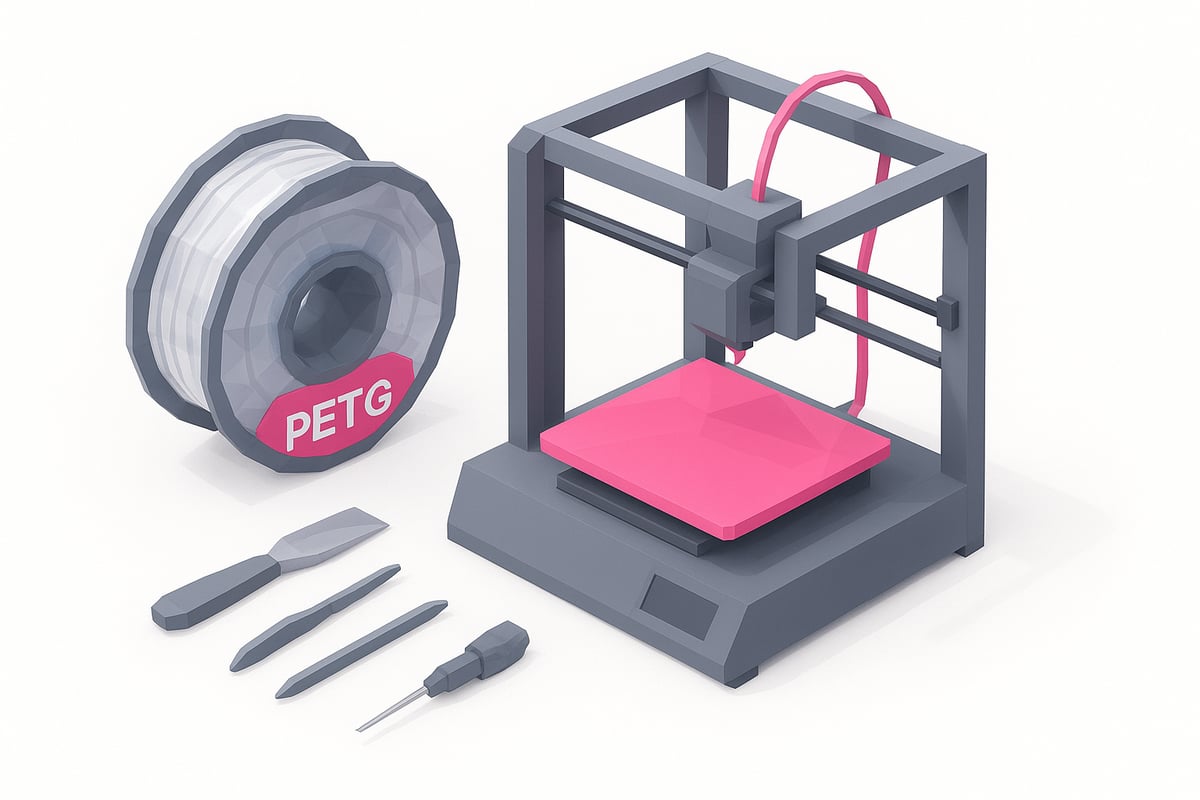
Make sure to store the filament in a dry place and use dryers if you live in humid areas, as PETG easily absorbs moisture and that can ruin the print. Here are some essential tools for printing PETG without any surprises:
- Spatula to remove parts without damaging them 🛠️
- Precision tweezers to remove filament residue
- Nozzle cleaner to prevent clogs
- Soft brush to clean the bed
Bed preparation is essential. Clean it thoroughly and use specific adhesives or Kapton tape to improve adhesion. Don't forget to level the bed before each print, either manually or with modern automatic systems. A good environment, with ventilation and, if necessary, a mask, will keep you safe throughout the process.
Comparing finishes helps you decide:
| Filament type | Surface finish | Strength | Ease of printing |
|---|---|---|---|
| Premium | Shiny, smooth | High | Very easy |
| Budget | Matte, rough | Medium | Can cause issues |
Properly preparing your space and materials is the foundation for printing PETG and achieving durable, beautiful parts from the very first attempt. The key is in the details!
Ideal settings for printing PETG in 2025: Key parameters and adjustments
Ready to achieve pro results from your very first time printing PETG? Let's go for a winning configuration! Getting the parameters right is key to achieving strong, beautiful parts without any failures. Here I'll explain it step by step, with real examples and tips tested by the community.
Extrusion and bed temperature: the first step towards success
The first essential adjustment for printing PETG is temperature. The ideal range is between 220°C and 250°C depending on the filament manufacturer and your printer. For example, premium brands typically require 235°C, while others work perfectly at 245°C.
A heated bed is also vital. Keep it between 70°C and 90°C to achieve good adhesion and avoid issues like warping. If you notice the part is lifting, raise the temperature slightly or use specific adhesives.
Here is a quick summary of the ideal parameters:
| Parameter | Recommended range |
|---|---|
| Extrusion | 220°C – 250°C |
| Bed | 70°C – 90°C |
Remember, every printer is different, so run tests and adjust based on your results.
Speed, retraction and fan: balancing quality and time
The printing speed for PETG should be between 40 and 60 mm/s. If your model has a lot of detail, lower the speed to improve the finish. For large, simple parts, you can increase it slightly.
Retraction is your ally against annoying strings (stringing). Try 4.5 mm of retraction at 40 mm/s, but adjust according to your extruder. If you still see stringing, lower the extrusion temperature a few degrees and try again.
The layer fan should be used at 50% after the first layers, especially if you're aiming for transparency or smooth finishes. But if you notice poor adhesion, reduce the fan during the first layers.
Nozzle, flow and a practical example: perfect Benchy in PETG
The standard nozzle diameter for printing PETG is 0.4 mm, ideal for most models. If you're going to print large parts, you can use 0.6 mm to gain time and robustness.
Material flow is another key setting. Keep 100% as your baseline, but if you see excess material in the layers, drop it to 98%. If you notice gaps, increase it slightly.
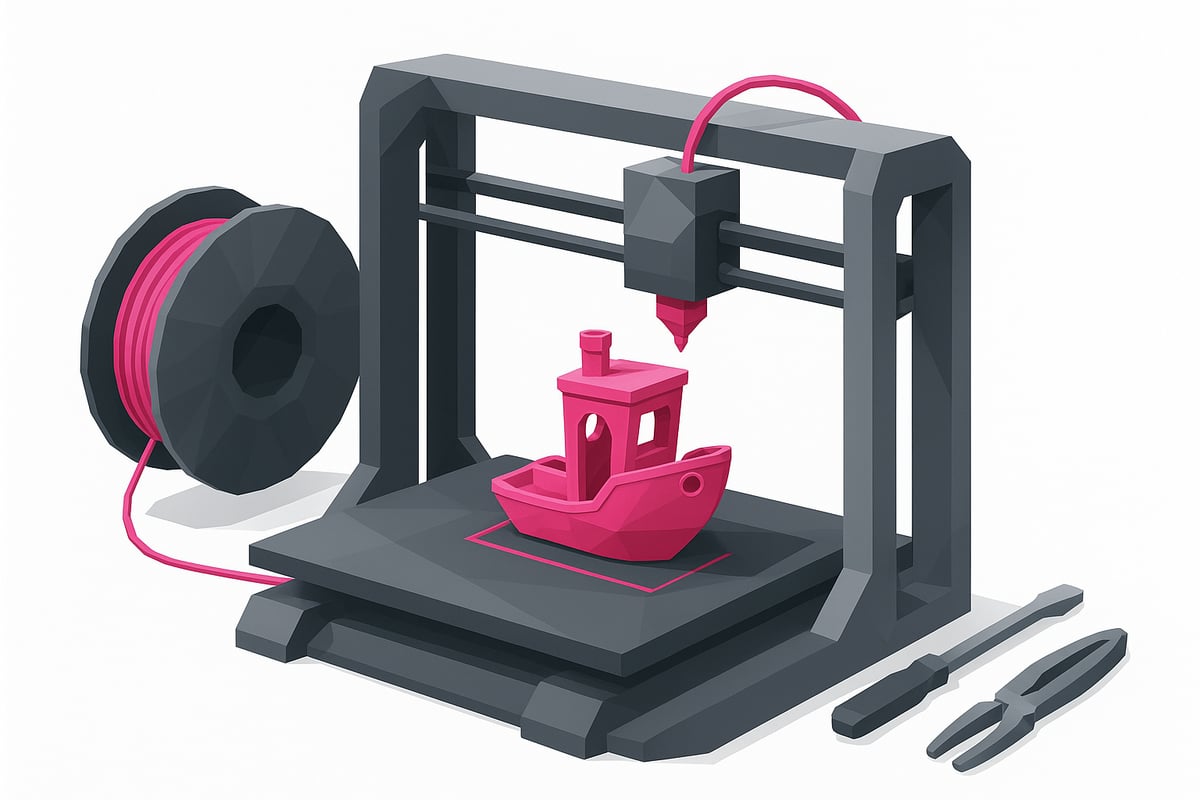
A real example: to print a Benchy in PETG with display quality, use 235°C extrusion temperature, bed at 80°C, speed 50 mm/s, retraction of 4.5 mm and fan at 60% after the base. The result will be spectacular!
Pro tips and extra resources for flawless prints
Remember that the key to printing PETG without frustration is patience and fine-tuning. Use pre-configured profiles in your slicer and run small tests before tackling large parts.
Want more tricks and real examples? Don't miss Perfect prints from the very first try, where you'll find advanced tips and solutions to the most common problems.
With these settings and tips, printing PETG in 2025 will be as easy as making a coffee. Go ahead and experiment — you'll see the difference!
Common problems when printing PETG and how to fix them
Has it ever happened to you that when printing PETG you get stringing, the part doesn't stick properly, or the nozzle even gets clogged? 😅 Don't worry, you're not alone! Let's go over the most frequent problems and how to fix them so your prints come out perfect.
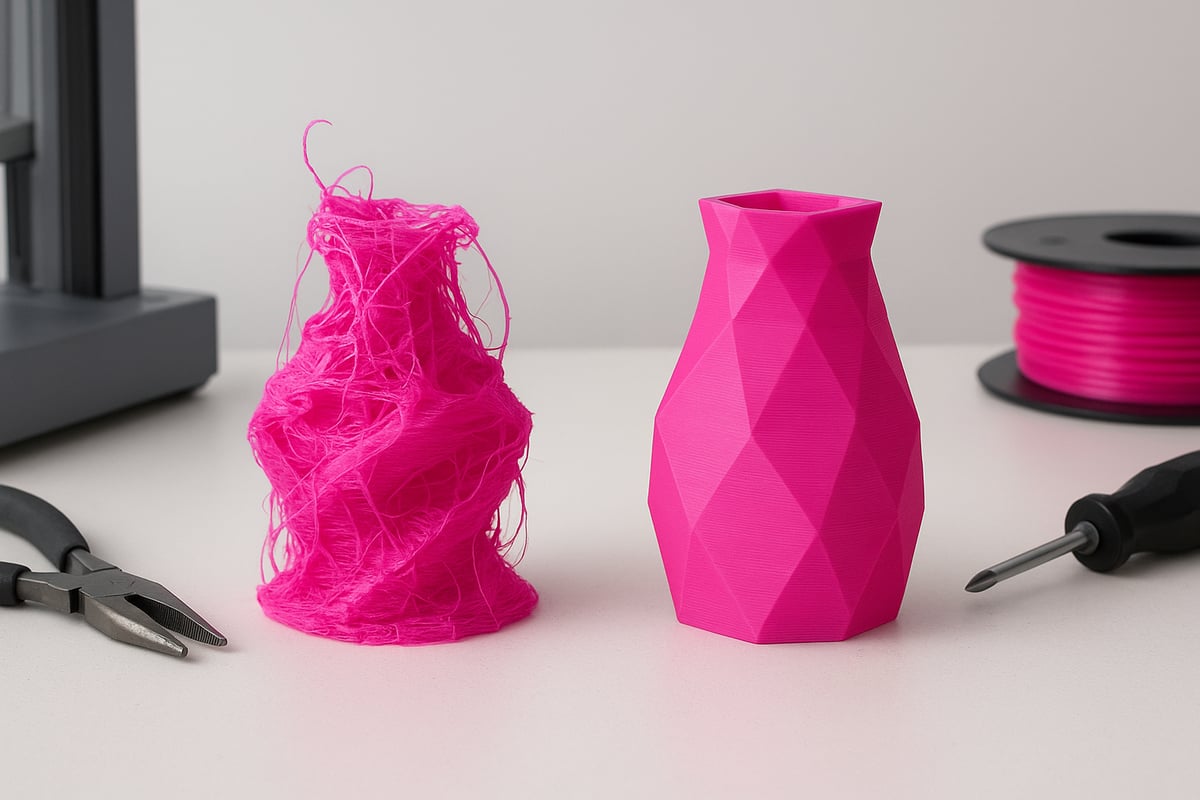
Here's a quick table with the problems and their solutions:
| Problem | Main cause | Quick fix |
|---|---|---|
| Stringing | High temperature, insufficient retraction | Lower temperature and adjust retraction |
| Poor bed adhesion | Dirty or cold bed | Clean thoroughly and raise temperature |
| Nozzle clog | Debris or low-quality filament | Clean and use premium filament |
| Warping and deformation | Low bed temperature, air drafts | Raise temperature and enclose the environment |
| Marks and bubbles | Wet filament | Dry the filament before use |
For example, I once tried printing PETG for an electronics enclosure and it came out full of stringing. I adjusted the retraction and lowered the temperature, and the next part came out flawless! According to surveys, more than 60% of users face these issues in their first prints, but 90% manage to solve them by applying these tips.
If you're new, I recommend reviewing the basics in What is filament 3D printing and how does it work to better understand why these problems occur and how to avoid them.
With these tips, printing PETG will be much easier and more fun! 😃
PETG Applications and Trends in 3D Printing for 2025
Printing with PETG has become the go-to option for creating functional prototypes, mechanical parts, and all kinds of everyday objects. This material stands out for its strength and flexibility, making it ideal for both hobbyists and professionals.
A super common example is the manufacturing of electronic enclosures: the parts come out clean, durable, and with a spectacular translucent finish. But printing with PETG goes far beyond home projects.
In industry, PETG is already a key player in sectors such as automotive, medicine, robotics, and education. Its ability to withstand mechanical and chemical stress positions it as a top filament for demanding applications.
And what about the trends for 2025? Recycled PETG is gaining ground, along with blends featuring special additives that improve thermal resistance and ease of post-processing. According to PETG Filament Market Growth Projections, sustained growth is expected in the market, driven by demand for sustainable and versatile solutions.
Furthermore, printing with PETG offers clear advantages over other materials: it is easier to work with, has excellent chemical resistance, and adapts perfectly to the latest generation of smart 3D printers. The future looks bright with innovations in filaments and greater technological compatibility.
Conclusion:
Now you have everything you need to print with PETG and achieve professional-level results in 2025! Remember that every adjustment matters, from the temperature to the type of filament you choose.
We invite you to visit Mr Resin, where you will find filaments, resins, and accessories with real images of each product. This way you can compare and choose the best for your projects.
Want to always stay up to date? Join our Telegram group at https://t.me/MrResin3D and subscribe to our Newsletter. Get discounts, exclusive coupons, and take part in giveaways with the community.
To learn more about trends and the growth of materials like PETG, you can check out the 3D Printing Plastics Market Analysis.
Don't get left behind! ✨ Happy Printing! 🚀
Now that you have a clear understanding of how to master 3D printing with PETG and know all the tricks to achieve pro results, the next step is choosing the ideal filament for your projects. Trust me, the difference between an ordinary finish and a spectacular one lies in the quality of the material you use. At Mr Resin you can find a variety of PETG filaments designed for every need, with expert support and advice just one click away. If you're ready to start experimenting and see what you're capable of, I invite you to View all 3D Printing Filaments. Let's print something incredible!