

Can you imagine creating custom medical prosthetics 🦾, architectural models 🏢, or unique toys at home 🎲? In 2025, 3D printing is advancing at full speed and more and more people and businesses are using it to transform ideas into real objects. Choosing the right type of 3D printer is key to achieving incredible results, whether for your home, your business, or a large industrial project. In this article you'll discover the 7 essential 3D printers of the year, their differences, advantages, and how they can open up a world of possibilities for you. Let's get started!
Why is it important to choose the right type of 3D printer in 2025?
The 3D printing revolution keeps growing at full speed in 2025 🚀. The market has diversified so much that choosing the right type of 3D printer can make the difference between a successful project and a frustrating experience.
Today, looking for a printer for the home, for a classroom, or for a factory are not the same thing. Each type of 3D printer responds to different needs. For example, while a dental clinic needs maximum precision for prosthetics, a school prioritizes safety and ease of use, and industry demands mass production and advanced materials.
Some figures show that the presence of 3D printers in homes and businesses continues to grow. This also means that mistakes when choosing can generate hidden costs, low-quality parts, or even stalled projects. Did you know that the wrong type of 3D printer can limit your materials and increase production times?
The trends for 2025 point toward more connected equipment, intelligent automation, and compatibility with new materials. Before buying, I recommend identifying what you want your printer for, how much you can invest, and what level of detail you need. If you want to dive deeper into the different types of 3D printer, take a look at this guide on Types of 3D printing to clear up any doubts and choose with confidence.
Remember! Analyze your needs carefully and anticipate the future of your projects to get the most out of your investment in 3D printing. 😉
7 Essential Types of 3D Printer in 2025
Ready to discover the perfect type of 3D printer for your next project? In 2025, the variety is enormous and each technology has its own magic. Let's explore together the 7 options that are revolutionizing the makers, professional, and educational world. 👇
Resin 3D Printers (SLA/DLP/LCD)
Resin printers have won over those seeking millimeter precision and perfect detail. They use liquid resins that solidify with light, achieving ideal results for miniatures, jewelry, or dental prototypes. Among their advantages, ultra-smooth finishes and high resolution stand out. That said, they require post-processing and their materials tend to be more costly.
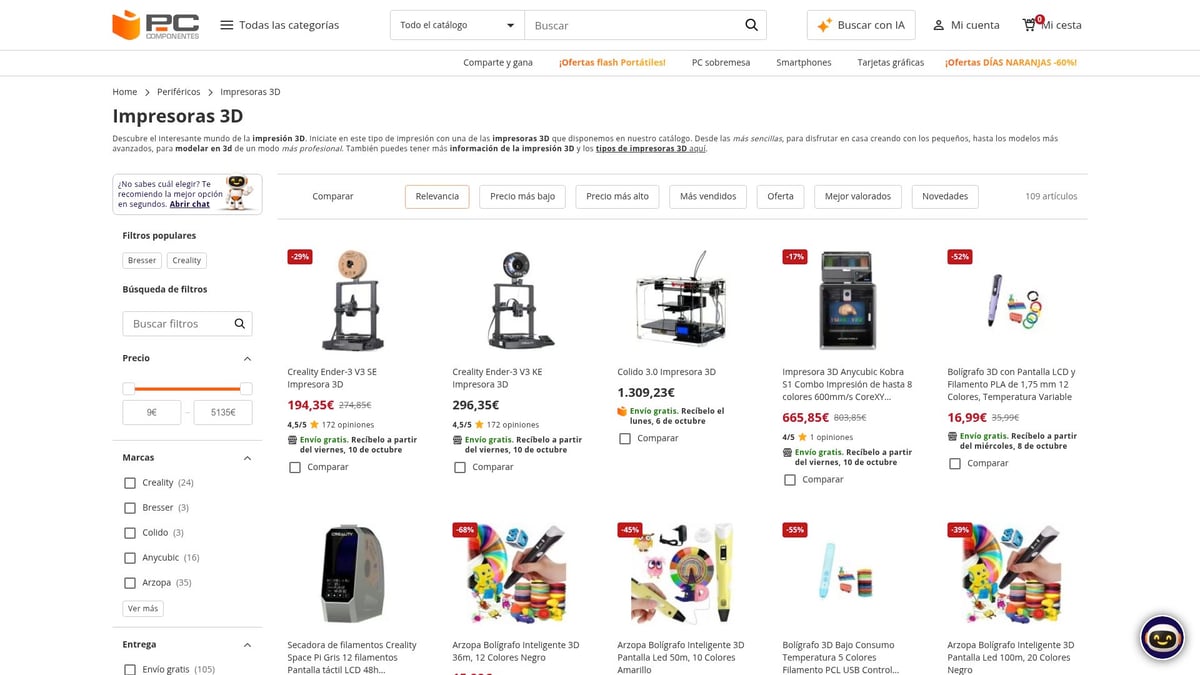
If you're unsure between filament or resin, I recommend taking a look at What is better, filament or resin to choose the most suitable type of 3D printer for you. Top examples: Elegoo Mars, Anycubic Photon. Audience: designers, dentists, artists. Prices: from €200.
FDM/FFF 3D Printers (Fused Filament)
This type of 3D printer is the most popular in homes and schools. They work by melting plastic filaments such as PLA, ABS or PETG, creating objects layer by layer. They are affordable, easy to maintain and compatible with many materials. The finish is less smooth than that of resin, but perfect for functional prototypes.
Models such as the Prusa i3 MK4 and Creality Ender 3 are benchmarks. Audience: makers, students, engineers. Prices: from €150 to €1,500. Ideal for getting started with 3D printing!
Metal 3D Printers (SLM/DMLS)
This is where the most advanced type of 3D printer comes in, capable of manufacturing finished metal parts. They use metal powders and lasers to create strong, complex components used in medicine, automotive and aerospace industries. Their advantages: design freedom and durability.
That said, the price is high (over €50,000) and they require specialised maintenance. Examples: EOS M 100, SLM Solutions. Audience: engineers, industrial sector. In 2025, a reduction in costs and greater accessibility is expected.
Delta 3D Printers
Delta 3D printers stand out for their vertical structure and super-fast movements. They are perfect for printing tall parts and jobs that require speed without sacrificing precision. That said, they have a steeper learning curve and are not as common as Cartesian FDM printers.
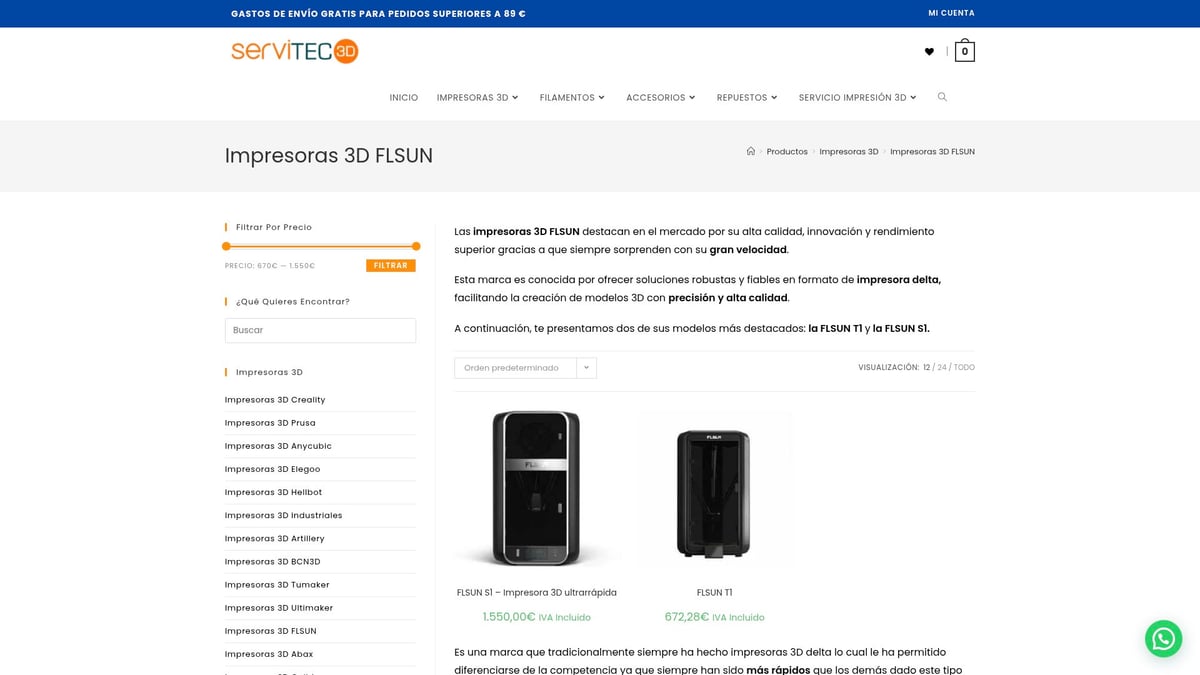
The FLSUN Super Racer model is a standout example. Audience: advanced users, laboratories, makers who love speed. Prices: from €300. If you're looking for something different, this type of 3D printer will surprise you.
Multi-Material and Multi-Color 3D Printers
Would you like to print in multiple colors or materials at once? This type of 3D printer makes it possible. They use technologies such as IDEX and mixing systems, enabling functional prototypes and parts with customised finishes. They are ideal for designers and advanced educational centres.
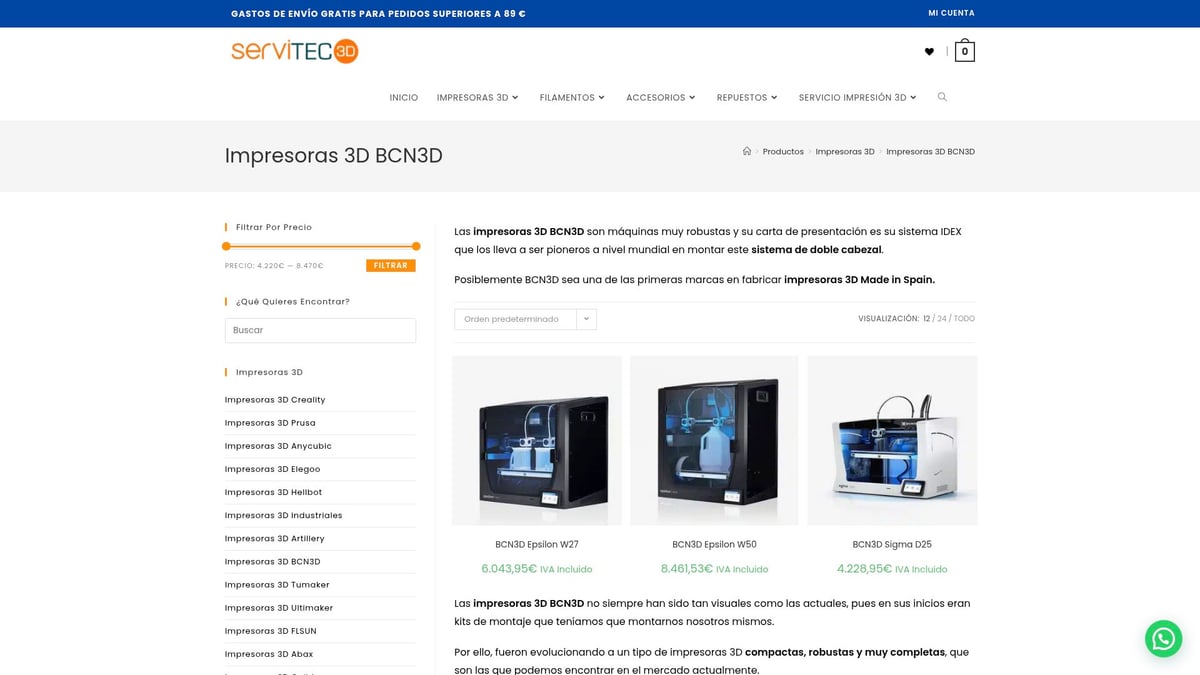
The BCN3D Sigma D25 model is a benchmark. Pros: unlimited creativity. Cons: greater technical complexity and higher price (from €2,000). Perfect for those seeking innovation with every print.
Large-Format Industrial 3D Printers
When what you need is to manufacture large parts or short runs, this type of 3D printer is the answer. They offer superior print volume, robustness and reliability for working 24/7. They are common in factories, architecture and engineering.
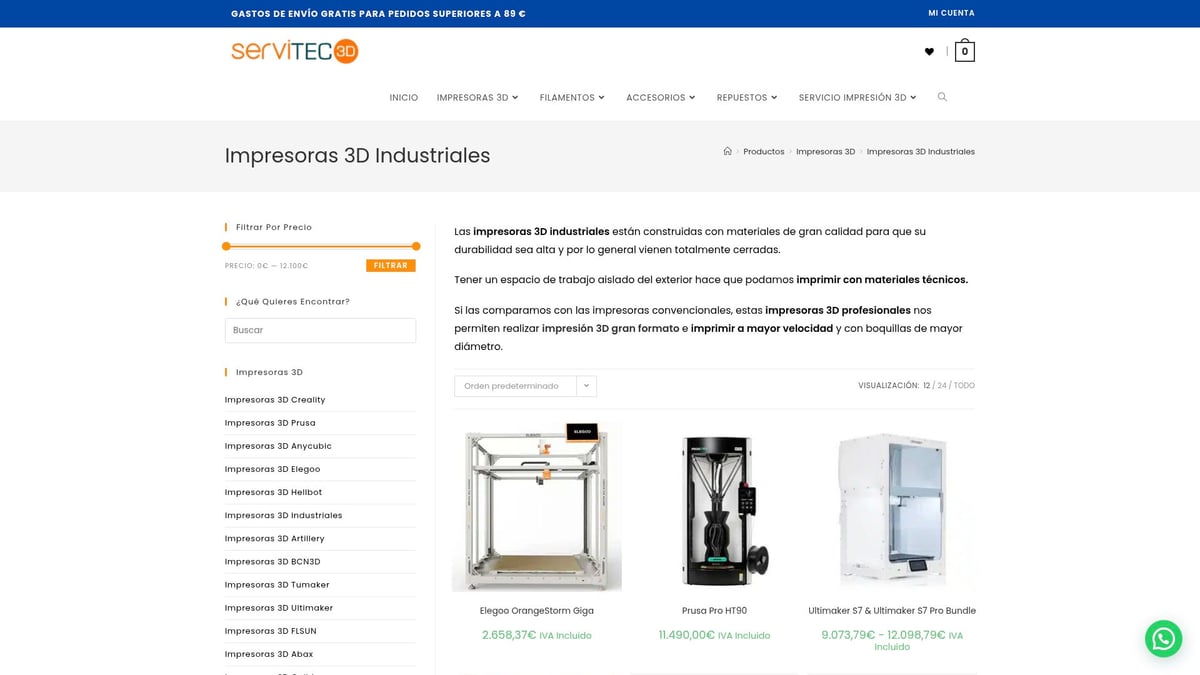
Examples: Tumaker, Ultimaker S5. Prices: several thousand euros. In 2025, IoT integration and remote control is a key trend for this sector.
3D Printers for Education and Home
If you're looking to introduce younger users to 3D printing or learn from home, this compact type of 3D printer is your best ally. They are easy to use, safe, and affordable, designed for families, schools, and beginner makers. They use safe materials like PLA and feature intuitive interfaces.
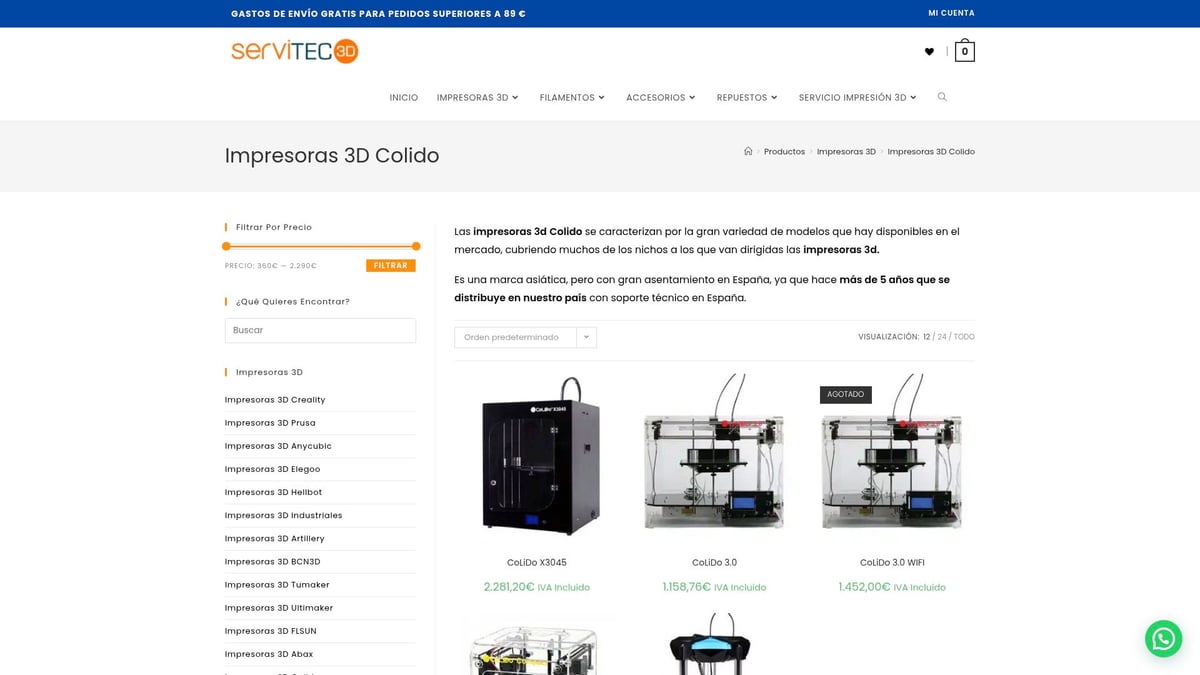
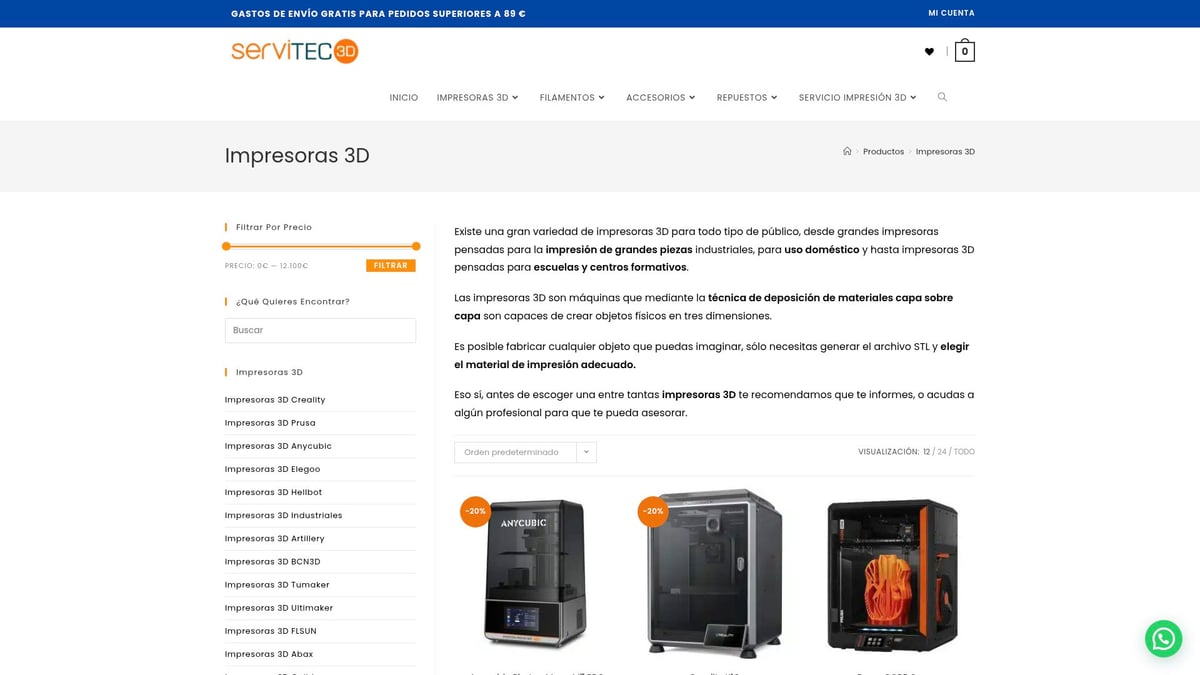
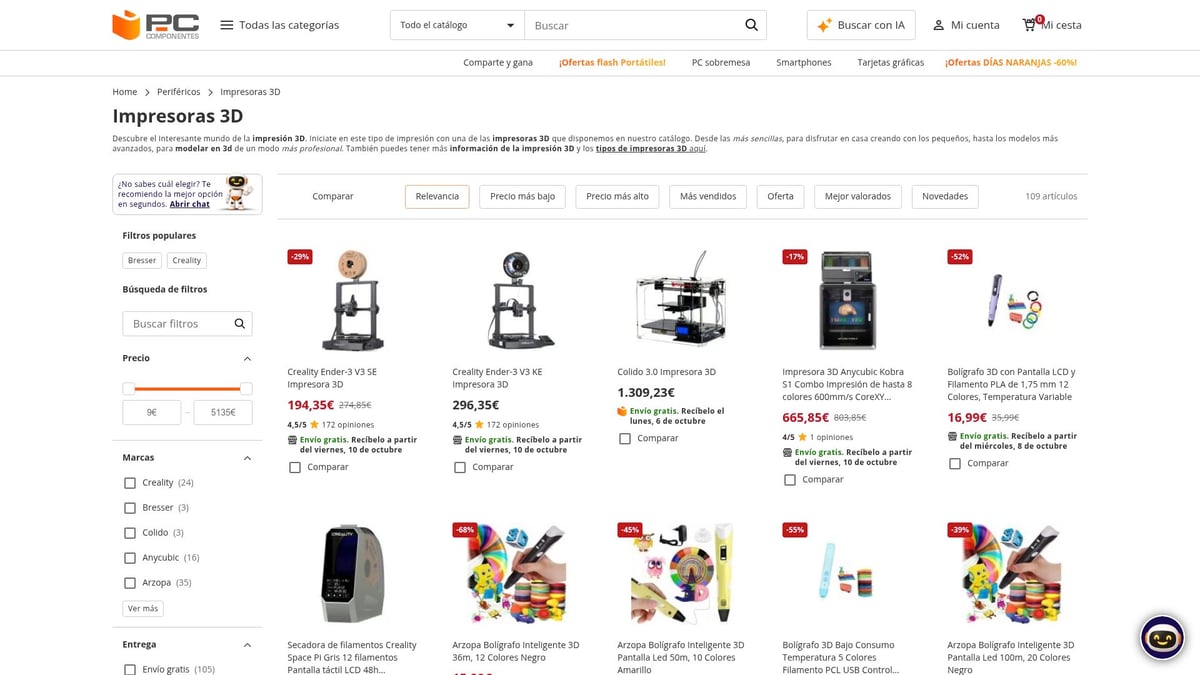
The Colido D1315 Plus model is popular. That said, they do have limitations in size and materials. Prices: from €200. Perfect for taking your first steps in 3D printing!
How to Choose Your Ideal 3D Printer According to Your Needs in 2025
Choosing the perfect type of 3D printer for you in 2025 may seem complicated, but with a few key tips you'll be able to get it right and make the most of 3D printing. 😊
First, think about your budget, the print volume you need, and the precision you're looking for. Are you going to print large parts, detailed prototypes, or simple figures for home use? Also consider compatible materials, such as PLA, ABS, or resins. If you have questions about filaments, take a look at this Filament Guide for 3D Printers to choose the ideal one for your project.
Ease of use, technical support, and included software can make all the difference, especially if you're a beginner. Consider whether you're interested in WiFi connectivity, automatic leveling, or extras like a dual extruder. Compare popular brands, ask in forums, and check community reviews before deciding which type of 3D printer best suits your day-to-day needs.
Don't forget to learn from others' experience — join our Telegram group at https://t.me/MrResin3D and subscribe to the Newsletter so you don't miss out on discounts, coupons, and news! This will help you improve your experience and avoid common mistakes.
✨Happy Printing! 🚀
Essential Materials and Accessories for 3D Printing in 2025
Choosing the right material is just as important as the type of 3D printer you use. Each technology requires specific consumables and accessories to achieve top results, whether in home, professional, or industrial projects. 🏗️
Among the most popular materials in 2025 we find:
- PLA, ABS, PETG: ideal for FDM, perfect for functional parts and prototypes.
- Standard resins, flexible resins, biocompatible resins: for SLA/DLP/LCD printers. If you want to go deeper, don't miss this Guide to Resin 3D Printing.
- Metal powders: exclusive to metal printers, ideal for advanced engineering.
Don't forget post-processing: cleaning, curing, sanding, and painting make all the difference in the final finish. Accessories such as FEP/nFEP/ACF films, isopropyl alcohol, and tool kits are essential for keeping your equipment in perfect condition. 🧰
Shopping at specialized stores like Mr Resin ensures variety, deals, and expert advice. For example, you can find Anycubic resins from €17.99. Additionally, there are tailored solutions for professionals, makers, and businesses looking to optimize their experience.
Want to learn more? Explore the blog and educational resources to get the most out of your printer. Join our Telegram group at https://t.me/MrResin3D for exclusive discounts, coupons, and events. And don't forget to subscribe to our Newsletter so you never miss any news!
In summary, investing in quality materials and accessories is key for any type of 3D printer. Take care of your equipment and enjoy spectacular results! ✨Happy Printing! 🚀
Now that we've covered the most essential 3D printers for 2025 and you know how important it is to choose wisely based on what you want to create, it's time to think about the materials that truly make a difference in your results. If you want to get the most out of your printer, I recommend taking a look at the resins that many of us use to achieve incredible detail and finishes. There are options for every project, from miniatures to functional prototypes, and you can find great prices and useful tips all in one place. If you're interested, you can View all 3D printing resins and start experimenting with the best of 2025.