

Are you wondering if resin vs filament 3D printing is the best option to get started in 2025? 🎯 You're in the right place! This decision can make all the difference whether you're a curious hobbyist, a demanding professional, or a business looking to optimize your projects.
Here you'll discover the advantages, disadvantages, and most powerful applications of each technology. We'll analyze how they work, their quality, costs, most recommended uses, trends for 2025, and give you practical tips to choose with confidence.
Ready to compare and discover which one suits your needs? Read to the end and make the decision that will help you achieve incredible results. Let's get started! 🚀
How does filament 3D printing (FDM/FFF) work?
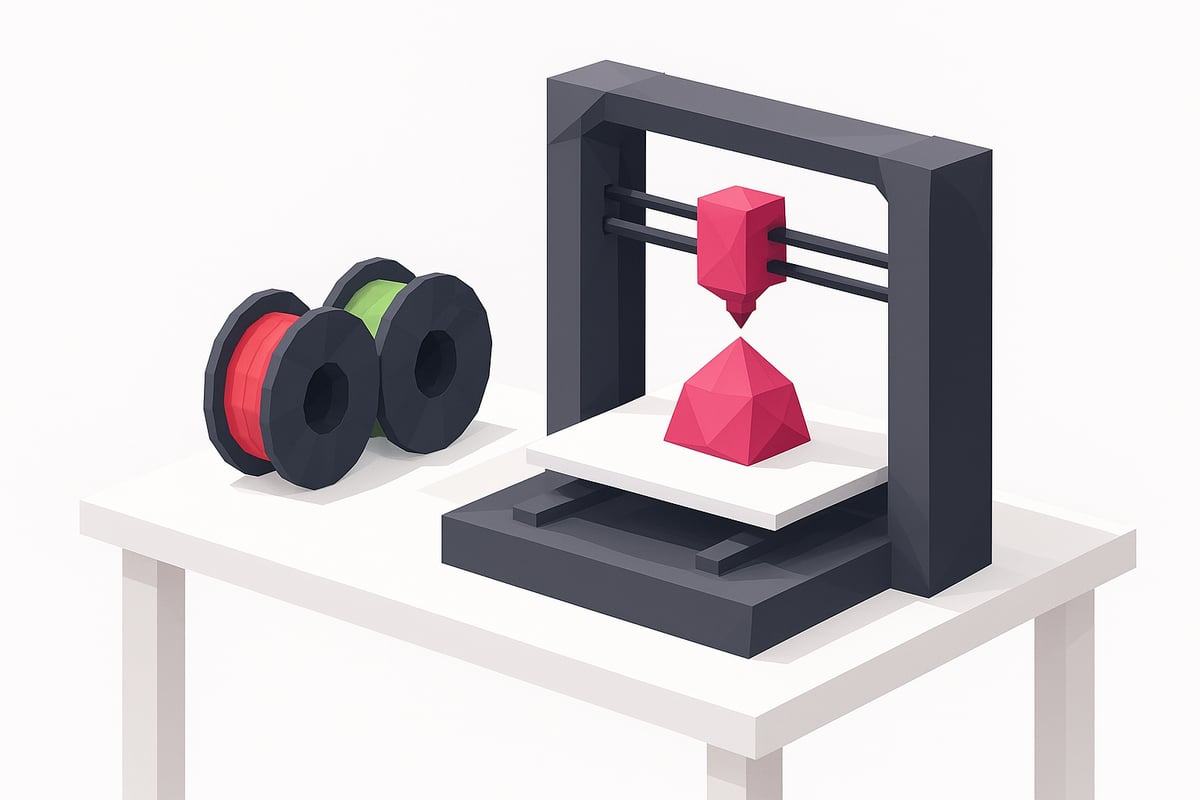
Filament 3D printing, known as FDM or FFF, is the starting point for many enthusiasts in the resin vs filament 3D printing debate. How does it work? The 3D printer heats a plastic filament, much like a glue gun, and deposits it layer by layer to form the desired object.
The most popular materials include PLA, ABS, PETG, and TPU. Each has its advantages: PLA is easy to use and eco-friendly, while ABS is more durable. If you want to see a real example of PLA filament, you can take a look at the PLA filament product page for 3D printers.
What makes FDM 3D printing so appealing? Here are its advantages:
- Easy to use, ideal for beginners.
- Low cost of 3D printers and materials.
- Wide variety of colors and filament types.
- Perfect for quickly creating prototypes and functional parts.
But watch out, it also has limitations:
- Medium resolution, with visible layers in the finish.
- Post-processing is straightforward, but may require sanding or painting.
- Some fine details can be lost, compared to resin.
A typical example is quickly printing supports, spare parts, or large prototypes. In fact, 60% of home users prefer FDM for its accessibility and low cost, according to 2024 market trends.
Who is it ideal for? If you're a beginner or need to print large objects, resin vs filament 3D printing with FDM is the most convenient and affordable option to start your adventure in the 3D world.
How does resin 3D printing (SLA, DLP, LCD) work?
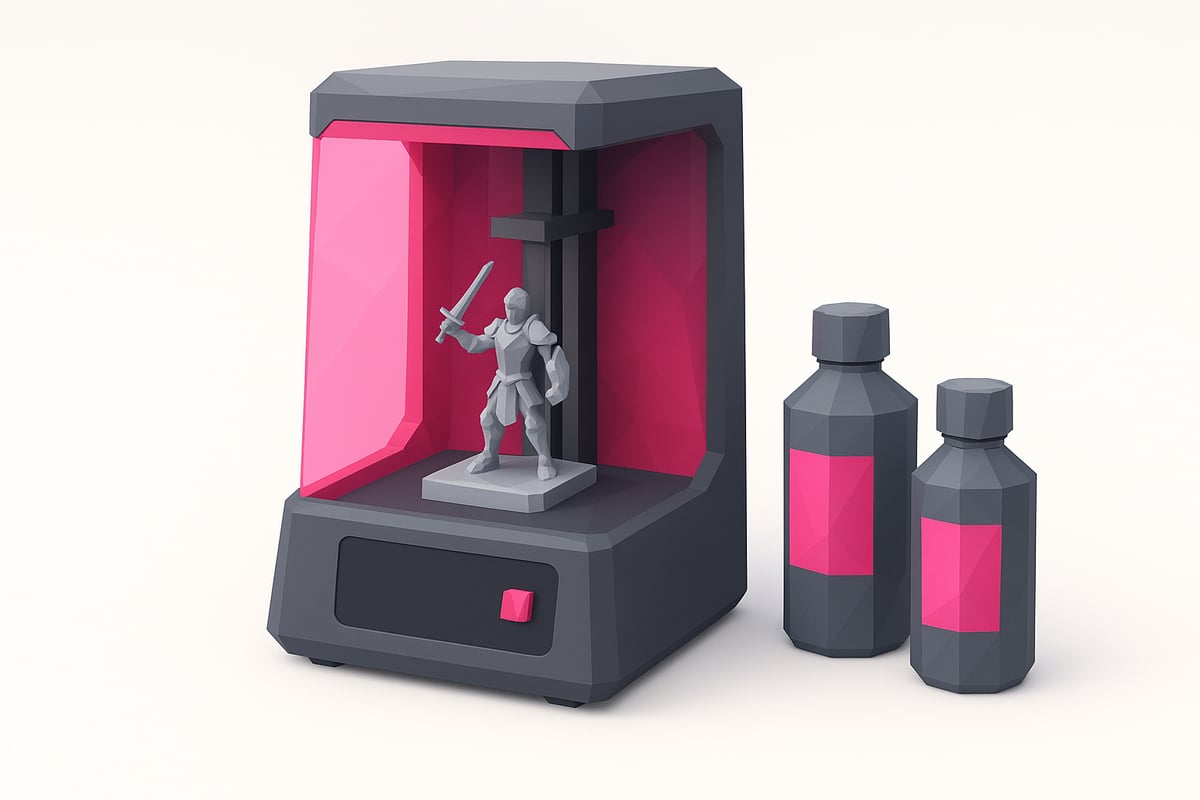
Have you ever wondered how resin vs filament 3D printing makes all the difference in surface finishes? Resin 3D printers work using technologies such as SLA (Stereolithography), DLP (Digital Light Processing), and LCD. All of them use light to cure very thin layers of liquid resin, creating parts with a remarkable level of detail.
In SLA, a laser traces each layer onto the resin, while DLP and LCD use light screens to solidify complete areas at once. The result is models with smooth surfaces and microscopic details, ideal for figurines, prototypes, and medical applications.
Among the most commonly used materials are standard resins, flexible resins, dental resins, and resins specific to miniatures. For example, those printing collectible miniatures or custom dental parts choose resin for its precision and professional finish.
The advantages of resin 3D printing include:
- Ultra-high resolution (layers up to 0.025 mm)
- Fine details and smooth surfaces
- Wide variety of resins for different applications
However, there are also limitations:
- The cost of resin is usually higher
- Post-processing involves washing and curing with UV light
- Precautions for odors and safe handling
An interesting fact: 70% of professional miniature makers prefer resin, according to 2024 industry surveys. If you want to dive deeper into the Differences between resin and filament, you can check out our detailed guide.
Resin 3D printing is the favorite among those looking for premium finishes and maximum precision in every project.
Head-to-head comparison: Resin vs Filament in 2025
Ready to see resin vs filament 3D printing face to face? Let's compare the key points you need to consider before diving into your next project. This way you'll know which technology suits you best in 2025.
Print quality and precision
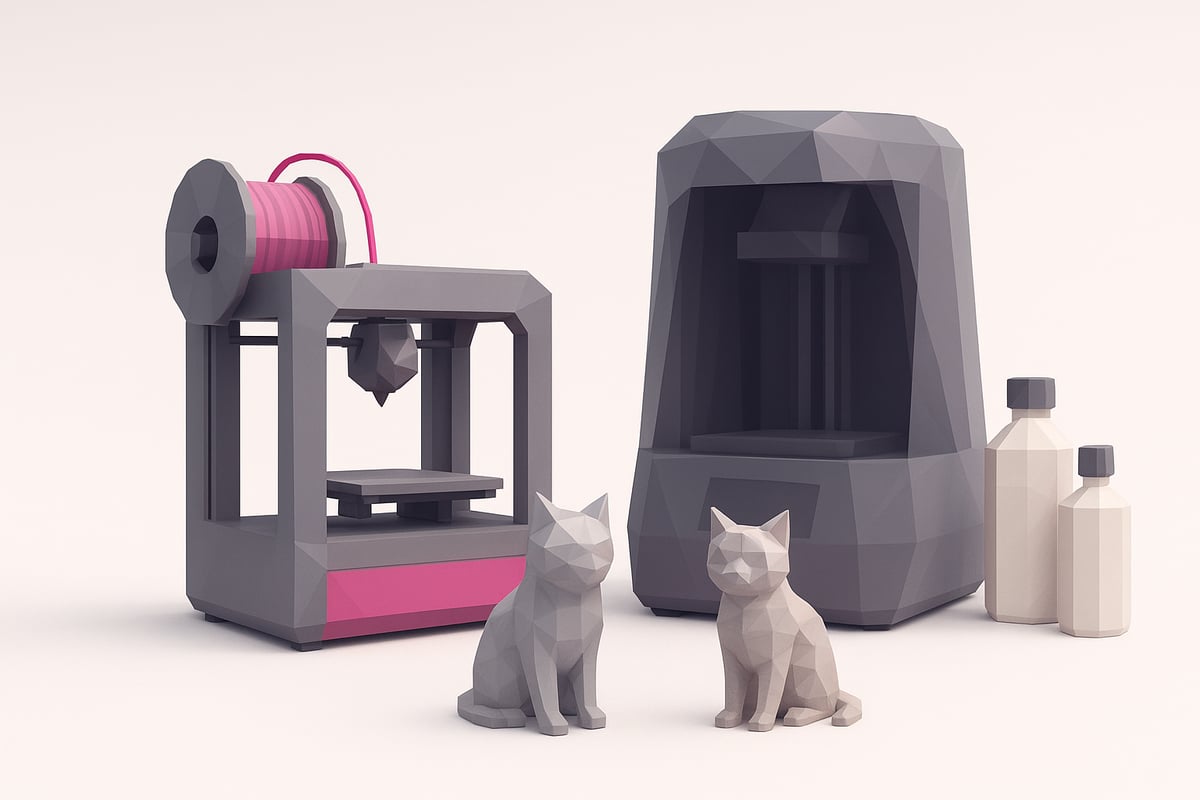
When it comes to quality, resin vs filament 3D printing shows notable differences. Resin can achieve a layer height of 0.025 mm, which translates into super fine details and smooth surfaces. Filament, on the other hand, typically ranges between 0.1 and 0.2 mm, showing visible layers but being ideal for functional prototypes.
Imagine a miniature: in resin it looks smooth and detailed, while in filament the layers are noticeable. 85% of those who use resin choose it for detail quality. So, if you're looking for precision, resin reigns supreme; for functional parts, filament more than delivers.
| Feature | Resin (SLA/DLP/LCD) | Filament (FDM/FFF) |
|---|---|---|
| Layer height | Up to 0.025 mm | 0.1-0.2 mm |
| Surface detail | Very high | Medium |
| Finish | Smooth | Visible layers |
Speed and print volume
In terms of speed, resin vs filament 3D printing also varies. Filament is faster for large parts and allows continuous printing, ideal if you need volume. For example, a 10 cm part can be ready in just 3 hours with FDM, while resin may take 5 hours, though with greater detail.
Maximum volume also differs: FDM allows printing large objects, while resin is limited by the vat. If your priority is printing many or large parts, filament is your friend. If you're after fine details and don't mind waiting, resin is the option to go for.
Costs and maintenance
In the resin vs filament 3D printing battle, price is key. FDM 3D printers start from €200, while resin ones typically begin at €300. Filament costs between €15 and €30/kg, quite affordable, while resin ranges from €30 to €80/litre, which can put many people off.
Maintenance also differs: FDM involves cleaning the nozzle, while resin requires more care, such as cleaning the vat and safe handling. Additionally, energy consumption and protective accessories (masks, gloves) raise the cost of resin. According to surveys, 55% of users consider the price of resin the biggest barrier to entry. If you want to dive deeper, you can check out this 3D printing comparison: resin vs filament.
Safety, post-processing and the environment
Filament is safe and easy to handle, while resin requires precautions due to fumes and toxicity. Post-processing also differs: filament only needs sanding and painting, but resin requires washing and UV curing.
As for the environment, PLA is biodegradable, but resin is not yet as sustainable. The trend for 2025 points toward more eco-friendly materials, but there is still a long way to go.
Recommended applications and use cases in 2025
Wondering what each technology is best suited for in resin vs filament 3D printing? 🤔 Let's make it clear with real examples and trends for 2025!
Filament (FDM/FFF):
Perfect for rapid prototypes, toys, supports, enclosures and large parts. It is the go-to option in education and for those looking to print functional objects of considerable size without complications.
Resin (SLA/DLP/LCD):
Essential for miniatures, jewelry, dental, medical models and parts where fine detail is key. If your goal is a premium finish, explore the resin collection for 3D printing and discover options tailored to every need.
Real example:
An architecture business uses FDM for structural scale models and SLA for decorative details, achieving the perfect balance on every project.
Trends for 2025:
Composite and recycled filaments are making a strong entrance, along with technical resins for industrial and creative applications! 65% of startups already combine both technologies depending on the stage of the project, confirming that resin vs filament 3D printing is not exclusive, but complementary.
Which one to choose?
If you are a hobbyist looking for versatility, start with filament. For professionals and creatives, resin opens doors to new levels of detail. The key is to combine and experiment!
Selection guide: How to choose between resin and filament 3D printing in 2025?
Not sure where to start with resin vs filament 3D printing? 🤔 Don't worry! Before deciding, think about your budget, the type of parts you want to print, your workload and your prior experience. Each technology has advantages that may suit you better depending on your goals.
Quick comparison
| Feature | Filament (FDM/FFF) | Resin (SLA/DLP/LCD) |
|---|---|---|
| Starting price | Lower 💸 | Higher 💵 |
| Ease of use | Beginner-friendly 🧑💻 | Requires more care 🧤 |
| Detail and finish | Medium, visible layers 🟧 | Very high, fine details 🎨 |
| Print volume | Larger 🏗️ | Limited 📏 |
| Safety | High 👌 | Extra precautions ⚠️ |
Tips and questions to help you decide
- Looking to print large, functional parts? FDM may be your best option.
- Need lots of detail and smooth finishes? Give resin a try.
- Do you prefer speed and lower cost? Filament usually wins here.
- Would you like to start out and then level up? Begin with FDM and, once you've mastered it, go ahead and give resin a shot!
Ask yourself these questions: What kind of projects inspire you most? Do you care more about speed or level of detail? That way, the choice between resin 3D printing vs filament will be much clearer.
Evolution, resources and community
Many creators start with FDM and then move on to resin to improve their results. In fact, 40% of advanced users use both technologies in their workshops. If you want to dive deeper, we recommend the full comparison of resin and filament 3D printers and this practical guide to resin 3D printing in 2025.
Don't forget to check out guides and reviews before buying, and join communities to get your questions answered. That way your experience will be much simpler and more enjoyable!
Now that you have a clear picture of what resin 3D printing can offer compared to filament (and vice versa), the next step is to explore for yourself the options that best suit what you're looking for. If after reading this you're curious to see the variety of resins available for your upcoming projects, I invite you to take a look at all the options out there. You'll find everything from standard resins to highly technical options and, if you have any questions, you can always count on the support of the community. Check it out here: View all 3D printing resins