

Can you imagine which will be the best 3D printing option for your projects in 2025? If you're looking to compare FDM printing with other leading technologies, you're in the right place! 🚀
Here you'll discover advantages, disadvantages, costs, applications, and the latest trends. We'll analyze materials, print quality, post-processing, prices, sectors of use, and practical recommendations, all explained in a simple way.
Ready to make a clear and informed decision? Keep reading and find the definitive comparison that will help you choose the 3D printing technology that best suits your needs. 💡
What is FDM printing and why does it remain relevant in 2025?
FDM printing, or Fused Deposition Modeling, works by melting a plastic filament and depositing it layer by layer until the object is formed. It is the most widespread 3D printing technology in homes, schools, and workshops thanks to its simplicity and low cost.
In recent years, FDM printing has evolved enormously. It is now more precise, faster, and compatible with a huge variety of materials, from PLA to technical filaments. According to recent data, more than 60% of desktop 3D printers sold worldwide in 2023 are FDM.
Among popular FDM 3D printers, models such as the Creality Ender 3 and the Prusa i3 MK4 stand out, which you can find in stores like www.mrresin.es. These machines are ideal for rapid prototyping, education, and the creation of functional parts. Check out the variety of filaments for FDM printing to explore even more possibilities.
In 2025, FDM printing remains relevant due to its accessibility, ease of use, and the continued advances in speed and precision. This keeps it as the preferred option for both beginners and professionals looking for reliable and cost-effective results.
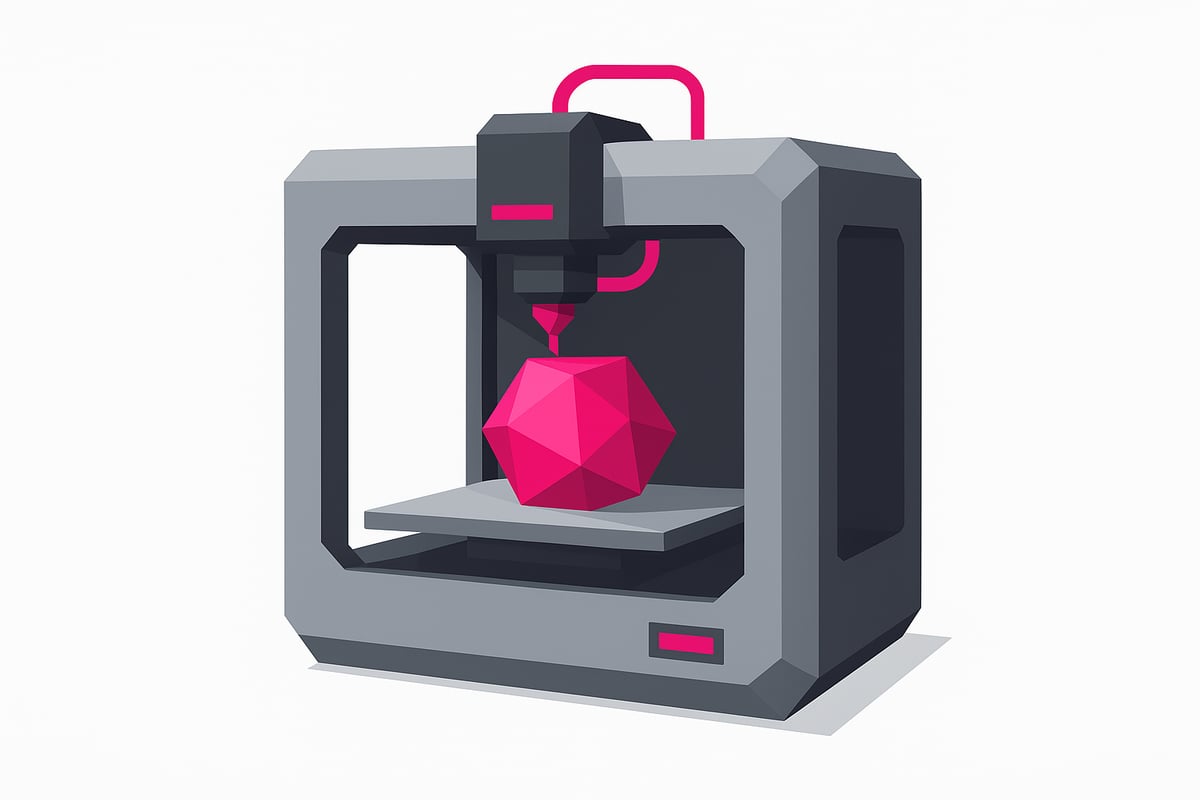
Main alternative technologies to FDM: SLA, SLS, and DLP
Want to know what lies beyond FDM printing? SLA, DLP, and SLS technologies have gained prominence in 2025, each with unique characteristics and specific applications. Let's discover them! 😎
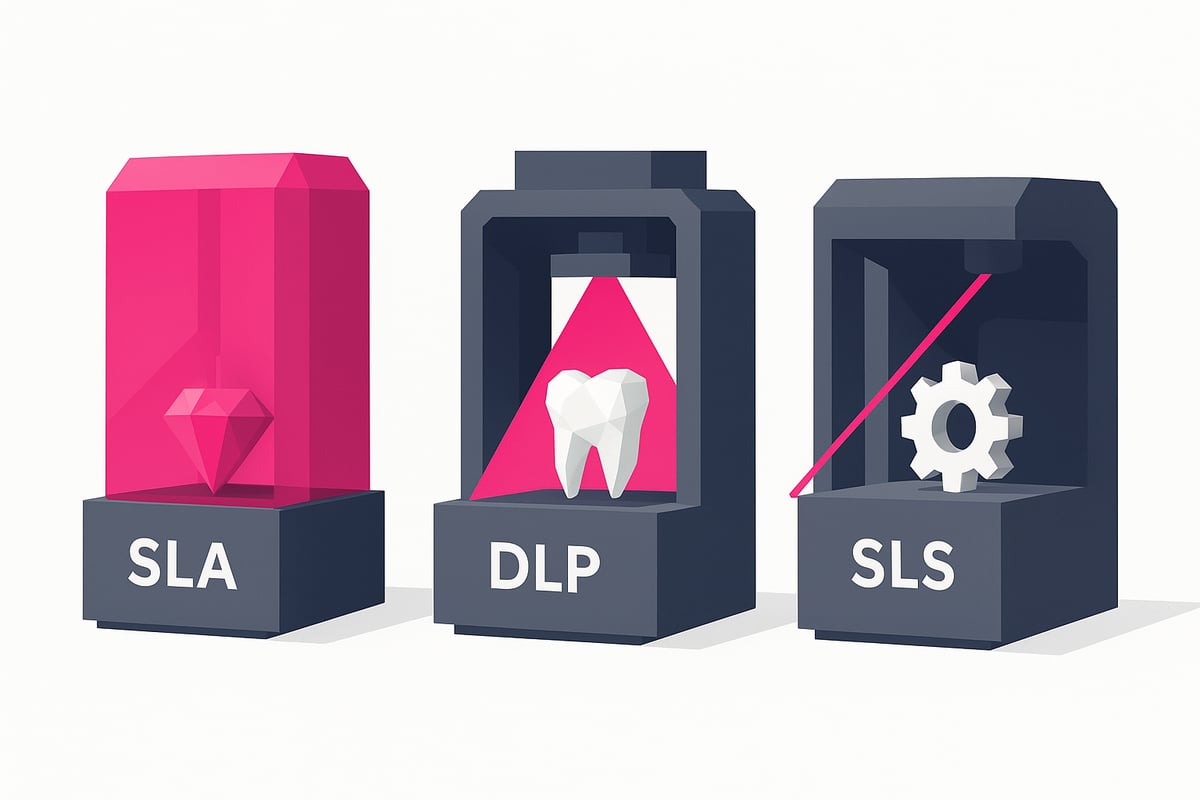
SLA (Stereolithography) and DLP (Digital Light Processing)
SLA and DLP use light to solidify liquid resins layer by layer. The result? Parts with ultra-high resolution and detail, ideal for jewelry and dental applications. Compared to FDM printing, they stand out for their smooth finishes and millimeter-level precision. Current examples such as the Anycubic Photon Mono X and Elegoo Mars 4 (real images at www.mrresin.es) are revolutionizing the sector. In 2024, the adoption of SLA/DLP grew by 25% in dental and jewelry applications. If you want to dive deeper into how they compare with other technologies, I recommend this Comparison of 3D printing technologies.
SLS (Selective Laser Sintering)
SLS uses a laser to fuse nylon powders or composites, creating strong parts with no need for support. This alternative to FDM 3D printing is perfect for complex geometries and sectors such as aerospace or automotive. Machines like the Sinterit Lisa X deliver industrial results and can be seen in action in images from leading manufacturers. SLS stands out for its durability and design freedom, although it requires a higher investment and prior experience.
Materials and mechanical properties comparison
The variety of materials is key when choosing a 3D printing technology. Whether you're looking for flexibility, strength, or a specific finish, each option has its advantages. Let's take a look at the main differences between FDM, SLA/DLP, and SLS!
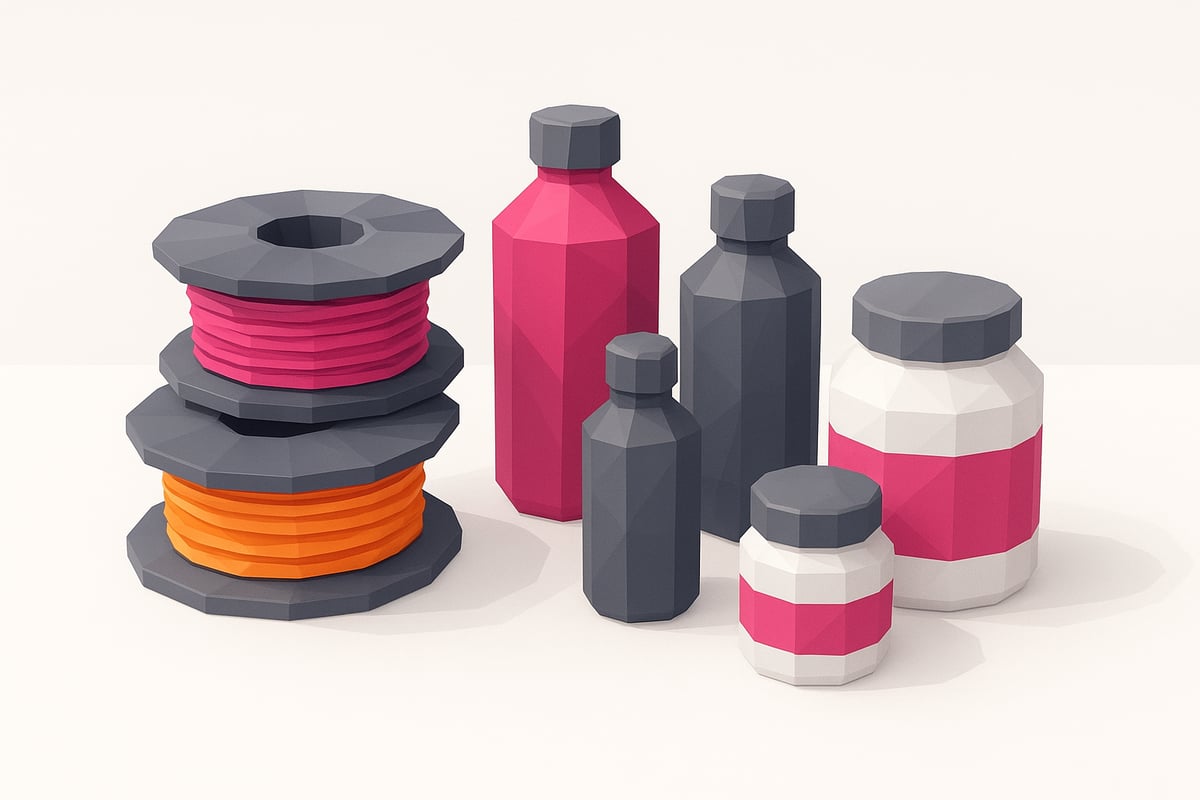
| Technology | Main materials | Mechanical properties | Approximate cost |
|---|---|---|---|
| FDM | PLA, ABS, PETG, technical, flexible | Good strength, flexibility, easy post-processing | From €20/kg |
| SLA/DLP | Standard resins, flexible, heat-resistant, biocompatible | High precision, smooth finish, less flexible | From €70/L |
| SLS | Polyamides, composites, engineering | High strength, durability, complex geometries | More expensive (from €100/kg) |
In FDM 3D printing, PLA is the most popular material due to its ease of use and low cost. If you want to learn more about filament types, visit our PLA Materials for FDM section and discover the available options.
SLA and DLP excel in finishes and detail, ideal for small parts such as jewelry or medical applications. SLS, on the other hand, allows the production of robust and complex parts, making it the preferred choice in engineering and automotive applications.
FDM leads in material variety and price, while SLA/DLP stand out in detail and SLS in strength. Choosing wisely depends on your needs: do you prefer low cost and versatility, or maximum precision and durability?
Print quality, precision, and surface finishes
Have you ever wondered how FDM print quality compares to other technologies like SLA, DLP, or SLS? Let's take a closer look! 🔍
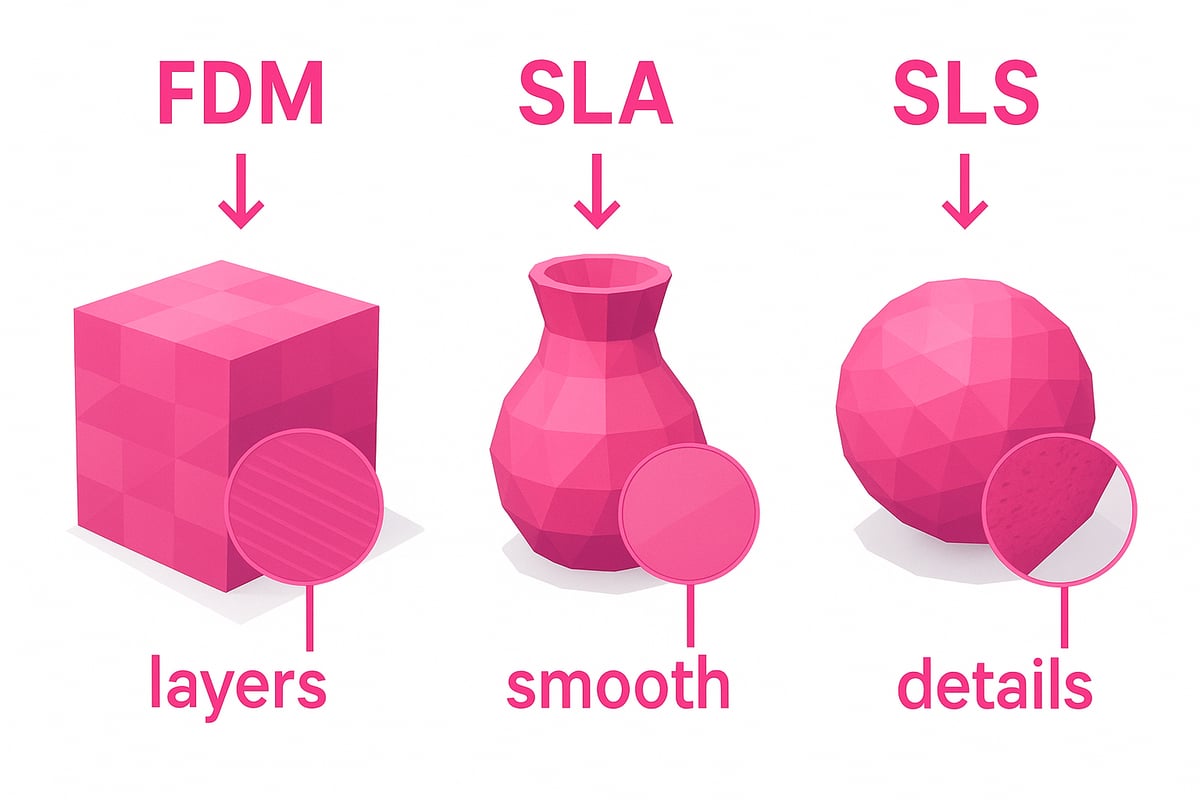
Resolution and detail: the difference is in the millimeter
Resolution is key for any 3D project. In FDM 3D printing, layers typically have a thickness of 0.1 to 0.4 mm. In comparison, SLA and DLP achieve ultra-thin layers of 0.025 to 0.1 mm, allowing for much sharper detail. SLS falls between the two, with layers of 0.08 to 0.12 mm.
| Technology | Typical resolution (mm) | Visual detail |
|---|---|---|
| FDM | 0.1 - 0.4 | Visible layers |
| SLA/DLP | 0.025 - 0.1 | Highly detailed |
| SLS | 0.08 - 0.12 | Fine details |
Surface finishes: smooth or textured?
With FDM, layer lines are usually visible and require post-processing to achieve a smooth finish. This is where 3D post-processing accessories make all the difference, helping to sand, polish, and improve the surface.
SLA and DLP deliver smooth surfaces right from the start, perfect for miniatures, jewelry, or dental applications. SLS, on the other hand, produces parts with a matte texture, ideal for functional prototypes or technical parts.
Precision and the sectors where each one shines
SLA/DLP stand out for dimensional precision, making them the go-to choice when finish quality is essential (for example, in jewelry and dental applications). FDM 3D printing is ideal for rapid prototyping and functional parts, although it requires calibration and some skill in post-processing.
SLS allows the creation of complex geometries without supports, making it a star in engineering and automotive sectors. Remember: if you're looking for the best visual finish, SLA/DLP are king; for economy and versatility, FDM remains a champion.
Post-processing and ease of use across each technology
Post-processing is a key factor when choosing a 3D printing technology or other alternatives. Each method has its own stages, tools, and challenges, which directly affects ease of use and the user's day-to-day experience.
Post-processing steps by technology
- FDM: Remove supports, sand edges, and polish surfaces. Tools like the Polysher exist to smooth out the finish. The process is simple and safe, ideal for beginners.
- SLA/DLP: Requires washing parts in isopropyl alcohol and curing them with UV light. Gloves must be worn and work should be done in ventilated areas, as resins can be irritating. The final finish is very smooth, but the process demands more caution.
- SLS: Involves cleaning excess nylon powder using brushes or sandblasting. No supports are needed, but special equipment is required to handle the powder safely.
Time and difficulty comparison
| Technology | Average post-processing time | Difficulty | Safety |
|---|---|---|---|
| FDM | 10-20 minutes | Low | High |
| SLA/DLP | 30-45 minutes | Medium-High | Medium |
| SLS | 20-40 minutes | Medium | Medium |
FDM post-processing is the fastest and most accessible, allowing for greater productivity and a lower learning curve. SLA/DLP requires more steps and care, while SLS excels with complex geometries, though it involves handling fine powders.
If you're looking for ease and speed, FDM is the recommended option. For professional finishes, SLA/DLP and SLS deliver superior results, albeit with greater dedication to post-processing.
Costs and accessibility in 2025: Which technology is the best fit?
Thinking about making the leap into FDM 3D printing or exploring other technologies in 2025? Let's compare costs and accessibility so you can choose with confidence!
Today, the entry cost varies quite a bit depending on the technology. FDM 3D printers start from €200, ideal for individuals and small businesses. SLA/DLP machines start at around €500, while SLS remains a premium option, exceeding €5,000.
| Technology | 3D Printer Price | Materials (approx.) | Maintenance |
|---|---|---|---|
| FDM | from €200 | filament €20/kg | nozzles, bed |
| SLA/DLP | from €500 | resin €70/L | vats, UV curing |
| SLS | from €5,000 | powder €100/kg | filters, cleaning |
Maintenance varies: FDM requires nozzle replacement and basic cleaning, SLA/DLP needs attention to vats and curing, while SLS involves more complex processes.
For beginners, the accessibility of FDM 3D printing is unbeatable. Businesses and makers value its low cost and quick learning curve. According to the 3D Printer Market in 2025, FDM continues to lead sales thanks to its balance between price and ease of use.
Trends for this year? SLA/DLP and SLS are starting to drop in price and become more accessible, but FDM remains the favourite entry point. The decision depends on your budget and what you want to create!
Application sectors and best uses by technology
FDM 3D printing is the favourite for rapid prototyping, education, and low-cost functional part manufacturing. It is no coincidence that 80% of educational centres use it, as highlighted in this educational initiative bringing 3D printing to thousands of students.
For their part, SLA and DLP dominate in jewellery, dental, and miniatures, standing out for their precision and fine finishes. 60% of dental laboratories already prefer them for detailed work and high-quality prototypes.
SLS shines in engineering, automotive, and aerospace, ideal for complex and durable parts. Its ability to manufacture without support makes it key in advanced industrial production.
Do you have questions about which technology suits you? If you are looking for more information on applications and sectors, visit our Resources for 3D Businesses and find the best option according to your cost, quality, and volume needs.
| Technology | Best Use | Sectors |
|---|---|---|
| FDM | Rapid prototyping, functional parts | Education, makers, small businesses |
| SLA/DLP | High precision, miniatures, dental | Jewellery, dental, design |
| SLS | Complex parts, durability | Automotive, aerospace, engineering |
Choose your technology with your goal, budget, and desired finish in mind. That way you will ensure the success of your projects!
Conclusion:
Comparing FDM 3D printing with technologies such as SLA, DLP, and SLS, it is clear that each option has unique advantages depending on your needs. If you are looking for accessibility, material variety, and ease of use in 2025, FDM 3D printing remains the favourite for rapid prototyping and education, while SLA and SLS shine in precision and industrial applications.
Ready to take your projects to the next level? Discover the best materials and accessories in our Mr Resin online store. Also join our Telegram group here to access discounts, coupons and exclusive events with our community.
Remember to subscribe to our Newsletter and don't miss any offers, news or 3D printing tips. That way you'll always be one step ahead in the maker world!
✨¡Happy Printing! 🚀
Now that you have a clear overview of the differences between FDM and other 3D printing technologies, you're probably wondering which material best fits your next projects. Remember that choosing the right resin can make all the difference, both in the finish and in the durability and detail of your prints. If you're curious to discover new options or want to easily compare quality and prices, I invite you to take a look at all the resins we have ready for you in our online store. Here you can explore, compare and find exactly what you need!
View all 3D printing resins