High-Temperature Resistant Resins for 3D Printing

Looking to print parts that can withstand extreme conditions without losing precision or structural integrity? At MR Resin, we offer a professional selection of high-temperature resistant resins, engineered to meet the demands of industrial, automotive, and electronics applications — and any project where maximum thermal stability is essential.

Skip to results list
Availability
Price
to
The highest price is €34,99
Clear
1 item
Column grid
Column grid

Filter

Availability
Price
to
The highest price is €34,99
  • 💪 Anycubic Rigid Resin 100. Rigid 100 💪

    💪 Anycubic Rigid Resin 100. Rigid 100 💪

    💪 Anycubic Rigid Resin 100. Rigid 100 💪

    Sale price  €34,99 Regular price  €54,99

Advantages of choosing high temperature resistant resins

High-temperature resistant resins are formulated to maintain their mechanical and dimensional properties even when exposed to intense heat sources, far surpassing the performance of standard resins. Here are some of their key advantages:

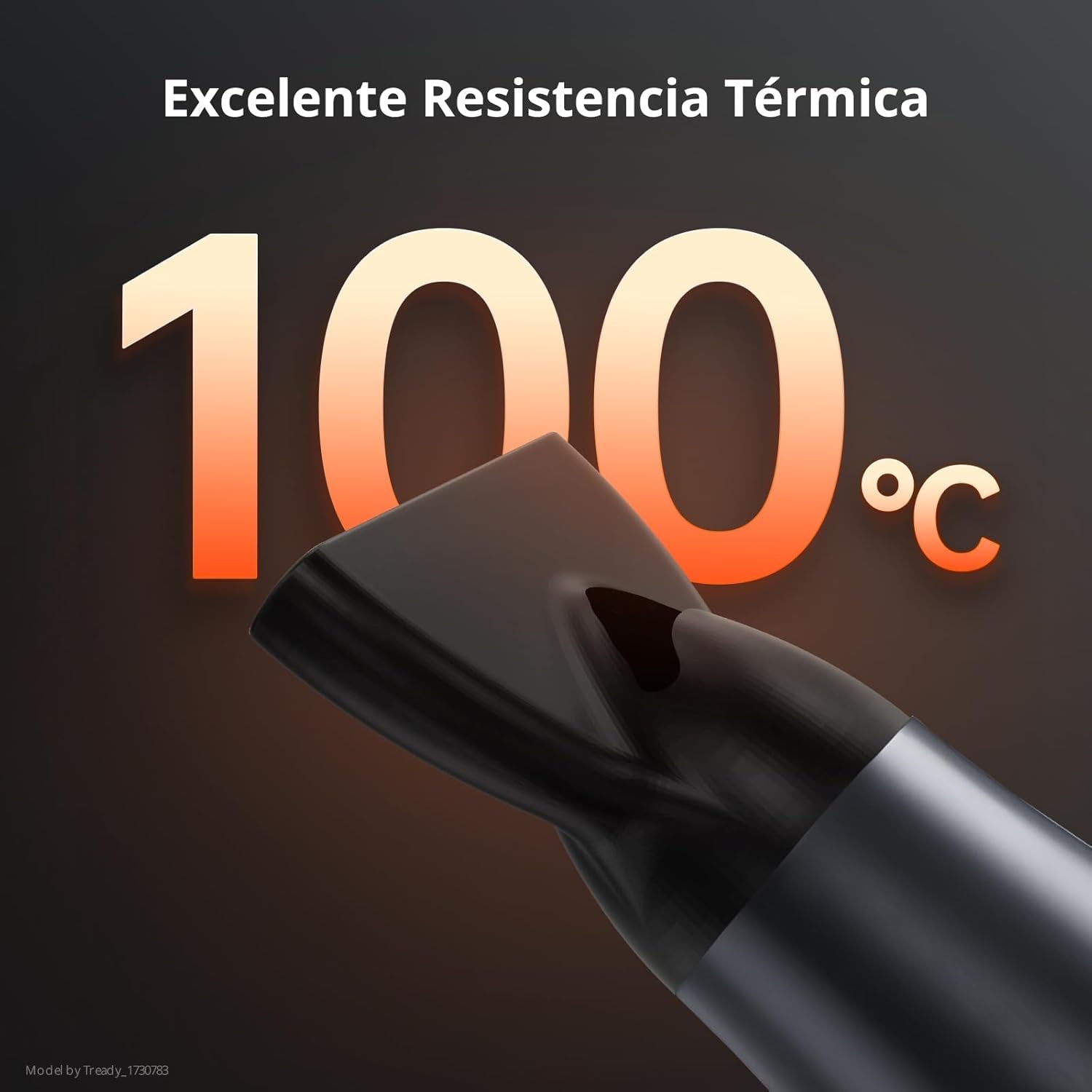
  • They withstand temperatures of up to 100°C without warping or losing rigidity, making them ideal for tooling, molds, and technical parts.
  • Dimensional stability and precision in industrial environments, ensuring that your prototypes and finished parts meet the most demanding requirements.
  • Mechanical and chemical resistance: they withstand stress and friction.
  • Versatility in post-processing: they allow sanding, drilling, painting, and machining after curing.
Resina UV Anycubic Rigid 100 resistencia termica para impresora 3D - Mr Resin

Recommended applications for heat-resistant resin

High thermal resistance resin is the preferred solution for:

  • Injection molds and thermoforming: withstand repeated heat and pressure cycles.
  • Engine components and electronic housings: maintain shape and performance under thermal stress.
  • Tooling and manufacturing tools: ideal for industrial processes requiring precision and durability.
  • Functional prototypes: test your designs under real conditions before moving to mass production.

Tips for printing with heat-resistant resin

To get the best results with high-temperature resistant 3D resins, follow these recommendations:

  • Set up the printer according to the manufacturer's instructions: Adjust exposure times and ambient temperature to ensure uniform polymerization.
  • Use robust supports: Parts can be denser and heavier, so good support is key to avoiding warping.
  • Specific post-processing: Perform a full UV chamber cure and, if necessary, a thermal post-cure to maximize resistance.
  • Avoid overheating during curing: Excessive heat can affect dimensional stability.
  • Store the resin in a cool, dry place: This will keep its properties intact until the moment of use.

📐 Technical, functional and precise finishes

These resins don't just withstand heat: they also offer good precision, detail, and mechanical strength. They are ideal for creating brackets, housings, guides, mechanical parts, or prototypes that need to remain stable at elevated temperatures.

⚙️ Printing and Post-Curing Tips

It is recommended to print in a stable environment with controlled ambient temperature. Post-curing is key to activating its thermal properties: prolonged exposure to UV light or even baking (when indicated by the manufacturer) may be necessary to achieve maximum thermal performance.

Compatibility and types of high temperature resin

At MR Resin we offer heat-resistant resins compatible with 405 nm LCD, DLP and SLA printers. We offer:

Check the technical data sheet of each product to find out the temperature limits and compatibility with your 3D printer.

Frequently Asked Questions about Heat-Resistant Resins

How to Ensure Dimensional Stability in Heat-Resistant Resin Prints

  • The key to maintaining dimensional stability in heat-resistant resin prints lies in dialing in the right print settings and post-processing workflow. Use solid supports and a properly leveled build plate to prevent movement during printing. After UV curing, many high-temperature resins require thermal post-curing in an oven — following the manufacturer's guidelines — to reach maximum strength and prevent warping. It's also important to avoid exposing finished prints to sudden temperature changes, as this can cause internal stress. For maximum precision, run tests with different print orientations and adjust support density based on the size and geometry of your part.

What industrial applications best take advantage of the properties of heat-resistant resin?

  • High-temperature resistant resins are essential in industries such as automotive, aerospace, and electronics. They are used to manufacture thermoforming molds, engine components, electrical device housings, soldering fixtures, and parts subjected to intense thermal cycling. They are also ideal for functional prototypes that must simulate real-world conditions before mass production. Their ability to withstand heat without losing shape or mechanical properties makes them the preferred choice for critical applications where safety and reliability are top priorities.

Is it possible to machine or paint 3D printed parts made with high heat-resistant resin?

  • Yes, most high-temperature resistant resins support machining, drilling, and painting after full cure. It's recommended to use sharp tools and work at low RPM to avoid overheating the part. Before painting, clean the surface thoroughly and, if needed, lightly sand with fine-grit sandpaper and apply a primer coat to improve paint adhesion. Use paints compatible with engineering plastics and test on an inconspicuous area first to ensure a uniform, long-lasting finish.

How does post-cure heat treatment affect the final part strength?

  • Thermal post-curing is essential for heat-resistant resins to reach their full mechanical and thermal performance. This process involves heating the printed part in an oven, following the manufacturer's recommended parameters (typically between 70 and 100°C for several hours). Thermal post-curing completes the polymerization process, improves internal cohesion, and eliminates residual stress — resulting in greater resistance to heat, impact, and warping. Skipping this step can significantly reduce the lifespan and performance of the part in demanding applications.

What are the differences between heat-resistant resins and standard resins for 3D printers?

  • Heat-resistant resins are formulated to withstand much higher temperatures than standard resins, which typically warp or lose their mechanical properties above 50–70°C. In addition, high-temperature resins offer greater dimensional stability, compression resistance, and in many cases, flame-retardant properties. However, they may require stricter print settings and post-processing, as well as a slightly higher price point. If your application demands durability and performance under heat, investing in a heat-resistant resin is absolutely worth it.

Related Categories

Post-Processing
Productos de postprocesado para impresion 3D en resina - Mr Resin

Post-Processing

Tough 3D Printing Resins
Mosqueton impreso en 3D con resina Anycubic ABS Like Pro 2 - Mr Resin

Tough 3D Printing Resins

Flexible and Semi-Flexible 3D Printing Resins
Guardabarros de bicicleta impreso en resina flexible Anycubic Tough Ultra doblado con las manos - Mr Resin

Flexible and Semi-Flexible 3D Printing Resins

Primers
Coleccion imprimaciones para miniaturas y modelismo - Mr Resin

Primers